Building codes look backward. Resilience looks forward.
by anthony_capkun_2 | November 18, 2026 11:27 am
 [1]
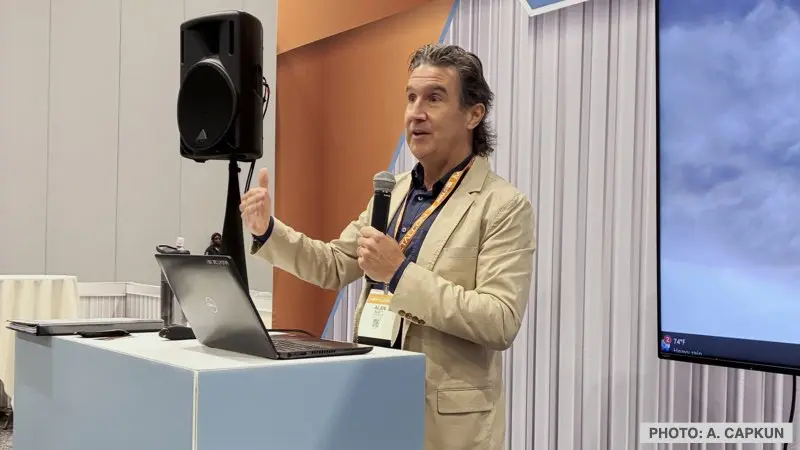
“A disaster is a hazard you didn’t prepare for,” said Alan Scott, FAIA, now with CannonDesign[2], at the start of his session “When codes aren’t enough: practical resilience for modern buildings” at Metalcon 2026[3].
Hence the growing importance of designing for resilience, not just because it pays to be prepared, but because of how much disasters cost us in lives and property damage.
Building codes are designed to protect occupants during hazardous events, but what happens after the immediate danger has passed?
Scott emphasized that building codes generally look backward, drawing on experience to establish minimum requirements, while resilient design must look forward to anticipate future challenges.
A building may survive a flood, wildfire, earthquake, or extreme heat event, yet remain unusable for weeks or months afterward. Resilience goes beyond surviving the event to maintaining critical functions and recovering quickly from disruption.
Scott presented a five-level Resilience Hierarchy to guide building professionals:
- Avoid exposure to hazards wherever possible.
- Resist damage through robust design.
- Adapt to changing conditions.
- Operate through disruption when necessary.
- Recover quickly when damage occurs.
Practical resilience measures include keeping water out of buildings, elevating critical equipment above potential floodwaters, maintaining the integrity of the building enclosure, and protecting occupants through appropriate filtration and shading.
Resilient buildings may also incorporate backup power, energy storage, reliable communications, and provisions for water and sanitation. Replaceable components can help accelerate recovery when damage does occur.
As an example, Scott highlighted the Oregon Treasury Resilience Building, which incorporates seismic isolation pads, durable metal siding, daylighting, backup diesel power, energy storage, and rooftop solar photovoltaic systems.
Scott also pointed to the growing recognition of resilience in industry standards and rating systems, including LEED v5 and ASTM E3429, a property resilience assessment standard developed by a committee on which Scott volunteers.
For architects and other building professionals, he emphasized that the responsibility is not necessarily to dictate decisions, but to ensure owners understand the risks and available options.
“Resilient buildings are designed, not discovered,” he said.
Anthony Capkun is the editor-in-chief of Metal Architecture[4] and Metal Construction News[5] magazines.
 [6]
- [Image]: https://www.metalarchitecture.com/wp-content/uploads/2026/11/Metalcon-2026-Session-Alan-Scott.webp
- CannonDesign: https://www.cannondesign.com/
- Metalcon 2026: https://metalcon.com/
- Metal Architecture: https://www.metalarchitecture.com/
- Metal Construction News: https://www.metalconstructionnews.com/
- [Image]: https://www.metalarchitecture.com/wp-content/uploads/2026/09/Editors-Corner-MCN-MA-Mug02-800.jpg
Source URL: https://www.metalarchitecture.com/articles/building-codes-look-backward-resilience-looks-forward/