Adhesive Innovation
by hanna_kowal | March 18, 2026 9:16 am
 [1]
[1]Photo courtesy Avery Dennison
In the evolving world of architectural design, metal continues to capture the imagination of architects, engineers, and builders alike. Its sleek aesthetic, exceptional durability, and sustainability credentials have made it a mainstay in modern construction—from high-performance roofing systems to facades, cladding, and prefabricated modules. Working with metal, however, introduces unique challenges. Thermal expansion and contraction, condensation, vibration, and exposure to ultraviolet (UV) radiation or extreme cold can compromise seals, weaken joints, and accelerate material degradation.
Enter the next generation of pressure-sensitive adhesive (PSA) tapes—engineered materials that are transforming how metal buildings are designed, assembled, and maintained. No longer substitutes for sealants or screws, advanced PSA tapes have emerged as high-performance bonding systems that enhance structural integrity and design flexibility.
Engineered for environmental extremes
Metal structures are constantly at war with the elements. Panels expand under intense heat, contract sharply in subzero cold, and are battered by rain, snow, and wind. Traditional mechanical fasteners and liquid adhesives can fail under these dynamic stresses. In contrast, PSA tapes maintain reliable adhesion across temperature swings, freeze-thaw cycles, and high humidity, thanks to advanced acrylic and butyl chemistries.
Modern PSA tapes demonstrate this capability with formulations tested for installation temperatures as low as -18 C (-0.4 F) and operational service down to -40 C (-40 F). Such low-temperature performance is vital for northern climates and winter construction schedules, allowing builders to continue work without resorting to heat-assisted bonding.
Beyond cold resistance, UV stability is another hallmark of modern PSA technology. Constant sunlight can degrade conventional adhesives, causing embrittlement or delamination. Today’s UV-stable backings and polymers resist photodegradation, making them ideal for exposed metal roofing and facade systems where longevity and color stability are as important as function.
Strong bonding—even on a range of difficult substrates
One of the most significant breakthroughs in PSA design is its ability to adhere to a wide range of substrates—from high-energy metals like galvanized steel and aluminum to low-energy plastics and coatings.
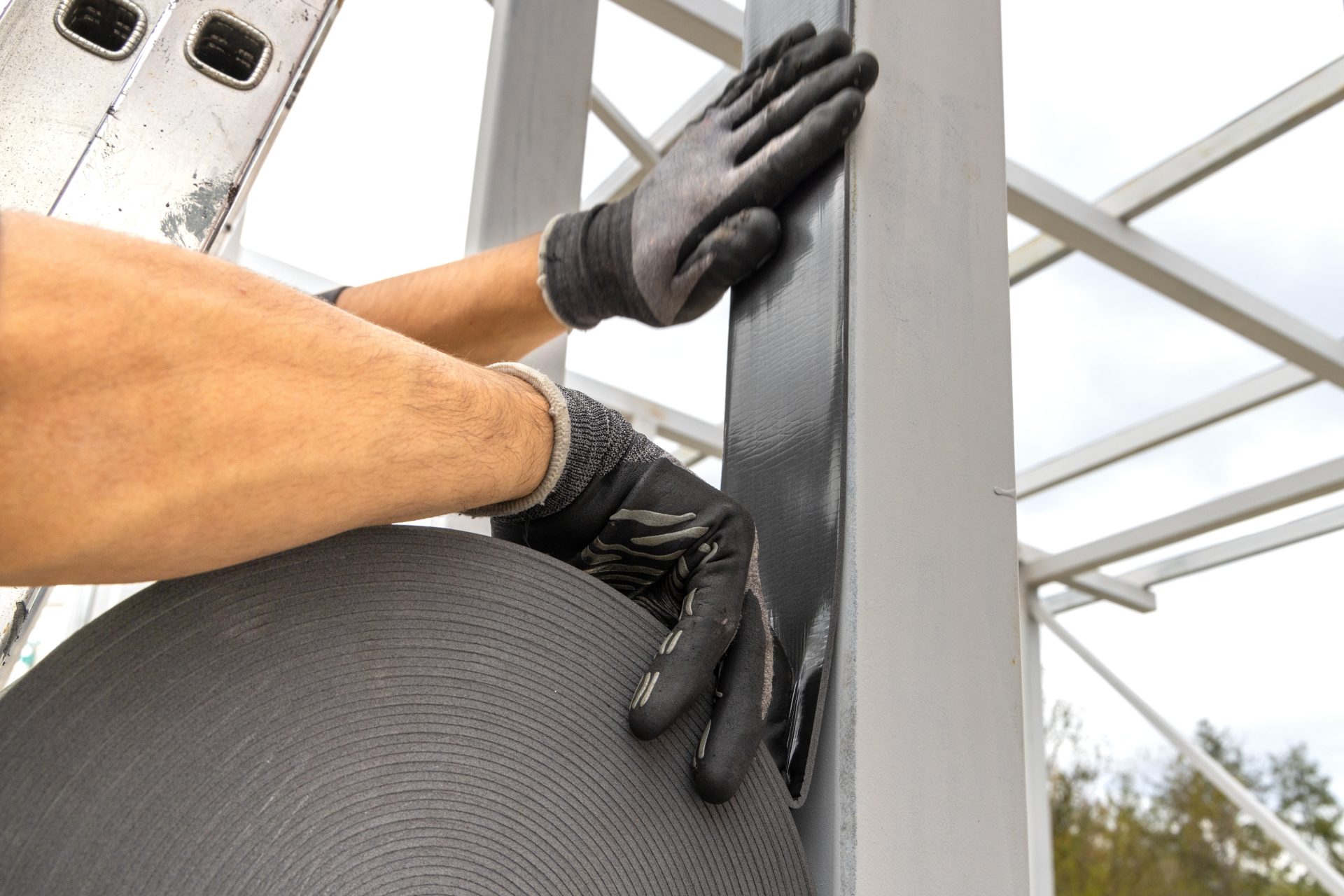
Where mechanical fastening can puncture panels and create paths for water ingress, PSA tapes provide a continuous, flexible seal that absorbs vibration, resists corrosion, and eliminates the need for drilling. Advanced acrylic formulations, for instance, maintain cohesive strength even under constant shear stress or movement, ensuring long-term durability without fatigue cracking.
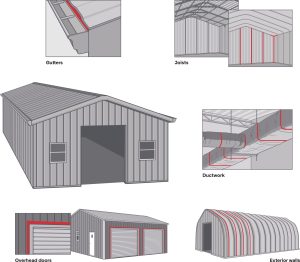
This strength makes PSA tapes invaluable in metal building assemblies, where panel overlaps, roof-to-wall transitions, and gutters demand tight, long-lasting seals despite constant structural motion.
 [2]
[2]Photo courtesy Avery Dennison
Ease of use and labor efficiency
Construction efficiency has become as critical as material performance. Labor shortages, rising costs, and compressed project schedules are prompting architects and contractors to seek materials that install quickly and reliably. PSA tapes excel in this domain.
Unlike liquid adhesives, PSAs require no mixing, curing, or cleanup. Application is simple—peel, position, and press—yielding an instant bond. This eliminates downtime associated with mechanical fastening or thermal welding. Contractors working in challenging environments, such as roof edges or elevated panels, benefit from faster, safer installations with fewer tools and a lower risk of error.
Additionally, PSAs are repositionable and conformable, making them particularly suited to the irregular geometries common in architectural metalwork. Whether sealing around fasteners, corners, or complex joints, PSA tapes adapt to contours without sacrificing adhesion. The result is a cleaner aesthetic and a more uniform seal—key advantages in visible architectural applications.
Custom configurations for specific design needs
Every building project presents a unique combination of materials, environmental conditions, and performance expectations. Recognizing this, manufacturers now offer custom adhesive configurations to meet specialized design criteria.
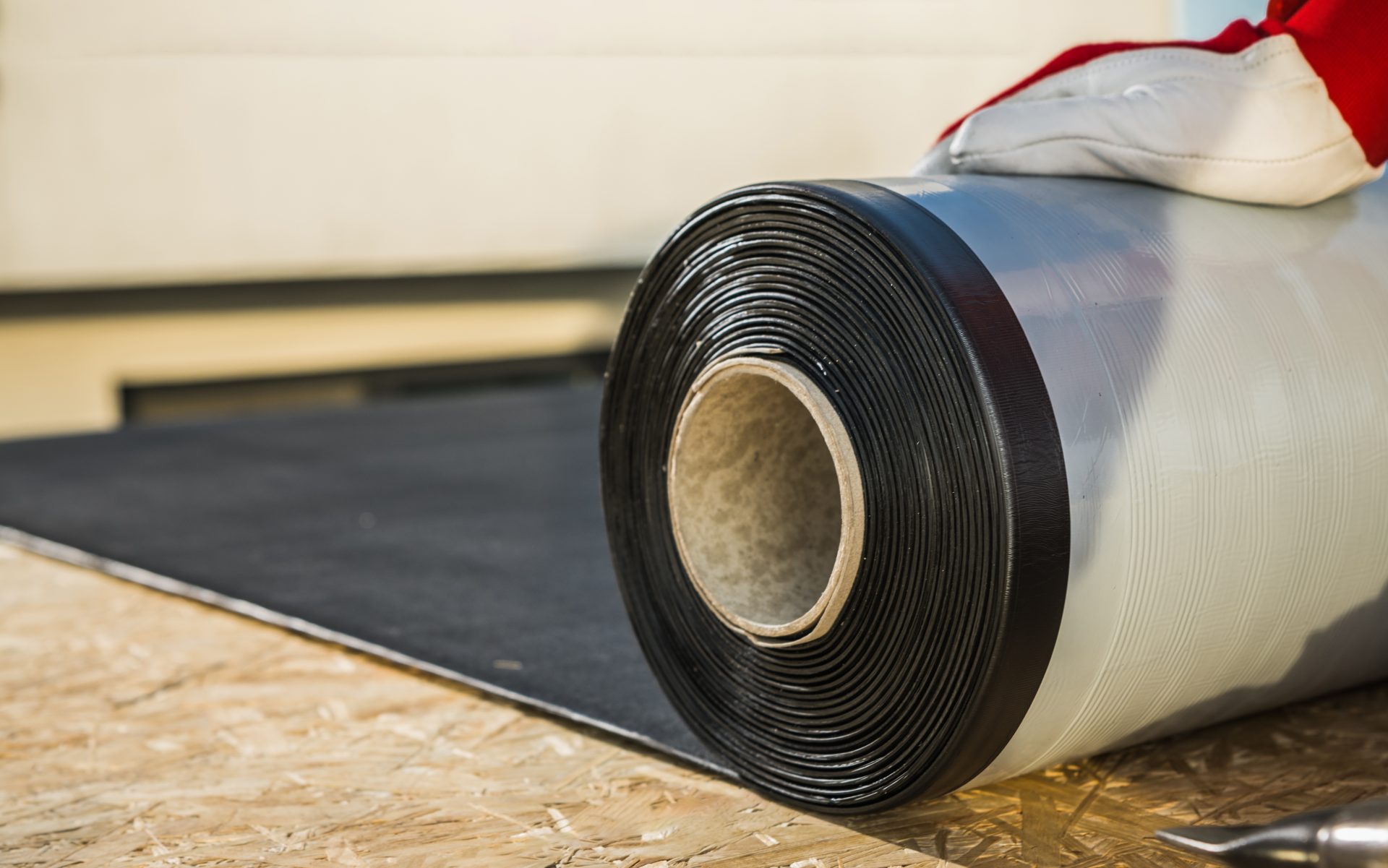
Product lines include high-tack, “quick-stick” adhesives, single-coated foam tapes, and hybrid constructions for different bonding priorities. Foam-based tapes add thickness for surface compensation and vibration damping, while hybrid acrylics deliver strength and elasticity.
Architects can specify tapes that balance immediate adhesion with long-term holding power, or select from varying liner materials and widths for either factory or field applications. This level of customization not only enhances performance but also integrates seamlessly into prefabrication workflows, enabling tapes to be applied in controlled conditions and resulting in faster on-site assembly.
 [3]
[3]Photo courtesy Avery Dennison
Thermal and acoustic benefits
Beyond adhesion, PSA tapes contribute to thermal management and insulation, both vital factors in metal construction. Metal, while strong and recyclable, is also a highly conductive material, prone to heat loss in winter and heat gain in summer. Specialized PSA tapes act as thermal breaks, reducing heat transfer between framing members, roof panels, and wall assemblies.
These insulative tapes not only improve energy efficiency but also mitigate condensation—a frequent challenge in metal roofs and walls where warm interior air meets cold exterior surfaces. By interrupting conductive pathways, PSA systems help maintain consistent interior temperatures and extend the lifespan of the building envelope.
Some formulations also provide acoustic damping, reducing noise transmission from rain impact or structural vibration. This is a growing consideration in mixed-use and residential metal architecture.
Supporting sustainability and worker safety
As the construction sector embraces sustainable practices, PSA tapes provide measurable environmental and safety benefits. Low- and zero-volatile organic compound (VOC) formulations minimize off-gassing and improve indoor air quality (IAQ). PSAs also eliminate the need for fuel-powered welding or solvent-based bonding, which further enhances on-site safety.
As PSA tapes deliver long-lasting seals with minimal waste, they extend the life of roofing and cladding systems, reducing the need for premature repairs or replacements. This directly contributes to reduced landfill waste and lower embodied carbon throughout the building’s lifecycle.
Enabling prefabrication and modular construction
One of the most promising applications for PSA tapes lies in the prefabrication and modular construction sectors, both of which are transforming how buildings are designed and delivered. The clean, consistent nature of adhesive tape bonding lends itself perfectly to factory-applied sealing, where precision and repeatability are paramount.
By applying PSA tapes to panels and modules in a controlled environment, manufacturers ensure uniform quality, reduce field labor, and accelerate project timelines once materials arrive on-site. This approach aligns perfectly with the industry’s drive toward higher productivity and consistent performance across multiple installations.
The future of metal bonding
As architects push the boundaries of form and performance, PSA tapes are evolving alongside them. Next-generation adhesives are integrating nanotechnology, hybrid polymers, and self-healing properties, promising even greater adaptability and durability in extreme conditions. Future innovations are expected to offer enhanced fire resistance, recyclability, and smart sensing capabilities, allowing tapes to play an even larger role in sustainable building envelopes.
John Calhoon is the business development manager of Building & Construction at Avery Dennison Performance Tapes North America. With more than two decades of experience in the construction materials industry, he works closely with manufacturers, architects, and contractors to develop and implement advanced adhesive solutions that enhance building performance. Learn more at https://tapes.averydennison.com. Contact him on LinkedIn at https://www.linkedin.com/in/johncalhoon/[4].
- [Image]: https://www.metalarchitecture.com/wp-content/uploads/2026/03/PSA_Metal-Building.jpg
- [Image]: https://www.metalarchitecture.com/wp-content/uploads/2026/03/PSA_Roofing-membrane.jpg
- [Image]: https://www.metalarchitecture.com/wp-content/uploads/2026/03/PSA_Metal-Building-Applications.jpg
- https://www.linkedin.com/in/johncalhoon/: https://www.linkedin.com/in/johncalhoon/
Source URL: https://www.metalarchitecture.com/articles/features/adhesive-innovation/