AIA26: interconnection, innovation, and the expanding role of architecture
by ciara_lalor-lindo | October 5, 2026 9:00 am
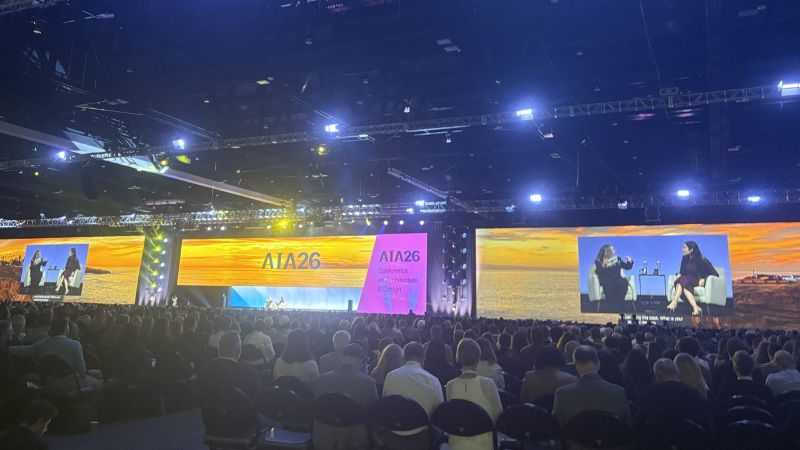
From June 10-13, the 2026 AIA Conference on Architecture & Design[1] at the San Diego Convention Center brought more than 12,000 professionals from across the globe together for continuing education, material and technological exploration, and conversation. Some split their time between local architecture tours and exploring product innovations on the show floor, while others attended sessions offering lessons on everything from abstract design concepts to guidance for career growth.
Across those experiences, a central theme emerged: interconnection.
That spirit was evident at the June 10 Opening Night Party at Bayfront Park, where attendees came together for a lively networking event. More than the food, drinks, and live music, what stood out in this warm welcome to AIA26 was how much architects enjoy learning from one another.
Within five minutes of sitting down at a table, I had spoken with design professionals across the education, recreation, and commercial sectors. As a first-time attendee of the annual AIA conference, I was especially looking forward to connecting with the readers of Metal Architecture and those who support their work. I pursued my curiosity with the question: “how do you use metal in your designs?”
Much to my delight, every person I spoke with that evening had a meaningful answer as our conversations touched on residential framing, modular industrial structures, and branded netting details on sports venues.
From learning about ongoing projects to reflecting on how design has changed within sectors, those conversations reflected the range of expertise assembled at AIA26 and set the engaged tone for the days ahead.
Metal in the exhibit hall
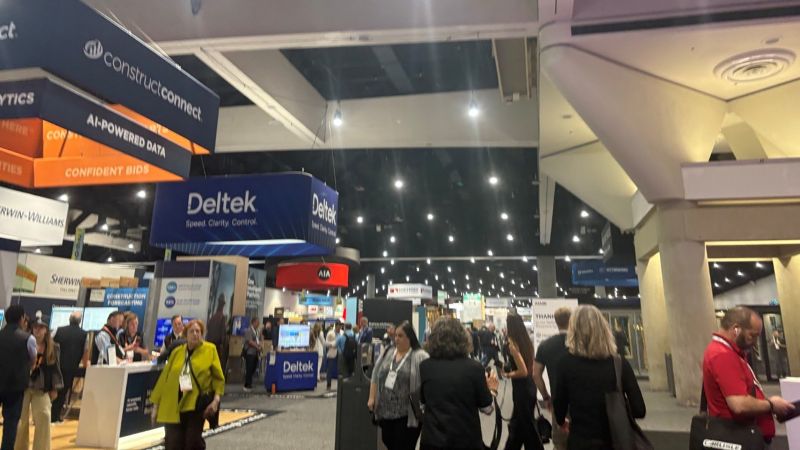
The exhibit hall included manufacturers and service providers across the building industry, giving attendees opportunities to learn about material advancements directly from the suppliers of architectural metal systems. Demonstrations, material displays, and one on-one conversations allowed attendees to see and feel materials firsthand and to brainstorm where these innovations fit into their current or future projects.
Expanded metal was featured at several exhibitor booths, demonstrating its range of architectural applications. Full-height walls, varied expansion patterns for sun shading and safety, custom coatings, and branded installations showed how the material can serve both functional and expressive roles. Other displays incorporated LED lighting, positioning expanded metal as a dynamic facade or identity element. The range in this metal speaks to how buildings and designs must interact with their environment and nods to the interconnected design mindset spread across the show.
Also on the show floor, the Metal Building Manufacturers Association[2] exhibited, helping patrons access information on the design opportunities and resources available for metal building systems including technical whitepapers and educational sessions.
Sessions and design lessons
The conference offered more than 350 AIA/CES registered sessions, which covered a broad range of topics. Among these sessions, there was an ongoing conversation about how architectural work can respond to the unique conditions of each project. From perspectives on developing codes and standards to scientific concepts that act as apt analogies for design mindsets, the lasting experience a building provides is central to the discussion.
“Reimagining the International Code Council Performance Code,” a session led by Beth Tubbs, P.E., FSFPE, and Ronald L. Geren, AIA, FCSI, examined the advantage of a performance-based design and evaluation approach. While the ICCPC has not been widely adopted, the session provided a window into how codes may change in the future.
Tubbs explained, “There’s the how-to in the prescriptive code, which works for a lot of buildings.” She added, “In the performance world, we need to justify the result versus ‘match the recipe’.” Her perspective recognizes that architecture is not limited to specific, on-paper criteria that can be applied to every circumstance. Each building exists within a unique set of conditions, and developing codes aim to account for that.
In a session called “Quantum Technologies, Architecture, Urban Systems & the Future of Design,” Adam Viorel, Intl. Assoc. AIA, used quantum thinking as an analogy for architecture’s role in creating cities “capable of learning, adopting, self-optimizing, responding dynamically to environmental and social conditions.” He said that the impacts of climate events, migration patterns, AI systems, digital infrastructure, economic shocks, and public health crises “create highly interconnected and unpredictable urban conditions.”
Bright and early on the second day of the conference, in the session “A Conversation with the 2026 AIA Firm Award Winner,” Duvall Decker Architects principals Anne Marie Duvall Decker and Roy T. Decker shared the story of their firm.
The firm’s philosophy reflected the conference’s recurring emphasis on interconnection. Duvall Decker explained: “In each project, we seek to identify the public value and figure out how we can influence good consequences outside the lot lines of the project.”
Decker explained the architect’s job is “to elevate a community with dignity and surprise.” The conversation left a lasting impression: successful architecture can positively affect the people, environments, and communities with which it interacts.
Though they approached architectural thought from different directions: regulation, theory, and practice, the sessions shared an interest in designing for conditions that cannot be solved through one-size-fits-all responses.
The offerings at AIA26 pointed to a shared design mindset, one with greater attention to context, changing systems, and the public influences of every project.
This feature originally appeared in the August/September 2026 edition of Metal Architecture, which you can find in our Digital Edition Archives.
- 2026 AIA Conference on Architecture & Design: https://aia26.conferenceonarchitecture.com/
- Metal Building Manufacturers Association: https://mbma.com/
Source URL: https://www.metalarchitecture.com/articles/features/aia26-interconnection-innovation-and-the-expanding-role-of-architecture/