Architectural Advantages of Aluminum Doors
by hanna_kowal | May 19, 2026 8:58 am
 [1]
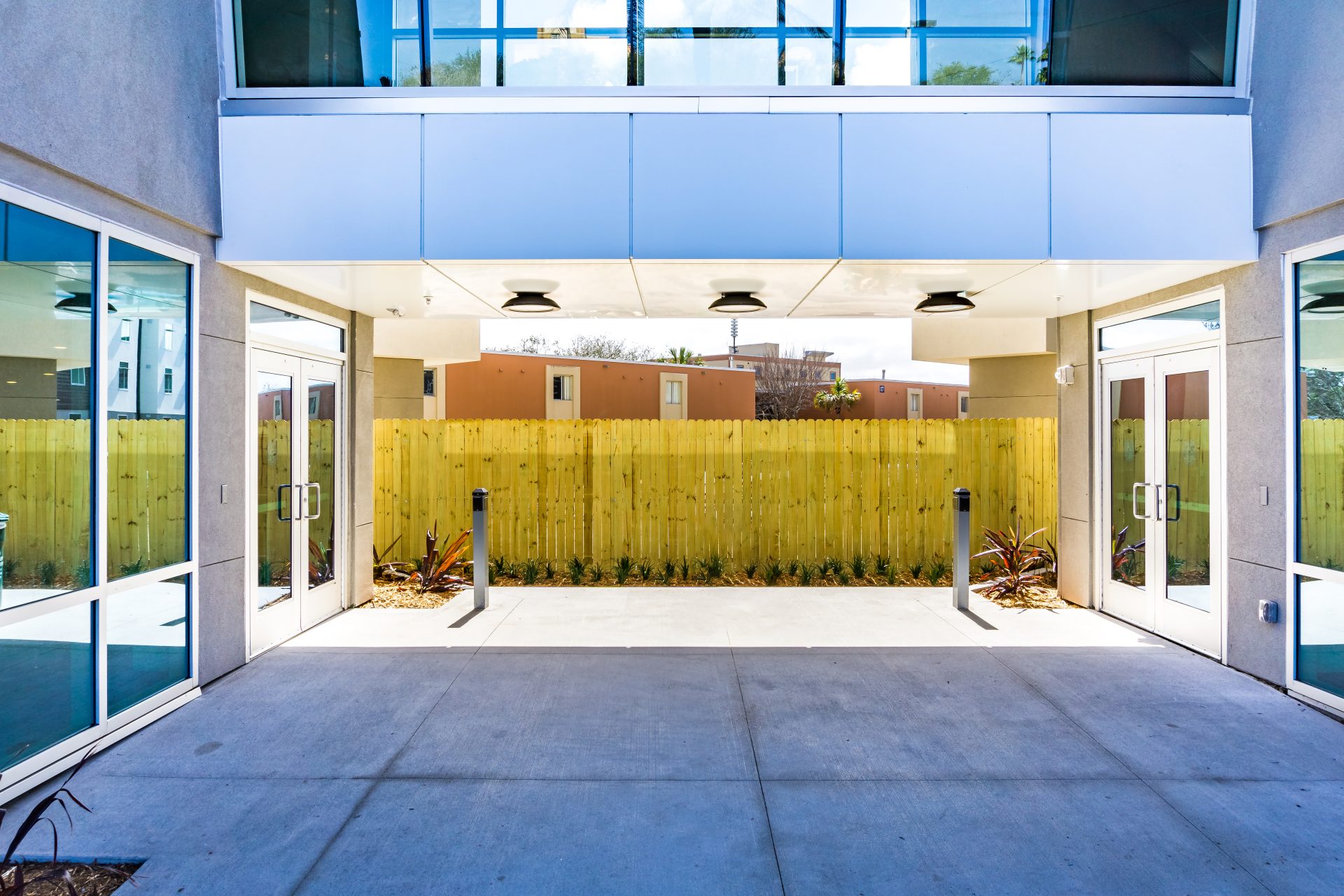
[1]One of the hardest-working elements of a building, entrance doors experience hundreds of thousands, or even millions, of openings and closings every year. Much more than utilitarian access points, exterior doors are integral to a building’s identity and the experience of its occupants. Architects carefully balance durability, security, accessibility, sustainability, and visual appeal when selecting entrance systems. Understanding the flexibility offered by standard, modified, and custom doors expands aesthetic and functional options.
Advantages of aluminum
Aluminum is the material of choice for manufacturing commercial doors and other fenestration systems such as windows, curtain wall, and storefronts. Aluminum’s strength, light weight, corrosion resistance, recyclability, and ease of fabrication make it suitable for a broad range of applications. Approximately one-third the weight of iron, steel, copper, or brass, aluminum extrusions are easier to handle, less expensive to ship, and an architecturally attractive material.
Millions of aluminum entry doors are installed across the country, and some have been in service since the 1950s.
The extrusion process forms metal products by pushing a heated billet of aluminum through a die. The shape of the die determines the shape of the extrusion. Using aluminum billet and a powerful hydraulic press, extruders can produce almost any shape imaginable. A painted or anodized finish can be applied later, or the extrusion may be left unfinished (mill).
Aluminum extrusions in door and entrance systems include varying wall thicknesses and internal reinforcement in the profile design. Cold-weather applications are particularly well served by thermally improved extrusions. Aluminum becomes stronger as temperatures fall, and in warm weather applications, it will not warp. Aluminum also combines strength with flexibility; it can flex under loads or spring back from the shock of impact, such as from an explosive blast or from windborne debris in storms and hurricanes.
The material does not burn, even at extremely high temperatures, and does not produce toxic fumes. Extrusions also offer excellent corrosion resistance, as they do not rust. Aluminum surfaces are protected by their own naturally occurring oxide film, a protection that can be enhanced by anodizing, painting, or other finishing processes.
Supporting environmentally responsible building projects, aluminum is the third-most abundant element in the Earth’s crust (in the form of bauxite), next to oxygen and silicon. At the end of its useful life as a door or entrance system, aluminum can be recycled infinitely without degradation of its mechanical properties. Green building guidelines, including the LEED rating system, recognize the performance and sustainability of aluminum products.
Stiles, rails, and key components
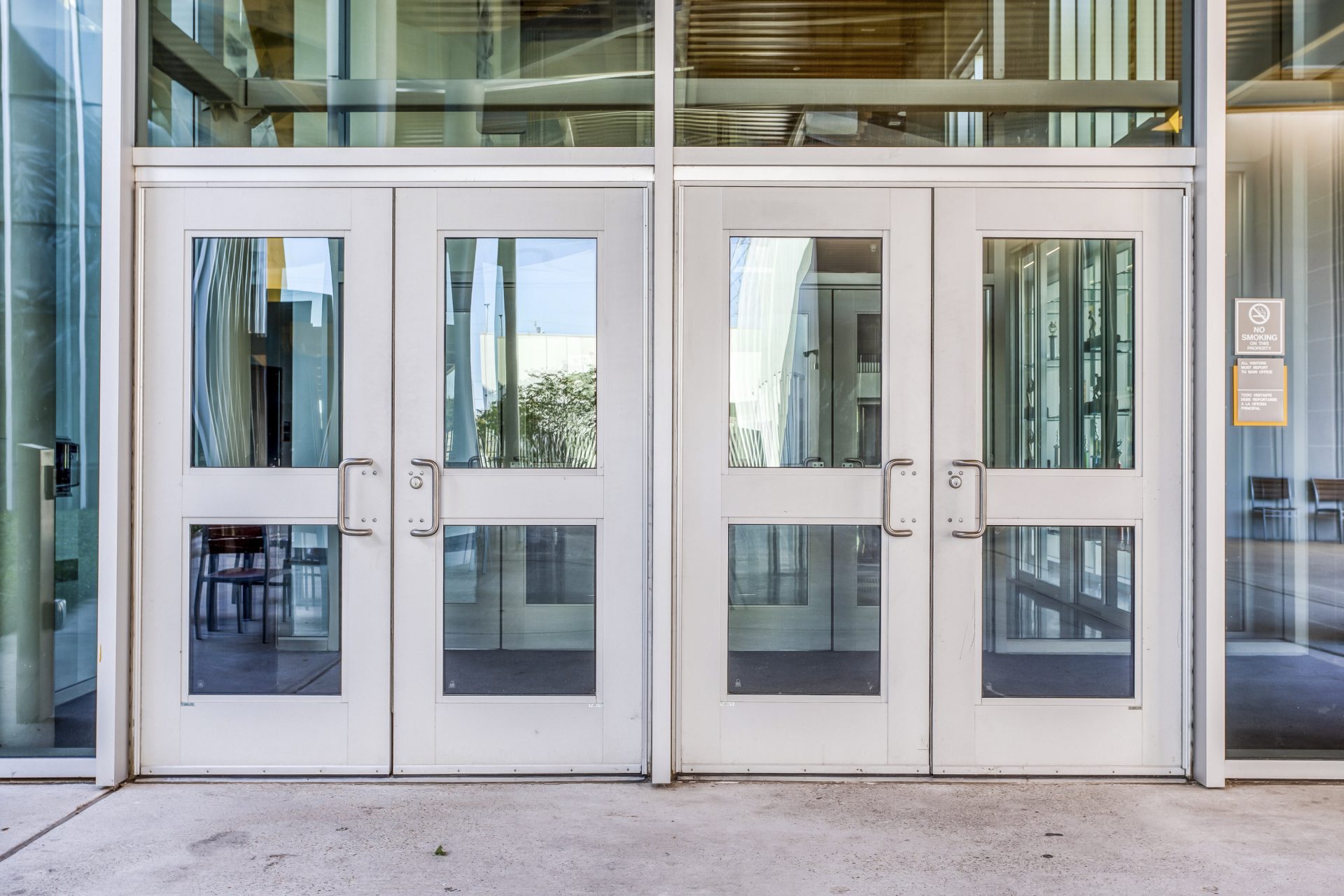
A single door may be called a leaf, and two doors together are called a pair. The extruded aluminum components of commercial entrance systems include stiles, rails, and framing.
Framing
The framing that surrounds an operable door includes a header across the top and jambs along the sides. The hardware attached to these components allows the doors to open, close, and lock. Thresholds are installed at the bottom of a door frame to keep water and weather out, and to facilitate a smooth transition from one side to the other.
Stiles and rails
Stiles are the vertical members of a door that span the full height. Rails are the horizontal members of a door that run between the stiles. Typically, the bottom rail is 101.6 to 254 mm (4 to 10 in.) high, and the stiles are 50.8 to 127 mm (2 to 5 in.) wide.
Glass stops
Glass stops in the rails and stiles hold the glass in place. As standard, these supports have thicknesses ranging from 6.4 to 25.4 mm (0.25 to 1 in.). An elastomer glazing gasket, normally composed of ethylene propylene diene monomer (EPDM), is used in conjunction with glass stops to hold the glass in place. Varying the width of the gasket allows for variance in glass infill thickness.
Modifications
Modifications to the standard templates can be offered that feature a variety of rail and stile sizes and support nonstandard glass thicknesses. The height of the top rail usually matches the width of the vertical stiles. The height of the bottom rail is generally larger than the width of the vertical stiles.
Medium and wide vertical stiles also accommodate the use of many non-standard panic exit devices commonly found in public and educational buildings. Modified top rails increase the face dimension of the extruded member to accommodate a door closer or other hardware item. Modified bottom rails increase the height for appearance or to prevent foot contact with the glass, and support accessibility compliance with the Americans with Disabilities Act (ADA)[2]. Modified doors may also add a vertical intermediate stile or a horizontal mid-rail.
The facility type and expected usage of its entrance will influence the robustness of its design. Light-duty doors may be opened and closed only 500 times (cycles) a day, and heavy-duty doors can exceed 1,500 cycles. The doors’ construction, hardware, and other components must be selected to withstand their setting.
Custom doors are specialized beyond modified entrance systems, such as heavy wall institutional doors with 50.8 mm (2 in.) thick profiles, 4.8 mm (0.19 in.) thick extrusion walls, and face dimensions of 76.2 to 152.4 mm (3 to 6 in.). Other examples include blast-mitigating doors, hurricane impact-resistant doors, and doors with hardware that is not provided as standard by the manufacturer.
 [3]
[3]Framing dimensions
Standard door leaf dimensions are 0.9 x 2.1 m (3 x 7 ft) or 1.1 x 2.1 m (3.5 x 7 ft). The framing dimensions add 44.45 mm (1.75 in.) or 50.8 mm (2 in.) vertically, and 88.9 mm (3.5 in.) or 101.6 mm (4 in.) horizontally. To accommodate transom units above the doors, the frames may extend up to 3 m (10 ft) in height.
Profiles on standard door frames are 44.5 x 114.3 mm (1.8 x 4.5 in.) or 50.8 x 114.3 mm (2 x 4.5 in) for 25.4 mm (1 in.) thick insulated glass units (IGUs). Some manufacturers offer 50.8 x 165.1 mm (2 x 6.5 in.) door profiles as standard. Pile weathering strips are used at the door stops of standard products with optional sweeps at the bottom rail.
Modified and custom door frames are available in larger sizes, up to 1.2 x 2.7 m (4 x 9 ft) for a single door, with reveal and flush-with-frame options, as well as nonstandard frame configurations, such as continuous headers and banks of doors. Transom frames on modified doors may reach up to 7.3 m (24 ft) in height.
Strength and longevity
In an aluminum door dominated by glazing, the outer perimeter of the door must do structural work. The intersection of the rails and stiles creates a corner that can be constructed using tie rods, shear blocks, and corner blocks, welding, or a combination of these methods. The strength of a door depends on the strength of its corners.
Doors with welded or tie-rod corner construction methods are equally durable, but they have different advantages. Considering installation, serviceability, and longevity for the doors, tie-rod construction delivers greater savings and flexibility. If the door needs to be modified in the field, the tie rods can be unfastened, and the door can be taken apart without compromising its structural integrity, durability, or finish.
During their long lifespan of operation, aluminum doors with tie-rod construction can be refurbished by replacing worn parts. An installer can adjust the glass blocks and fasteners to bring door leaves back to square with the openings. Replacing the weatherstripping and seals optimizes air tightness. Worn-out individual elements, such as a rail or a stile, can be replaced on tie-rod doors.
Hardware packages
Manufacturers of aluminum doors offer inexpensive options for push bars, pull handles, closers, hinges, pivots, and locks. Assisted operators and accessible thresholds also may be considered part of the standard offering to comply with the ADA. Standard hardware is made from aluminum, and sometimes from steel, such as mortised hinges. Be cautious in selecting other metals, such as brass. Placing incompatible metals in direct contact with one another can cause a galvanic chemical reaction, which can result in corrosion of the aluminum extrusions.
Hardware for modified doors may include push bars and pull handles mounted back-to-back or in special locations, continuous hinges, and intermediate hinges and pivots for doors that are larger or heavier than standard doors. Beyond standard deadbolts and panic exit devices, modified locking mechanisms are available as latch locks, hook and short-throw bolts, thumbturns, and electric strikes and panic devices. Nonstandard panic devices may reduce the clear opening of a door, making it noncompliant with the ADA.
Electric/magnetic card readers and other keyless entry systems, as well as electric hardware that requires power transfer from the frame to the door, are also available on standard, modified, or custom doors. Special-order push/pulls, hinging, or any other item not readily supplied by the manufacturer will also be included in a custom door.
If customization is essential, ask for an overview of the door manufacturer’s capabilities and services. Some may only prepare the door to accept the custom hardware. Others will also provide installation of the hardware.
Performance expectations
Most manufacturers classify thermally improved doors and frame extrusions as modified doors. To maintain the door’s structural integrity while reducing the transfer of heat through the aluminum components, a thermal break or barrier is necessary between the interior and exterior surfaces of the extruded profile. Thermally broken exterior entrance doors may be required in the northern two-thirds of the United States.
There are two principal types of thermal barriers used in North America: polyurethane poured and debridged, and polyamide insulating strut. In addition to supporting energy efficiency goals and comfortable interior temperatures for occupants, thermally insulated door and frame extrusion components also reduce the occurrence of condensation and frost in cold climates.
In coastal climates prone to hurricane-force winds, building products must demonstrate their resilience to windborne debris. Depending on the size of the tested missile that a door can withstand, manufacturers may consider their hurricane impact-resistant products as either modified or custom.
Like hurricane-impact-resistant doors, blast-mitigating doors may be designated as modified, but are most often considered custom, as blast load requirements are project-specific. For more regular security considerations, modified and custom door products also may be specified to resist forced entry.
Glass options
By creating distinctive designs and improved functionality, entrances can incorporate glass and glazing with different interlayers, tints, patterns, prints, coatings, and more.
Polyvinyl butyral (PVB) interlayers are the standard for laminated architectural glass, commonly specified for safety glazing and enhanced sound attenuation. Colorful PVB interlayers can add a welcoming appearance and visual distinction. Rigid ionoplast interlayers can also enhance safety, security, structural integrity, and impact protection.
Low-e coatings remain a staple for high-performance entrance systems in buildings with energy-efficiency goals. In colder climates, room-side low-e coatings may provide additional thermal performance, but be cautious not to compromise condensation resistance.
Increasingly, bird-friendly glazing is being specified across the country and is required in certain jurisdictions and by some property owners. These glazing options can be created through a variety of techniques, including coated, printed, or etched patterns, or with laminated layers.
Finish choices
The aesthetic longevity of aluminum doors and entrances is closely tied to the specified performance of their painted coating or anodized finish. Selecting finishes that contain no or low volatile organic compounds (VOCs) also supports a healthy indoor environment.
Anodized finishes are produced through an electrochemical process that enhances the natural oxide layer on aluminum. Highlighting the natural metallic tones, anodized colors range from clear to bronze to black, with specialty colors like copper also available.
For high-performing finishes on exterior entrances, choose Class I anodize that meets the AAMA 611 specification, published by the Fenestration and Glazing Industry Alliance (FGIA)[4]. This ensures the anodized finish resists temperature, corrosion, humidity, and warping, and provides excellent wear and abrasion resistance with minimal maintenance.
When color choice is a priority, high-performance 70 percent fluoropolymer coatings offer nearly any conceivable hue, as well as specialty textured coatings. FGIA’s AAMA 2605 is the highest performance specification standard for these architectural coatings to shield against weathering, pollution, and aging.
The bottom line
Not surprisingly, the most economically priced entrance systems are standard doors. Modified doors are moderately priced, and custom doors are the most expensive.
Similarly, standard doors offer quicker lead times from order placement to arrival on the job site. With standard components and finishes, these doors may be ready for pickup or shipping in a couple of days. Modified doors with non-standard components, finishes, and hardware may take several weeks to arrive. Custom doors may take two months or longer to produce as specified.
Manufacturers’ warranties for aluminum entrance systems vary greatly, and it is critical to review them carefully before making a final selection. Working with a dependable manufacturer early in the project will ensure the highest quality, reliable thermal performance, within budget, and on-time, damage-free delivery.
Brian Tobias serves as a senior product marketing analyst for Apogee Architectural Metals, supporting commercial architects and building teams. With nearly 40 years of experience in the construction industry, his expertise focuses on aluminum doors, entrances, and other fenestration systems. Learn more at www.apogeearchmetals, or contact him at btobias@apog.com.
This feature originally appeared in the March/April 2026 edition of Metal Architecture, which you can find in our Digital Edition Archives.
- [Image]: https://www.metalarchitecture.com/wp-content/uploads/2026/05/FL_EmbryRiddleU_CharlesLeRette8616.jpg
- Americans with Disabilities Act (ADA): https://www.ada.gov/
- [Image]: https://www.metalarchitecture.com/wp-content/uploads/2026/05/TX_SamHoustonMSTC_BrianAustinPhotography.jpg
- Fenestration and Glazing Industry Alliance (FGIA): https://fgiaonline.org/
Source URL: https://www.metalarchitecture.com/articles/features/aluminum-doors-advantage/