Education, advocacy, and metal building excellence
by ciara_lalor-lindo | October 14, 2026 9:00 am
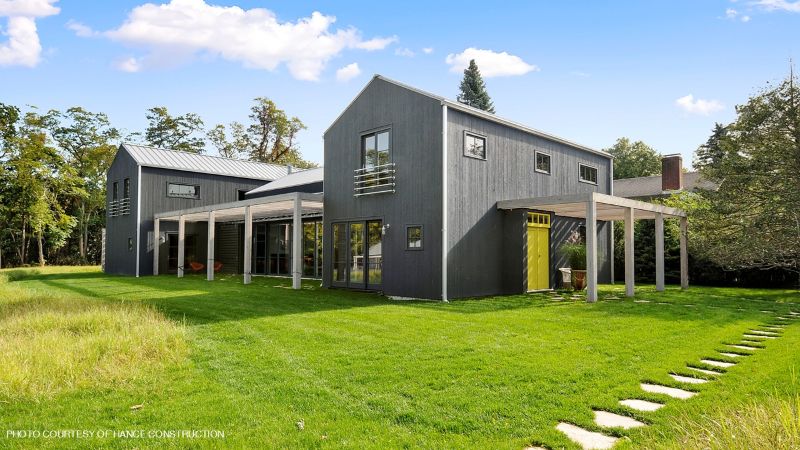
Metal building systems extend far beyond the basic, box-like structures that many architects may still associate with them. Today, they support complex designs, varied exterior materials, tall and clear-span spaces, and a wide range of architectural applications.
Members of the Metal Building Manufacturers Association see significant opportunities in schools, municipal buildings, data centers, sports facilities, and other projects where speed, cost efficiency, durability, and code compliance are priorities. They say education and collaboration will be key to helping more architects understand—and adopt—the possibilities of metal building systems.
As the MBMA celebrates its 70th anniversary, Metal Architecture asked four members to reflect on the industry’s past, present, and future. Their responses highlight the resources, community, and architectural opportunities that continue to shape metal building construction.
Robert Tiffin, national accounts manager at Silvercote, offers a uniquely integrated perspective from his ongoing work connecting architects and architecture students with knowledge of metal building systems. Tiffin also chairs the MBMA Architect Committee, and is the past president of the Metal Building Contractors and Erectors Association (MBCEA).
Amy Wirth, CEO of Sunward Steel, offers the perspective of a newer MBMA member, having joined the association less than five years ago.
Robert Major, vice president of Schulte Building Systems and Inland Buildings, represents companies closely connected to the association: Schulte has been a member since the company’s inception in 2005, and Inland is a charter member.
Rob Haddock, founder of S-5!, has been in the industry for five decades and provides a perspective as a member of the MBMA for since 2010.
Their responses celebrate the resources, community, and architectural opportunities unique to metal buildings and the MBMA.
MA: Metal building systems have changed significantly over the past 70 years. What do architects most often misunderstand about today’s metal buildings?
TIFFIN: A common misconception is that metal building systems have condensation problems and they’re leaky. In metal building systems, you put in the amount of insulation for the code, but make sure that you—in the purlins or the support for primary structure—fill that space, because if you don’t, then you have condensation, which then perpetuates part of the misconception.
WIRTH: That a metal building has a certain aesthetic. That it’s just a box and it’s steel, so it’s commercial or industrial. There is such great versatility in a metal building and the applications in which it can be used. As it becomes more accepted with architects and with building departments, there are a lot of opportunities for metal building manufacturers.
MAJOR: There’s a misconception that we can’t create complex structures. We can. I’ve done buildings over 80 feet tall in the metal building world. We can be creative. We run into architects who do not really know the versatility that a metal building can bring them. When it comes to what the building looks like as far as the exterior skins, it’s not just a metal panel look. You can use brick, block, insulated metal panels, and many options that don’t look like the old corrugated boxy type wall panels.
HADDOCK: Architects once viewed pre-engineered metal buildings primarily as basic shade and shelter structures. Because metal buildings were prefabricated, pre-engineered, pre-designed, or designed by a contractor, the architect was largely left out of the equation. Over the past five decades, that perception has shifted as the pre-engineered building community has incorporated a broader range of materials and design concepts. They’re not just metal sheds anymore. There was a time when the metal building was considered the ugly duckling. Today, you could say it’s become a swan.
MA: How has MBMA membership strengthened your work with architects?
WIRTH: Through the education and code compliance, our engineers continue to be updated on the rapidly changing environments, and as the building departments continue to change as a result of many variables, including climate change, for example, with fire and wind and snow, in the extreme weather events that we see throughout the country. There’s also a lot of value in the collaboration with other manufacturers. We all have the same challenges, and being able to have a peer group that has experience in those same kinds of challenges as we continue to grow is something that I think we can take advantage of and lean on.
TIFFIN: By being part of the MBMA, we have learned what are architects are interested in, how the AIA works, and we have learned some of our own limitations. For example, some specific data centers have to be able to withstand incendiaries or explosive results because of the critical nature of the server’s interior. Fiberglass-encased wall systems do not stop that, hence the reinforced concrete getting its fair share of the data center market.
MAJOR: The MBMA is so intertwined with knowing the market and trying to see ahead of the game. Many companies, not just in the metal building world, are very reactive. Being part of the MBMA helps you be more proactive with trends in the market before they become commonplace. The Architects Committee is getting the word out on the versatility that a pre-engineering metal building can bring. It was an ingenious move by the MBMA to partner with architectural schools, offer scholarships, and make a student competition. That has really helped bring awareness to young architects as they go into the workforce. There is a huge benefit to having some architects that you work with on a project-by-project basis and, when we’re quoting a project, that we are quoting it to the most current code.
HADDOCK: It’s helped increase acceptance of metal building construction within the architectural community. The standing seam roof has played a prominent role in that evolution and has become more and more popular among architects and building owners. S-5! attaches ancillaries to those roof types.
MA: Where do you see the strongest architectural opportunities for metal building systems?
WIRTH: I think that there is a lot of opportunity in the municipality, schools, and private businesses that are really looking for a cost-effective alternative to conventional construction.
TIFFIN: Data centers, indoor sports, schools, and vocational training centers. Because of the number of communities with fixed or limited budgets, a metal building system for a primary or secondary education facility is ideal. It meets all the codes for the county and is quick to assemble. It has clear spans. And it can be erected in a short period of time. This is also true in municipal works—from water treatment centers to other public works to arenas—as well as in office and mixed-use developments. In some particular retail environments, metal building systems are fast. For example, at O’Reilly Auto Parts, as a retail operator, your cash register is ringing in 45 days from the day you cleared your dirt. Costco: 100 days.
MAJOR: When it comes to educational facilities, you see a lot of that opportunity with metal buildings. As we all know, school systems have a budget. They also want something that has curb appeal, that blends in with the surrounding community.
HADDOCK: The strongest opportunity is in buildings that are intended and designed to last for a long time. That includes municipal buildings, educational buildings, commercial buildings of nearly every kind, with the possible exception of a shopping center developed with the intention to fill leases and sell within five or 10 years.
MA: Looking ahead, what do you hope to see in the partnership between MBMA members and the architectural community over the next decade?
WIRTH: I really hope to see a lot of growth and collaboration in making metal buildings more of a solution for architects. Especially with the changing environments, steel is much more fire resistant, for example, than wood, so they can really better understand the cost effectiveness and the efficiencies that steel can bring to a project.
TIFFIN: We hope to evolve from awareness to adoption to advocacy. With the MBMA having so many engineers, we have so many white papers. They researched everything. They have explored pre engineered metal buildings so extensively, including how they perform in hurricanes, earthquakes, condensation, energy consumption, and more. Every metal building system can meet an energy code, they can meet wind ratings, they can meet earthquake ratings. I hope to see architects wonder ‘Why would you not have a metal building?’
MAJOR: Architects have associations that they’re members of, and collaborating more with those associations is something that I would like to see in the future. I think the more opportunity we have to interact with the architectural community, the better it will become for the flow and the speed of the project.
HADDOCK: There was a time when MBMA membership consisted of 100 percent metal building manufacturing members. Since then, the association has made huge strides in developing cooperative efforts with related trade associations and trade groups like the MBCEA and the MCA. An association, by definition, brings together people with shared interests and a common purpose. Cooperative efforts involving other trade groups and people from across all sectors of metal construction support the broader acceptance of this type of construction within the architectural community.
The message from MBMA members is clear: Metal building systems are not limited to simple, utilitarian structures. They can deliver design flexibility, clear spans, rapid construction, code compliance, durability, and cost efficiency across a wide range of projects—from schools and municipal facilities to sports complexes and commercial buildings.
As manufacturers, architects, engineers, educators, and related trade groups work together to share knowledge and engage students and architects, they demonstrate what today’s metal building systems can do.
Through education, collaboration, and advocacy, the MBMA continues to make metal building systems a more familiar and compelling option for architectural design.
This feature originally appeared in the August/September 2026 edition of Metal Architecture, which you can find in our Digital Edition Archives.
Source URL: https://www.metalarchitecture.com/articles/features/education-advocacy-and-metal-building-excellence/