From basic shelter to building blocks with infinite possibilities
by ciara_lalor-lindo | October 9, 2026 9:00 am
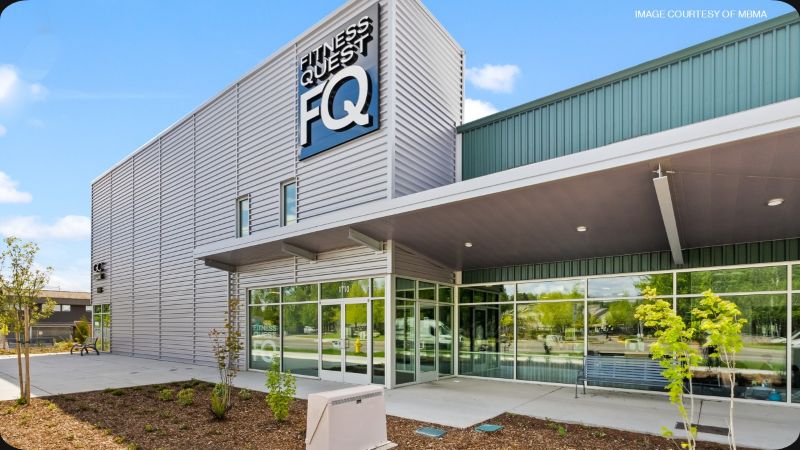
When 13 metal building system manufacturers came together 70 years ago as the founding members of the Metal Building Manufacturers Association (MBMA)[1], they did so with the vision to bring high-quality building solutions to the construction industry.
Metal buildings, once viewed only as storage, shade, or basic shelter, are now seen as building blocks with infinite design options. Further, our membership has grown to 44 building manufacturers and 78 associate members.
Turning 70 has us reflecting on past insights. Don Pratt, who served as MBMA chairman in 1983 and on the executive committee for several years prior to his chairmanship, once said: “Our industry has a unique history, and MBMA is a unique organization. It has created a place where competitors can work in cooperation to solve industry issues. This has led to a steady stream of new construction and system-building technologies that have changed individual member companies and the industry as a whole.”
Leading the industry in learning and discovery
Through research and education, MBMA has established leadership in the use of metal buildings in the construction industry.
“Modern design and construction environments have changed rapidly, especially in the last decade,” says MBMA director of research and engineering, Jon-Paul (JP) Cardin, PE. “It can be challenging for architects and others in construction to keep up with the pace of change in codes, standards, and manufacturing advancements. The MBMA acts as a strategic partner, equipping professionals with the resources they need to successfully navigate these complexities.”

The latest developments in educational assets
Subcommittees and task groups are always at work within the MBMA committee structure, updating current documents and creating new ones. These resources explain how metal building systems can be designed to comply with energy code requirements across North America.
Among those resources is the Metal Building Systems Manual. First published in 1959, the manual is updated every six years to incorporate code and other industry changes. The latest edition was completed in 2024 and reflects updates from IBC 2024 and American Society of Civil Engineers 7-22. We are two years into gathering updates that will come out in 2030.
In 2024, “Common Industry Practices” was published separately from the manual to provide timely revisions. Created for builders, contractors, architects, engineers, owners, and manufacturers, the free guide defines roles and serves as a checklist for necessary documentation. A chapter about building information modeling was added in February 2026, creating the second edition of “Common Industry Practices.”
“Having BIM in an MBMA document is significant because we know how vital BIM is to architects,” notes Vince Sagan, PE, MBMA’s director of codes and standards, highlighting the popularity of a BIM-related FAQ section on the association’s website.
The second edition of the Roof Framing Design Guide for Metal Building Systems was also released in 2026.
More updates are planned, including adding details about insulated metal panels to both “Common Industry Practices” and the Fire Resistance Design Guide.
“The roster of MBMA associate members providing IMPs has expanded notably in recent years, and we look forward to welcoming more to our group to support future research, data delivery, and education surrounding IMPs and metal buildings,” says Sagan.
Collaborative, comprehensive architectural opportunities
MBMA has created meaningful lunch-and-learn sessions for architects focused on up-to-date field insights. These sessions enhance their understanding of metal building constructability, detailing coordination, sequencing, and common specification gaps, as well as ways to reduce downstream requests for information, redesigns, and installation issues.
The AIA-approved CEU courses, where LUs can be earned, include: “Metal Building Systems 101,” “Creative Design Alternatives Using Metal Building Systems,” “Advanced Sustainability Potential Using Metal Building Systems,” and MBMA’s newest course, “Using Metal Building Systems to Meet and Exceed the Energy Code.”
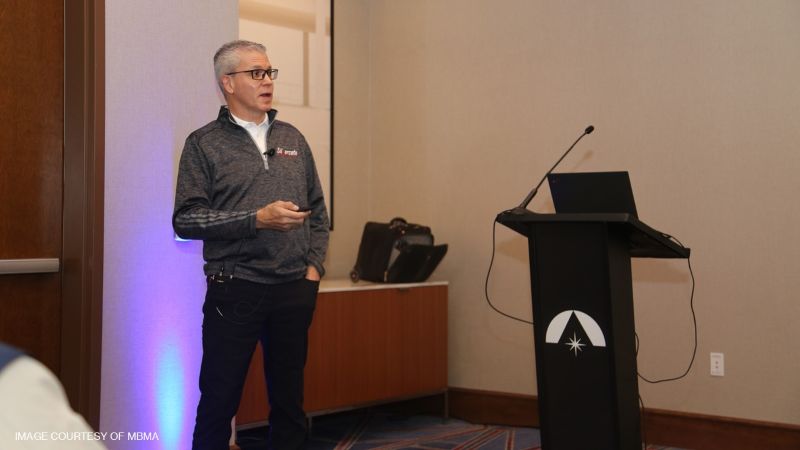
“MBMA and its Architect Committee have been intentional, and a bit strategic, toward making metal building projects easier for architects. It’s about getting inside architectural conversations and turning perception gaps into action through AIA engagement, targeted LUs, and growing relationships,” says Robert Tiffin, chair of MBMA’s Architect Committee and national sales manager for Silvercote. “Our efforts are focused on listening for the ‘voice of the drawing set’ and using it as feedback about how architects truly learn, to refine and better target how we influence the specification of metal building systems.”
He adds, “We are leaning into this front-end design engagement because it sharpens how we show up and solve problems in the field. In return, when I conduct these sessions, I see architects gain not just confidence in metal building systems but a clearer path from intent to spec. This is where good design actually becomes buildable.”
Students and the MBMA
Lunch-and-learn sessions represent only a fraction of the comprehensive educational programs developed by MBMA. Six years ago, the MBMA Student Design Competition was launched to give architecture students a way to explore metal building designs under the guidance of their professors. This year’s contest is to design a library/community knowledge hub.
Past innovations focused on other categories, like a botanical garden and events center, a new campus recreation center, a new nature center and environmental research facility, a fire station and department headquarters, and a one- or two-story elementary school to house approximately 200 students.
Cardin, who manages the design competition with a panel of architecture professors, practicing architects, and industry experts, says, “The competition challenges students to develop innovative designs using a metal building system to meet the needs of their community. The fifth year of the MBMA Design Competition had 93 students from nine different schools put forth a total of 80 entries. That was the most submissions ever, and we are excited to see what inspiring designs come in this year.”
Creating a legacy
Evident in what architects are creating with metal building systems—schools, museums, car dealerships, retail stores, offices, restaurants, breweries, churches, and more—their growing popularity would not have happened without the MBMA.
In fact, our members represent billions of dollars in annual steel shipments. Their custom structures account for more than one-quarter of the total non-residential, low-rise construction market in the United States.
The creation of MBMA set in motion 70 years of growth and change focused on influencing and interpreting building codes, participating in product testing, and committing to quality accreditation. None of this happens without collaboration among members and a partnership with architects. Together, we are a powerful force that is positively impacting the built environment.
Tony Bouquot is the general manager of the Metal Building Manufacturers Association, headquartered in Cleveland. You can reach him at tbouquot@mbma.com, and more details can be found at mbma.com[2].
This feature originally appeared in the August/September 2026 edition of Metal Architecture, which you can find in our Digital Edition Archives.
- Metal Building Manufacturers Association (MBMA): https://mbma.com/
- mbma.com: https://mbma.com/
Source URL: https://www.metalarchitecture.com/articles/features/from-basic-shelter-to-building-blocks-with-infinite-possibilities/