Transformative Metal Roofing Design:
A Catalyst for Architectural Innovation
by hanna_kowal | May 4, 2026 11:04 am
 [1]
[1]Metal roofing has experienced a profound evolution over the years. Once associated primarily with agricultural structures, factories, and warehouses, modern metal roofing systems are now specified for a wide range of project types, from luxury homes and museums to hospitals, schools, stadiums, and civic icons. This shift reflects not only advances in coatings, fabrication, and engineering, but also a growing understanding that metal is among the most expressive and high-performing roofing materials available to designers today.
For architects, designers, and building owners, metal roofing no longer represents a tradeoff between performance and aesthetics; it has become a catalyst for design innovation. Whether through nuanced texture and refined color or bold geometry and intricate forms, metal enables designers to bring ambitious architectural concepts to life, often in ways that other roofing materials cannot match. When thoughtfully integrated, metal roofing becomes one of the most impactful visual and functional components of the building envelope.
Design freedom through versatile metal roofing
Metal roofing offers an unusual combination of strength and malleability. While the material is rigid enough to provide long-term structural integrity, it can also be roll-formed, curved, tapered, folded, and fabricated into an almost unlimited range of shapes. This makes metal uniquely suited to both traditional and modern architectural styles.
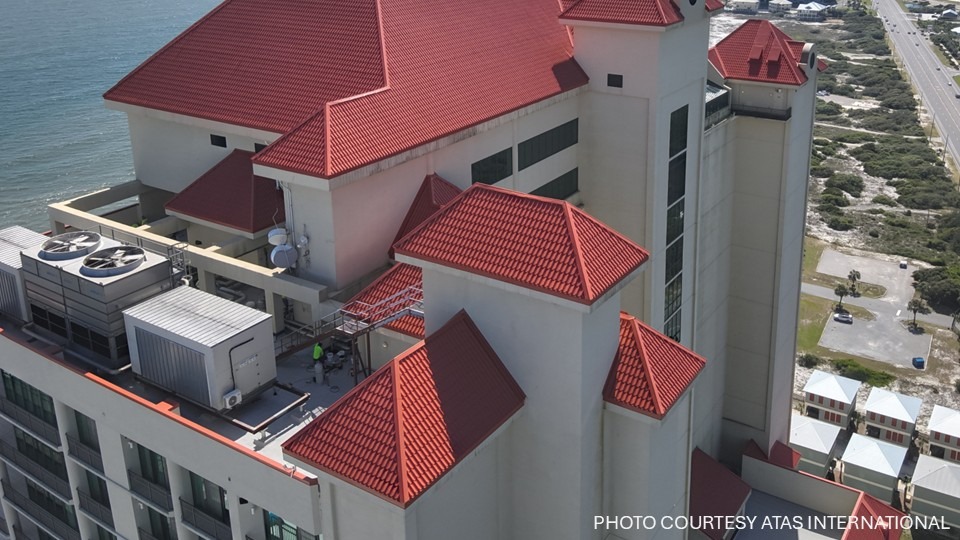
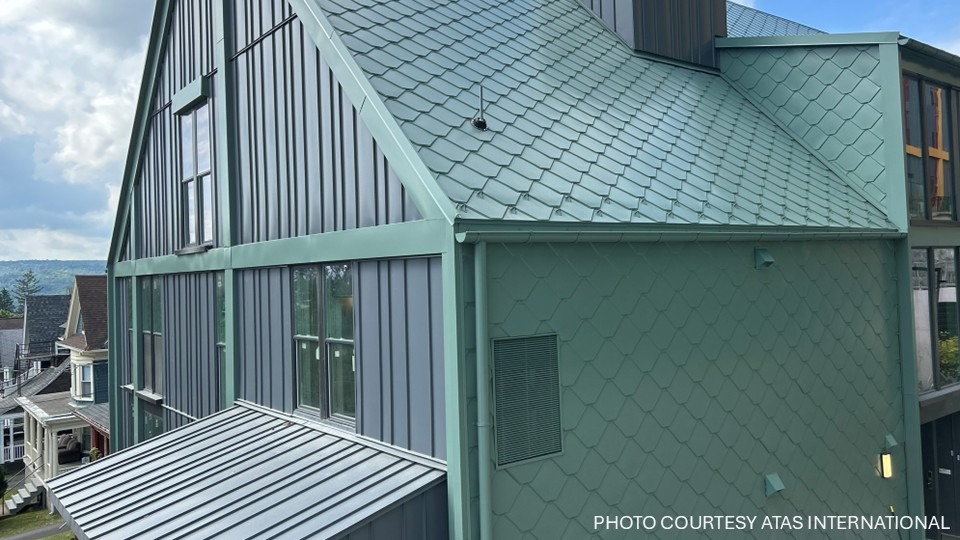
Standing seam profiles can deliver a crisp, contemporary aesthetic, while batten seam, shingle, tile, and slate profiles can replicate historic or handcrafted appearances. Designers are not limited to a single look, as metal roofing systems can be mixed and layered, or even transition seamlessly into metal wall panels, creating a unified exterior skin.
This versatility is particularly valuable in today’s architecture, where hybrid styles and bold forms are increasingly common. Whether the goal is to complement a traditional streetscape or make a striking modern statement, metal roofing can be adapted to match the architectural intent.
A more expressive color palette
One of the most overlooked design advantages of metal roofing is color. Modern paint technologies, including polyvinylidene fluoride (PVDF) and silicone-modified polyester (SMP) coatings, allow manufacturers to offer hundreds of standard and custom colors with long-term color retention and fade resistance.
Metal roofing can be finished in everything from subtle earth tones and natural metals to vibrant hues and deep, saturated shades. Designers can select colors that harmonize with surrounding materials, reinforce branding, or create visual contrast. Matte, gloss, metallic, and textured finishes further expand the palette, allowing roofs to be understated or expressive depending on the project goals.
Color also enables creative strategies such as:
- Roof plane delineation, where different roof planes are highlighted or differentiated.
- Brand integration for corporate, institutional, or retail buildings.
- Contextual architectural blending with surrounding landscapes or
historic districts. - Solar reflectance optimization for energy performance.
Unlike many roofing materials that limit designers to a narrow range of factory colors, metal roofing provides true freedom of expression.
 [2]
[2]Surface texture, light, and depth
Beyond color, metal roofing introduces texture and shadow, adding depth to building design. Panel ribs, seams, folds, and surface treatments create changing patterns of light throughout the day. As the sun moves, metal roofs come alive with subtle shifts in tone and contrast.
This dynamic quality can be used intentionally to emphasize roof geometry, highlight architectural features, or add visual interest to large roof expanses. Profiles such as standing seam or batten seam naturally create rhythm, while staggered or tapered panels, or custom seam spacing, can introduce movement and scale.
Textured finishes, including embossed metals, stone-coated steel, or brushed surfaces, add another layer of sophistication, particularly on highly visible roofs.
Transforming architecture with metal
One of the greatest design opportunities for metal roofing lies in its ability to follow complex shapes. Unlike rigid roofing materials that require flat planes and simple slopes, metal panels can be curved, arched, or tapered to accommodate dramatic roof forms.
This allows architects to design:
- barrel vaults
- conical towers
- wave-like rooflines
- faceted geometries
- dome structures
- free-form curves
Custom-fabricated metal panels can be engineered to match precise radii and angles, ensuring that even the most ambitious roof designs are weathertight and structurally sound. This makes metal a natural choice for signature architecture, cultural buildings, transportation hubs, and civic projects where roof form plays a defining role.
 [4]
[4]Coordinated building envelope integration
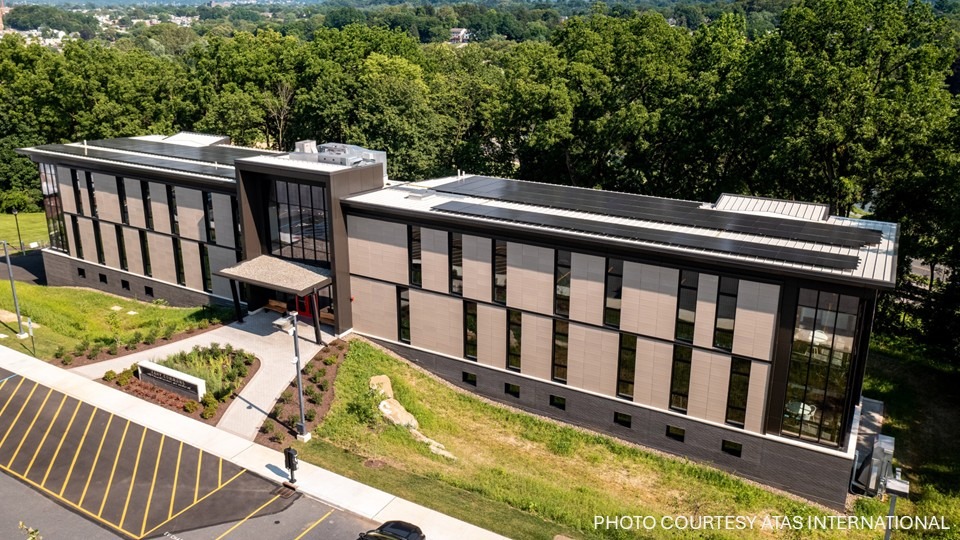
Metal roofing does not have to stop at the eave. Increasingly, architects are using metal to create a continuous exterior skin that flows from roof to wall. By using compatible metal wall panel systems, parapet details, and trim components, designers can achieve a clean, modern appearance with minimal visual interruptions.
This roof-to-wall continuity offers both aesthetic and functional benefits. Visually, it allows for strong geometric forms and unified color schemes. Technically, it simplifies detailing, reduces potential water infiltration points, and improves overall building performance.
In mixed-material designs, metal roofing also pairs well with glass, wood, concrete, masonry, stucco, and fiber cement panels, making it easy to balance warmth and texture with precision and durability.
Performance as the foundation for design
Great design is not only about appearance, but also about how a building performs over time. Metal roofing enhances design freedom by removing many of the limitations associated with other roofing materials.
As metal roofs are lightweight, they can often be installed over existing roofs (depending on local building codes). This opens the door to renovations, additions, and adaptive reuse projects where other roofing options might be too heavy.
Metal roofs are also engineered to handle:
- high wind loads
- heavy snow and ice
- thermal movement
- seismic activity
- extreme temperature swings
This reliability allows architects to push the boundaries of roof geometry and scale without compromising safety or longevity.
Design that lasts—visually and environmentally
Sustainability is now a driver of design decisions, and metal roofing aligns naturally with sustainable architecture. Most metal roofing contains a high percentage of recycled content and is 100 percent recyclable at the end of its life. Unlike asphalt shingles or composite roofing materials, metal does not degrade into landfill waste.
Metal roofing also supports energy-efficient design through reflective coatings, cool roof technologies, and compatibility with insulation and ventilation systems. In warm climates, reflective metal roofs can significantly reduce heat gain, while in cold climates they shed snow efficiently and support continuous insulation (c.i.) strategies.
From a design standpoint, sustainability is also about visual longevity. Metal roofs retain their appearance for decades, avoiding the streaking, fading, and deterioration common with many other materials. A building that looks good decades after construction is a sustainable achievement.
Integrating renewable energy solutions
Modern roofs do far more than keep out the weather; they host solar panels, skylights, and mechanical equipment. Metal roofing is uniquely suited to support these technologies without compromising aesthetics.
Standing-seam metal roofs, for example, allow solar panels to be attached with clamp systems that do not penetrate the roof surface. This preserves the roof’s weather-tight integrity while allowing clean, visually integrated solar installations. Snow guards, walk pads, and rooftop equipment can also be added without damaging the panels.
For architects, this means sustainability features can be incorporated without cluttering the roof or detracting from the overall design.
 [5]
[5]Design realized in detailing
The true design potential of metal roofing is realized in the details. Trim, flashing, fascia, soffits, and edge conditions can be customized to reinforce architectural themes and ensure a high-end finished appearance.
Unlike many roofing systems that rely on off-the-shelf accessories, metal roofing components are often fabricated to match the project. This allows designers to specify clean edges, sharp corners, hidden fasteners, and custom profiles that elevate the roof from a technical necessity to a design feature.
Attention to detail also improves durability by ensuring that water, wind, and thermal movement are managed properly, protecting both the building and the design intent.
Versatility across multiple building sectors
The design flexibility of metal roofing makes it suitable for virtually every building type:
- Residential—from modern homes to traditional cottages and mountain lodges.
- Commercial—retail, office, hospitality, and mixed-use developments.
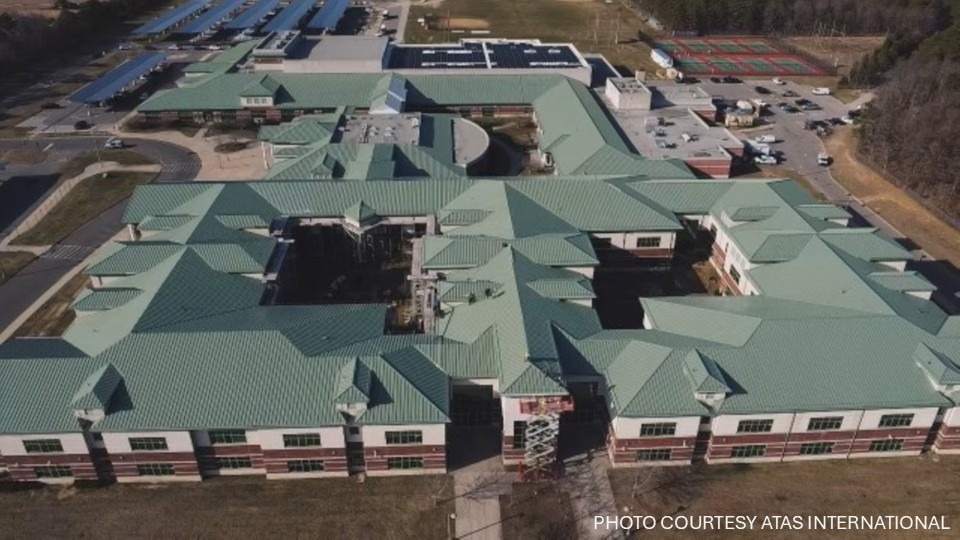
- Institutional—schools, universities, hospitals, and government buildings.
- Cultural—museums, performing arts centers, and places of worship.
- Industrial—where performance and aesthetics increasingly go hand-in-hand.
In each case, metal roofing allows architects to tailor the roof to the project’s specific visual and functional needs.
Confidence in every detail
Perhaps the greatest advantage of metal roofing is that it allows architects to design with confidence. The material’s proven durability, extensive testing, and long service life mean that creative ideas need not be sacrificed for fear of premature failure or excessive maintenance. With proper specification and experienced installers, metal roofing systems routinely last over 50 years. This gives building owners a long-term return on investment (ROI) while preserving the original design vision.
Inspired roofline solutions with metal
Metal roofing has evolved far beyond its utilitarian roots to become one of today’s most compelling instruments for architectural expression. With exceptional flexibility in color, profile, texture, and performance, it empowers designers to challenge conventions, explore new forms, and create buildings that are as striking as they are durable.
When metal roofing is approached not as a commodity, but as a creative material, architects and specifiers open the door to remarkable possibilities. From quiet sophistication to bold statements and high-performance sustainability, metal roofing offers a foundation for inspired design to flourish.
As buildings are called upon to perform more, endure longer, and communicate stronger design intent, metal roofing is uniquely positioned to help shape what comes next. It defines the future of architecture, one distinctive roofline at a time.
Lee Ann M. Slattery, FCSI, CDT, CCPR, LEED AP BD+C, is the sales support manager at ATAS International and the chair of the Metal Construction Association (MCA). She has more than 30 years of experience in sales and marketing in the architectural building products industry. Slattery served as the Middle Atlantic Region institute director on the national board of the Construction Specifications Institute (CSI) for four years and was elevated to fellowship in CSI in 2020. She currently serves as a director of the Greater Lehigh Valley AEC Foundation and of the Lehigh Valley Let’s Build Construction Camp for Girls. In 2024, she received the Women of Influence and Circle of Excellence awards from Lehigh Valley Business. In 2025, Slattery was recognized with a Lehigh Valley Business Icon Award for her notable success and strong leadership, both within her field and in the wider community.
This feature originally appeared in the March/April 2026 edition of Metal Architecture, which you can find in our Digital Edition Archives.
- [Image]: https://www.metalarchitecture.com/wp-content/uploads/2026/05/Slide6.jpg
- [Image]: https://www.metalarchitecture.com/wp-content/uploads/2026/05/Slide5.jpg
- Fahy Commons: https://boundless.muhlenberg.edu/priorities/fahy-commons/
- [Image]: https://www.metalarchitecture.com/wp-content/uploads/2026/05/Slide3.jpg
- [Image]: https://www.metalarchitecture.com/wp-content/uploads/2026/05/Slide4.jpg
Source URL: https://www.metalarchitecture.com/articles/features/metal-roofing-design/