Sight Sensitive Facility
by Stacy Rinella | January 17, 2024 7:00 am
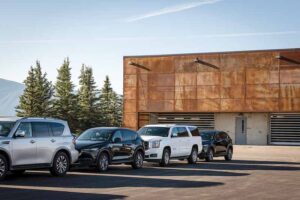 [1]
[1]the QTS can see up
to 200 vehicles.
Photos courtesy Audrey Hall
In Wyoming’s Grand Teton National Park sits Jackson Hole Airport, a facility renown for its sustainability and environmental initiatives. However, when the existing back-of-house rental car facilities were not aligning, proving to be disorganized, outdated, and not meeting sustainability standards, it was time for a change.
The quick turn around (QTA) facility provides three basic functions: vehicle fueling, washing, and detailing. During peak times, each rental company can run up to 200 cars through the facility per day. These needs translated into a fuel island, a washing building, and a detailing building.
To better handle these functions at the nation’s only airport situated within a national park, a new QTA facility was developed, providing a simple, yet site sensitive solution.
 [2]
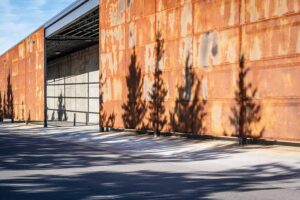
[2]According to Paige Hobson, project manager, “The sustainability concerns are addressed specifically through the building systems and infrastructure that were designed to support the operations (i.e. water efficiency, grey water storage, etc.). Those are givens that should always be implemented with all the strides our industry has made in reducing the footprint of the built environment.” Hobson adds, “Architecturally, as related to the building structure itself, the materials, including steel, were chosen to be incredibly long lasting and durable which reduces the need for replacing materials and the waste associated with upkeep over the decades. The design is intended to be timeless so that the building exists for a long time to come.”
Seasonally sensitive
The QTA is located on the south edge of the airport; its orientation derived from the existing east access road and the west row of buildings and hangars. Overall site planning and space program information was provided by the Jackson Hole Airport based on existing constraints, increasing demand, as well as future phasing and growth of airport development.
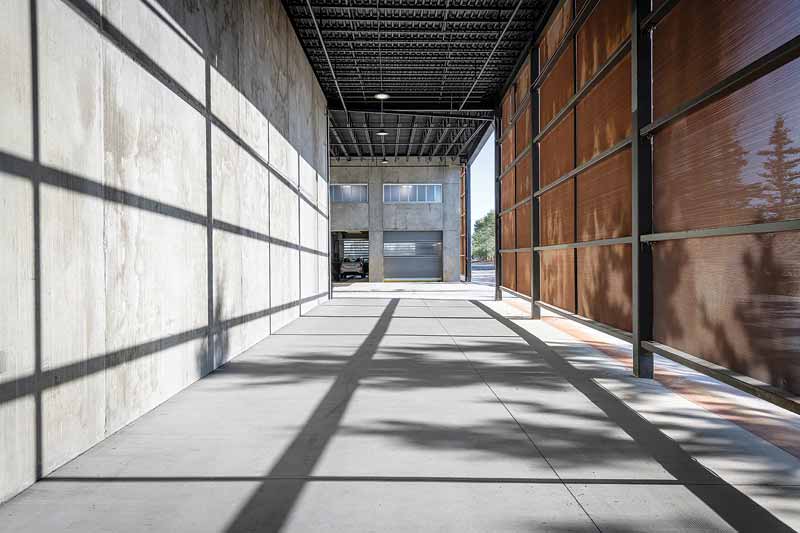
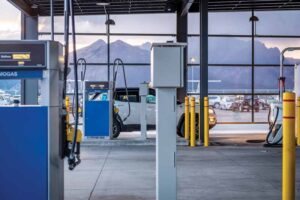
The three program spaces all reside under one large, heroic low-sloped roof. Every winter Jackson Hole gets an average snowfall of approximately 10 m (32.7 ft), and the continuous roof provides overhead protection from snow and rain in between the two buildings and at the exterior fuel island. Hobson says this is a direct response to providing shelter for the employees to efficiently do their jobs outside during Wyoming’s varied seasons.
Rustic details
The complex is wrapped in a perforated, rusted metal screen with washing and fueling functions hidden from public view. Each of the three components are organized into three independent bays to service the three different rental car companies.
“The material palette came from the desire to maintain a sense of cohesion and consistency with the airport campus overall,” explains Hobson. “There is an identity which has already been successfully established at the main terminal so the goal is and will continue to be to align with this aesthetic that is associated with the Jackson Hole Airport.”
 [3]
[3]Hobson says the other reasoning behind the material palette is to draw from the beautiful context in which the airport campus resides. “CLB feels strongly about our projects being ‘Inspired by Place’ which can come to fruition through form and materiality. This is the only airport located within a national park so there is also a responsibility and stewardship that were inherent in the decision to blend with the surroundings.” Hobson adds “The materials need to be timeless and very low maintenance in this environment. So, metal with a live finish was a sensible solution.”
Blending in
Operationally, the facilities are sequenced from south to north, staring with fueling, then washing, and then detailing. The wash building is 429-m2 (4,620-sf), while the detail building is 831 m2 (8,950-sf) including a mezzanine level used for mechanical equipment, storage, and an employee break room.
Materials, like the rusted metal, as well as concrete, steel, and wood are intended to complement the main airport terminal building (a project for which CLB Architects served as the associate architect) and were chosen to blend with the surrounding landscape. Exposed steel serves double duty, used both for structure and to add to the complex’s industrial aesthetic. Translucent panels at the upper level provide natural light at both levels as the upper mezzanines which are open to the bays below. Muted architectural details provide a platform to amplify the overall statement and backdrop of the QTA—the excitement of the airport.
Hobson explains this building is really meant to be seen from afar. Patrons of the airport approach the campus from the highway and get a glimpse of this massive roof line, but only subtly through a line of trees on the eastern edge of the site. The QTA is intended to be somewhat hidden until one gets closer which is an intriguing idea.
“The coolest detail when you get up close is that the entire steel and precast concrete panel structure is shrouded with this rusted corten steel floating screen that is held off of the walls,” Hobson adds, “The steel framed screen adds a level of interest to the elongated elevations on the east and the west. You then get little snippets between breaks in the screen where the steel beams are expressed. The screen material is perforated so from afar, it looks almost opaque but up close it’s surprising how well you can see the vistas to the mountains beyond. It’s pretty wild that a car wash building at the Jackson Hole airport frames a view of the Sheep Mountain perfectly!”
- [Image]: https://www.metalarchitecture.com/wp-content/uploads/2024/01/CLB_CAR-WASH-4213_300DPI.jpg
- [Image]: https://www.metalarchitecture.com/wp-content/uploads/2024/01/CLB_CAR-WASH-4217_300DPI.jpg
- [Image]: https://www.metalarchitecture.com/wp-content/uploads/2024/01/CLB-Car-Wash-4113-HDR_300DPI.jpg
Source URL: https://www.metalarchitecture.com/articles/features/sight-sensitive-facility/