The Serene Life
by Stacy Rinella | January 15, 2024 8:20 am
 [1]
[1]Photos courtesy Linda McManus Images
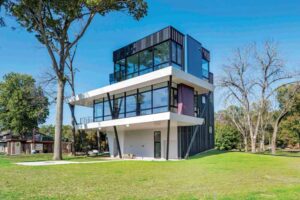
When you think of Philadelphia, what comes to mind? Naturally, it is cheesesteaks, the Liberty Bell, and Rocky Balboa. However, did you know if you keep following the Schuylkill River trail about 45-minutes from Rocky’s famous run up to the Philadelphia Museum of Art, you will discover a suburban woodland home to Schuylkill Sanctuary.
Located on the banks of the Schuylkill River, very close to Valley Forge National Historical Park, this custom single-family residence can only be described as “a harmonious living experience that embraces the serene riverside setting.” The sanctuary sits in a small community, featuring a single line of homes across the river, with most being year-round residences. According to Oliver W. Wischmeyer III, AIA, principal/architect with OW3 Architects-in Philadelphia, Pa., it is a quiet, residential area with immediate access to the river. “Aside from a nearby railyard, the only sounds are ducks, geese, and the wind rustling through the leaves. It’s hard to imagine you’re so close to an urban area.”
 [2]
[2]Mother Nature
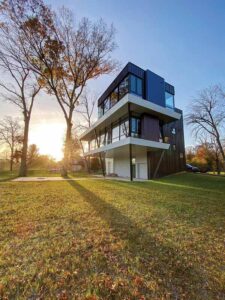
The project involved a close collaboration between the architect and the client, aiming to create a home that offers unobstructed views of the river.
The design team incorporated additional height to the main floor raising the house above Federal Emergency Management Agency (FEMA) regulations, ensuring both resiliency and enhancing the breathtaking natural views surrounding the property. Wischmeyer recalls back to the design process in September 2021. Flooding and resiliency drove most of the design decisions, including height to the main floor. Minimum required height was 3.7 m (12 ft), and they built to 4.9 m (16 ft) to be safe. “When the flooding from Ida came through, the water came up to 3.9 m (13 ft), and proved the extra planning and height were needed.”
Wischmeyer adds there is no basement to the home, meaning everything had to revolve around being on the ground floor. In addition to the flooding issue, the project team designed and installed diagonal columns to cantilever the foundation away from the tree as much as possible.
 [3]
[3]Rhythm in hues
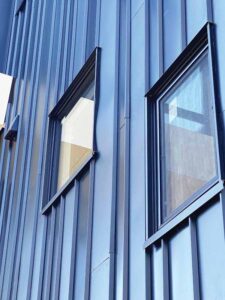
The client’s desire for modern, low-maintenance, and durable led to the decision to go with a metal clad house. The design incorporated multiple types of metal panels to accentuate its unique form. These panels consist of three different widths in two contrasting colors: matte black and gloss black. By arranging these panels with staggered seams and an overlap detail, the result was a seamless vertical appearance showcasing a tonal shift between the two black colors. This created a deliberate rhythm, adding a subtle yet dynamic touch making a dramatic impact during daylight hours.
Additionally, metal panels require minimal upkeep, allowing homeowners to focus on enjoying their property rather than be burdened by maintenance tasks.
The use of aluminum panels is particularly beneficial due to their exceptional resistance to environmental elements, including water. This ensures the cladding can endure seasonal flooding without experiencing issues like rust or delamination, which are common with other materials.
The metal touch
 [4]
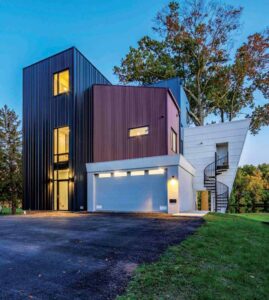
[4]The exterior also features a vibrant boysenberry and blue corrugated metal cladding. These exposed fastener panels add a pop of color to the mostly monochromatic palette of black, gray, and white. To emphasize the bend plate and folded form of the house, the team employed white flat aluminum sheet panels for the soffits and ceiling grid inserts. These panels provided a clean and crisp backdrop, drawing attention to the intricate architectural details which continue around to the side of the house, facing the river.
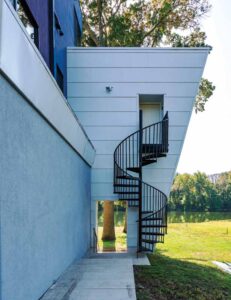
A unique spiral staircase provides not only visual interest and charm but serves a purpose for a second means of egress if the house floods. An exterior stair is a common design on new houses along the river and the flooding from Hurricane Ida proved the point.
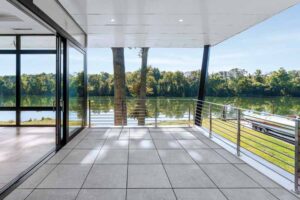
The main living space is enclosed by glass on three sides, blurring the lines between the indoors and outdoors. Bringing the outside in is a consistent theme with this residence. There is the metal railing on the patio deck, and these touches continue inside with handrails, stainless steel work surfaces in the butler’s pantry, and metal bathroom fixtures and accents.
 [5]
[5]means of egress if the house floods.
The serenity also continues through the home as one can enjoy the views along with a soak in the metal-adorned tub. “The goal was to have views of the river from as many rooms as possible,” says Wischmeyer.
An abundance of natural light floods the interior. To address the need for sun shading and climate control, the design incorporated strategically placed overhangs. On the south and east sides of the house, 2 m (7 ft) overhangs provide shade during the summer months, preventing excessive heat gain. On the west side, a covered patio acts as a 5.8 m (19 ft) overhang, offering protection from the sun while still allowing direct sunlight to penetrate during the winter, maximizing passive solar heating. The covered patio blends seamlessly with the main living area when the sliding doors are opened, prioritizes the integration of nature, and allowing the residents to feel connected to the ever-changing rhythms of the river.
 [6]
[6]- [Image]: https://www.metalarchitecture.com/wp-content/uploads/2024/01/MCA-Indian-Lane-1.jpg
- [Image]: https://www.metalarchitecture.com/wp-content/uploads/2024/01/MCA-Indian-Lane-9.jpg
- [Image]: https://www.metalarchitecture.com/wp-content/uploads/2024/01/MCA-Indian-Lane-7.jpg
- [Image]: https://www.metalarchitecture.com/wp-content/uploads/2024/01/MCA-Indian-Lane-6.jpg
- [Image]: https://www.metalarchitecture.com/wp-content/uploads/2024/01/MCA_60-W-Indian-Lane-5.jpg
- [Image]: https://www.metalarchitecture.com/wp-content/uploads/2024/01/MCA_60-W-Indian-Lane-12.jpg
Source URL: https://www.metalarchitecture.com/articles/features/the-serene-life/