Bringing Design Synergy Home
with Vertically Stacking Doors
by hanna_kowal | May 7, 2026 10:34 am
 [1]
[1]Photo courtesy Clopay Corporation
Modern architecture reflects homeowners’ desire to blend indoor comfort with outdoor living. This trend has encouraged designers to explore solutions that balance indoor/outdoor spaces and has inspired manufacturers to develop products that solve design challenges and bring an architect’s vision to life.
Compact vertically stacking doors exemplify how manufacturers confront structural complexities and pioneer innovative solutions. Offering striking aesthetics and practical considerations for space, these aluminum and glass artworks are anything but standard garage doors. A myriad of customization options, sleek styles, and thoughtful engineering address aesthetics, privacy, and light control, as well as ceiling space constraints, empowering architects and homeowners to reimagine how and where these doors can be used.
Building on a solid foundation
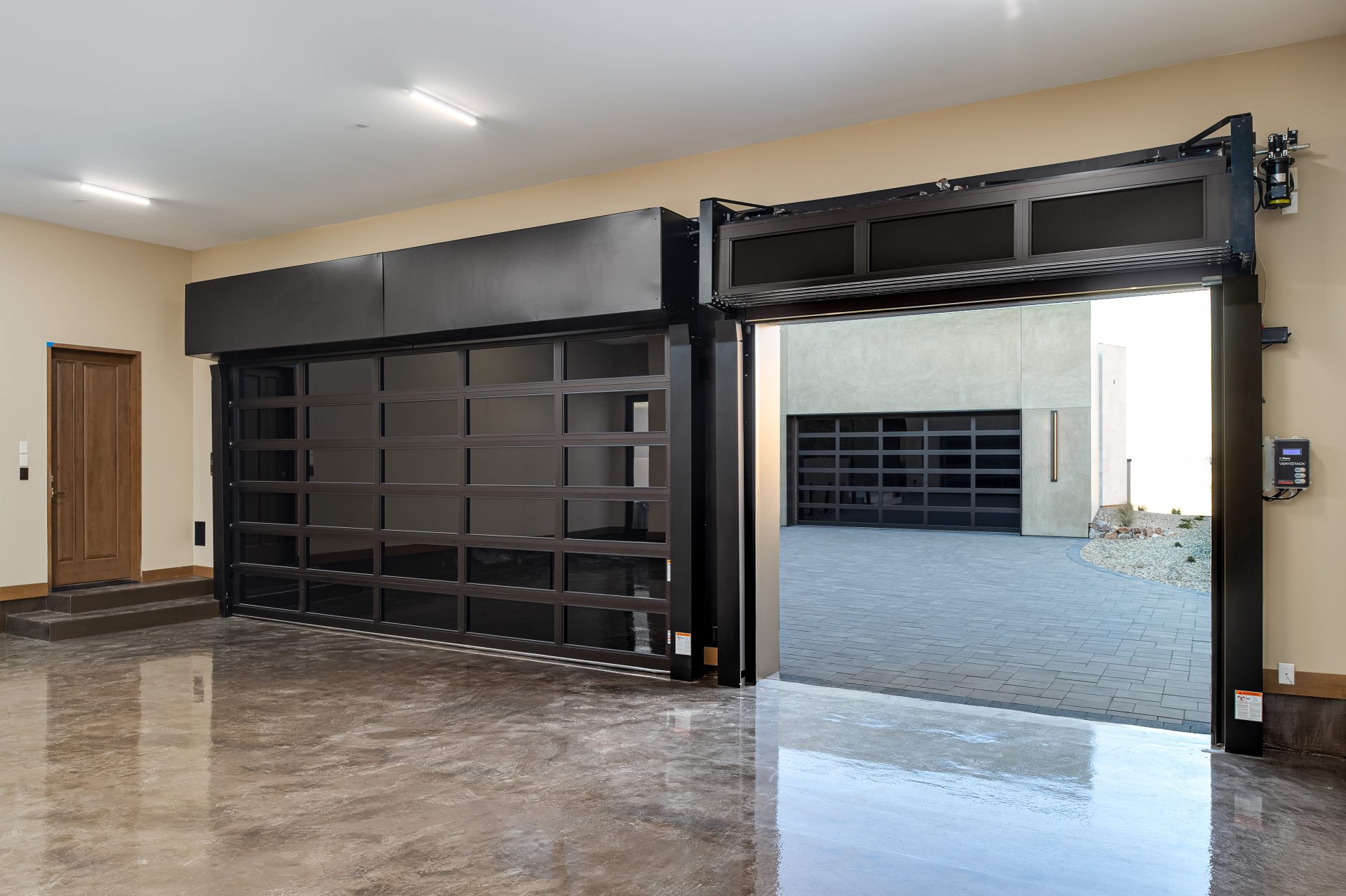
Compact vertically stacking doors are an evolution of the traditional garage door, and the right choice depends on the desired look, functionality, and installation requirements. Like traditional doors, vertically stacking doors are known for their endurance and style and are constructed with high-quality aluminum and glass. It is their unique space-saving design that sets them apart from their predecessors.
This newer stacking style neatly folds the door sections above the opening. This approach eliminates the need for an overhead track system, preserving the fifth wall—or ceiling space—for lighting, mechanical systems, and decorative ceiling elements. Some vertically stacking doors include the option to stow the sections in a recessed area above the door, making them virtually invisible when the door is open.
In addition to the streamlined functionality of stacking doors, several key construction features enhance their durability and control privacy and visible light transmittance (VT), including:
- Commercial-grade aluminum frames. Aluminum is renowned for its lightweight strength and resistance to corrosion, which contributes to the door’s smooth, quiet operation, low maintenance, and extended lifespan.
- Heavy-duty rollers and track systems. Robust steel ball-bearing rollers, combined with nylon tires, deliver quiet and consistent operation. A concealed track mechanism enhances the appearance by keeping the door’s hardware hidden and maintaining clean, uninterrupted visual lines.
- Glass styles and glazing. For security and durability, glass styles can include single-pane, tempered, acrylic, and insulated options. Additional glazing choices control light transmittance, provide privacy, or, with low emissivity (low-e) glass, improve energy efficiency.
These construction features provide both engineering strength and light and privacy options essential in modern home designs. However, what has propelled vertically stacking doors into the spotlight is the evolution of their design.
 [2]
[2]Merging structure with style
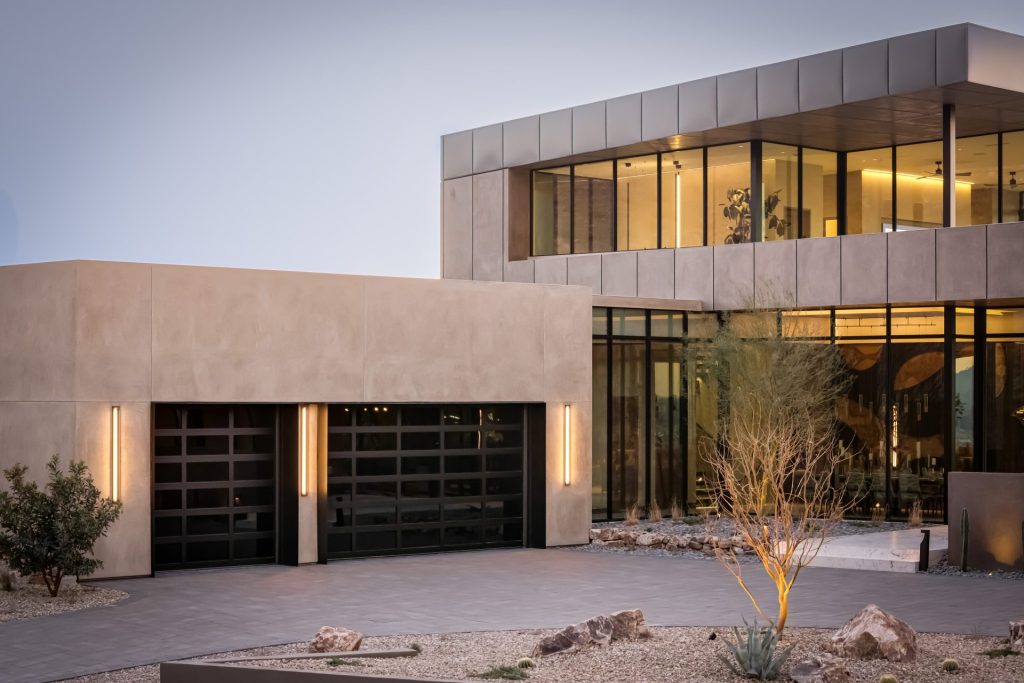
Compact vertically stacking doors have evolved from their pragmatic origins to become integral design elements celebrated for their visual appeal and versatility. Modern iterations combine sleek lines with clean, unobtrusive profiles, thanks to their hidden mechanics and absence of overhead tracks. The result is an uncluttered look that brings a contemporary feel to any residence, whether the style is minimalist modernism, industrial chic, or updated traditional.
The door’s aluminum frames are available in multiple finishes, which complement the glazing options. Anodized options are available in clear, dark bronze, or sleek black, adding understated elegance and outdoor weather protection. Additional finishes such as white, chocolate, and bronze introduce rich color and warmth, harmonizing with interior palettes. Custom colors also extend the aluminum palette to more than 1,500 shades, empowering designers and homeowners to achieve their architectural visions.
The array of customization possibilities works flawlessly with various architectural narratives, from urban townhomes to sprawling estates. Experimenting with this aesthetic versatility, architects and homeowners are finding increasingly innovative ways to incorporate these doors into home designs.
Applications in residential design
The growing popularity of using stacking doors to transform the home environment is the result of the demand for more flexible spaces with abundant natural light and seamless indoor-outdoor living. Some creative examples of vertically stacking doors in modern home design include:
- Oversized vehicle or overhead equipment storage. A vertically stacking door system is ideal for garages that house taller vehicles or specialized overhead equipment, such as car lifts or ceiling-mounted storage. Eliminating traditional overhead tracks maximizes the ceiling space that can be allotted for other uses.
- Pool houses and outdoor kitchens. The effortless blending of indoor comforts with outdoor environments enhances recreational and entertainment spaces. Homeowners appreciate the ability to expand usable space and experience natural airflow and social connection when hosting gatherings.
- Party barns, studios, and workshops. Versatile accessory buildings seamlessly transition from private, enclosed spaces to vibrant, open-air venues, significantly enhancing the usability, property appeal, and market value of a home.
With such versatile applications, vertically stacking door systems are redefining what is possible in the modern home. From the Gulf Coast to the Pacific Northwest, doors can be customized to meet rigorous regional performance standards, including ASHRAE 90.1[3], International Energy Conservation Code (IECC) 2021, wind-rated construction and glazing, impact resistance, security, UV protection, and more.
It is important to consult the manufacturer’s guidelines before specifying and installing, as vertically stacking door systems are not suitable for all applications. Recommended applications are often dependent on climate zone and weather conditions. Online tools available from some manufacturers further aid door customization and specification by allowing users to upload home images, preview door styles, explore colors and glazing options, and request color samples to match door finishes to design visions.
Opening the door to imagination
Compact vertically stacking doors have become much more than practical installations. Moving from the humble garage to the outdoor kitchen and beyond, these ever-evolving architectural elements notably enhance residential design. With an impressive range of colors, styles, and configurations, along with performance standards to match, vertically stacking doors empowers architects, designers, and homeowners to express their creativity and individuality without compromise.
Heather Bender is the director of commercial product marketing at Clopay Corporation. At ClopayDoor.com[4], she leverages 16 years of experience in manufacturing and building materials to find unique solutions for building owners and designers. She can be contacted at hbender@clopay.com.
This feature originally appeared in the March/April 2026 edition of Metal Architecture, which you can find in our Digital Edition Archives.
- [Image]: https://www.metalarchitecture.com/wp-content/uploads/2026/05/Avante-VertiStack-Las-Vegas-TNAH-122.jpg
- [Image]: https://www.metalarchitecture.com/wp-content/uploads/2026/05/Avante-VertiStack-Las-Vegas-TNAH-114.jpg
- ASHRAE 90.1: https://www.ashrae.org/technical-resources/bookstore/standard-90-1
- ClopayDoor.com: http://clopaydoor.com
Source URL: https://www.metalarchitecture.com/articles/features/vertically-stacking-doors/