KAI Enterprises: Architecture with Purpose
by hanna_kowal | October 31, 2025 3:32 pm
 [1]
[1]Photo by Tom Paule
This month, Metal Architecture connected with Anthony D. Kelley, AIA, an architectural designer at KAI Enterprises. This minority-owned and led firm in the architecture, engineering, and construction (AEC) industry opened its doors in 1980 and now consists of more than 160 design and construction professionals. The company promotes community development and transformation through its work on various projects, including residential, recreational, commercial, educational, medical, and community-focused initiatives.
 [2]
[2]KAI Enterprises is headquartered in St. Louis, has large hubs in Atlanta and Dallas–Fort Worth, and maintains offices across the Midwest and the Southern United States. Equipped with an open-minded and community-oriented approach, the firm’s projects go beyond making strong and beautiful structures to prioritize creating environments that help people thrive through its mission of transforming communities.
As communities and organizations continue to grow and expand, KAI Enterprises approaches the AEC process by considering community and user needs and compelling aesthetic features. Kelley says, “We craft visually compelling elements that emphasize pattern, depth, and materiality through dynamic illumination.”
Form and function through creative uses of metal
 [3]
[3]KAI Enterprises creates functional and sophisticated structures by embracing various metal materials’ texture, strength, and character. Kelley says the design approach highlights a “core theme or focal element that resonates with the client.” In support of these themes or focal elements, the firm selects materials that consider the environment and purpose of their designs.
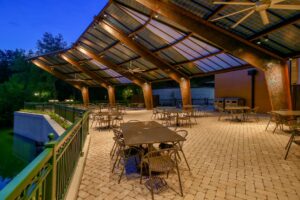
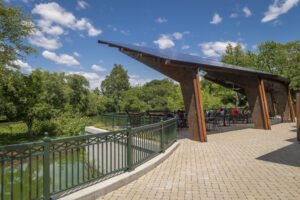
Corten steel comprises a large portion of the Williams Family Solar Pavilion, a prominent outdoor canopy at the St. Louis Zoo. This prominent feature of KAI Enterprises’ design-build project is an umber-colored, low-maintenance material. The metal adopts a natural patina, protecting the structure from weather conditions. Further using the Corten steel’s advantages, the structure is engraved with animal and zoo-themed patterns.
Sustainable structures
The firm uses multi-functional energy-saving material in various projects. Beyond its functional advantages of covering the St. Louis Zoo’s dining area and creating an eye-catching landmark, the Williams Family Solar Pavilion generates electricity. Solar panels comprise the canopy’s roof, functioning as both a sustainable power source and shade. With the required wires and connections for these panels visible in the structure, using Corten steel complements the industrial aesthetic and ensures no cosmetic sacrifice in pursuit of sustainability.
 [4]
[4]KAI Enterprises’ engineering and design of the Student Engagement Center on Dallas College’s Cedar Valley Campus emphasizes sustainability. The structure is an indoor learning space, meeting space, common area, and an outdoor educational and social environment. Specific materials and assembly processes in the building’s design minimize the heat transfer to prevent wasted energy. The structure employs an insulating glass design and a framing system of thermally broken aluminum and polyamide. The layout of the building also embraces the benefits of natural light, with a reduction in the need for artificial light.
A people-first approach in the AEC process
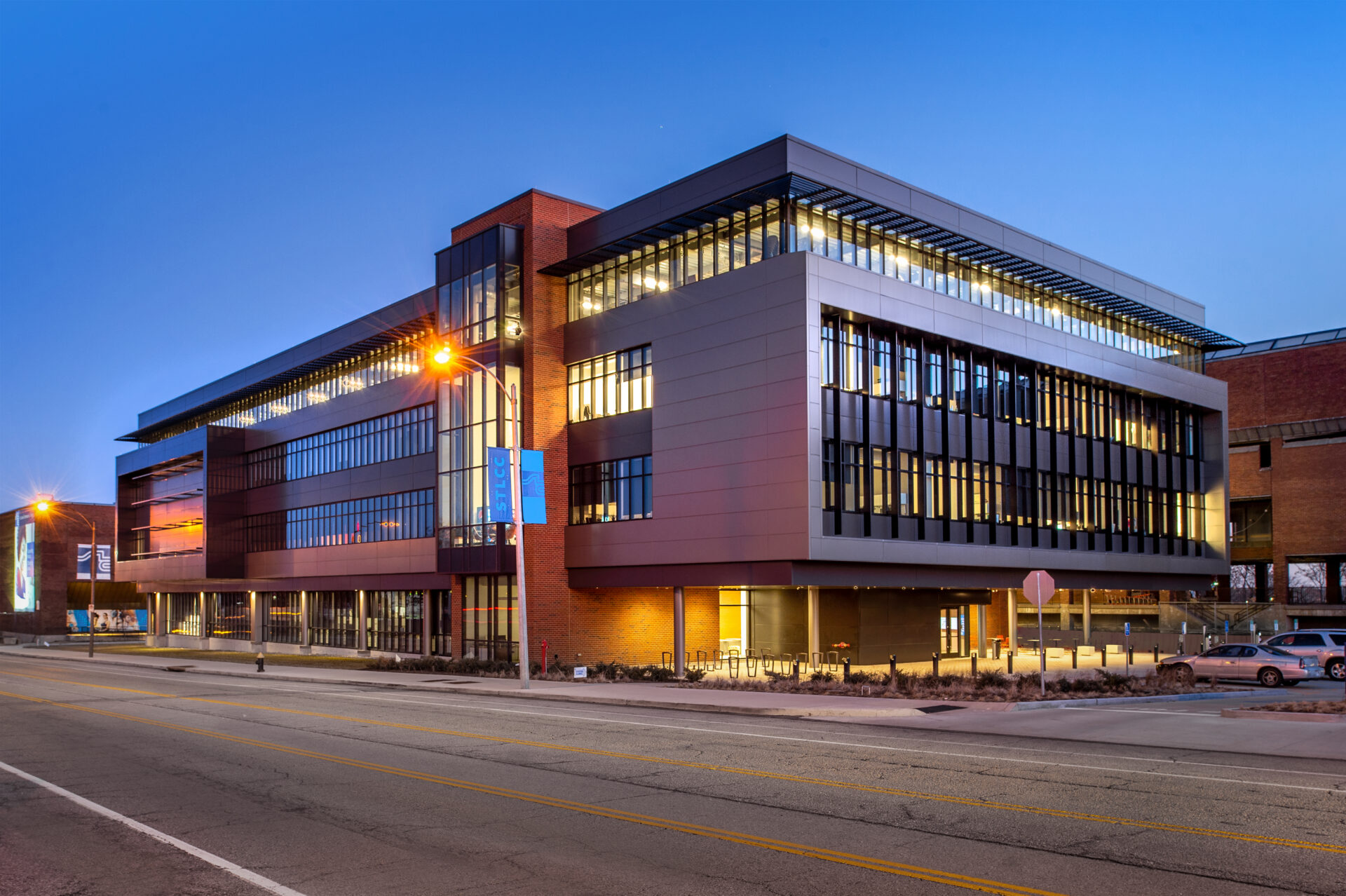
Working with their philosophy to create structures that positively contribute to the lives of the people using them, KAI maintains communication with building users. Before constructing the Allied Health Center in the Center for Nursing & Health Sciences at the Forest Park campus of St. Louis Community College, the firm held workshops with the staff and faculty who regularly use the facility. The final structure spans 8,919 m2 (96,000 sf). It hosts a large variety of educational program classrooms with deliberate flexibility in their design, allowing the need for different learning layouts to be accommodated from the start.
 [5]
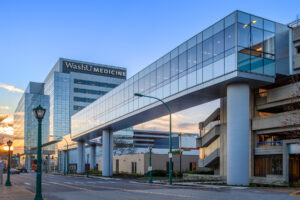
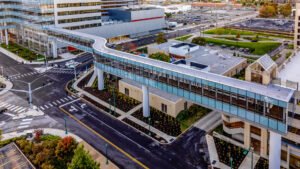
[5]The firm adapts to the environment’s different features from design to construction. When building the pedestrian bridge connecting St. Louis Children’s Hospital to the new Jeffrey T. Fort Neuroscience Research Building at the Washington University School of Medicine, KAI Enterprises performed most of the construction at night, considering the active daycare and continued regular use of the center during the process. To match the modern facade of the existing structure, the designs of the garage for the research building include an elevator wrapped in a metal panel.
What comes next
With multiple current projects in Texas, KAI Enterprises contributes to the cultural and educational landscape in both building and design. Renovations are underway at The Black Academy of Arts and Letters in Dallas. KAI is providing architectural and engineering design services on this project, which involves preserving the existing culture while providing modernization and increased community accessibility.
 [6]
[6]Preserving the history of Juneteenth, KAI acts as the executive architect and mechanical, electrical, and plumbing (MEP) engineer, collaborating with BIG-Bjarke Ingels Group on the National Juneteenth Museum in Fort Worth, Texas. Activist Ms. Opal Lee guides this project, which acts as a hub for discussion, education, historical preservation, and celebration of the African American path to freedom. The plans consist of a 4,645 m2 (50,000 sf) building with space for exhibits, discussion areas, event spaces, a courtyard, a restaurant, an amphitheater, and storefronts. A key design feature of the project is the gabled rooftop, which represents both the Southside neighborhood and the Nova Star, and represents progress towards justice. This project is estimated to be completed in 2026 and is a prime example of architecture that fosters community and learning.
- [Image]: https://www.metalarchitecture.com/wp-content/uploads/2025/11/002-SLCC-Forest-Park-Night-Exterior-Feb-2020.jpg
- [Image]: https://www.metalarchitecture.com/wp-content/uploads/2025/11/Saint-Louis-Zoo-solar-canopy-1.jpg
- [Image]: https://www.metalarchitecture.com/wp-content/uploads/2025/11/St.-Louis-Zoo-solar-canopy-3.jpg
- [Image]: https://www.metalarchitecture.com/wp-content/uploads/2025/11/WUSM-Neuroscience-Research-Building-Parking-Garage-Bridge-Link_web-12.jpg
- [Image]: https://www.metalarchitecture.com/wp-content/uploads/2025/11/WUSM-Neuroscience-Research-Building-Parking-Garage-Bridge-Link_web-42.jpg
- [Image]: https://www.metalarchitecture.com/wp-content/uploads/2025/11/KAI-St.-Louis.jpg
Source URL: https://www.metalarchitecture.com/articles/kai-enterprises-the-firm/