Pocketbook Protection
by Stacy Rinella | December 4, 2024 7:36 am
 [1]
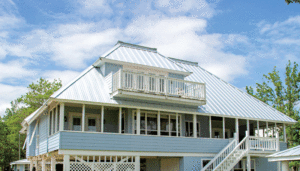
[1]with no compromises in performance. Photos courtesy MRA www.metalroofing.com
Home insurance costs depend on several factors, including the home’s size, location, age, and the coverage options selected. Homes in areas prone to natural disasters, such as hurricanes, floods, or wildfires, often have higher premiums due to the increased risk. Additional factors like the security features, the homeowner’s claims history, and the home’s construction materials also affect the cost.
Using more durable materials like metal can reduce a homeowner’s insurance costs because it helps protect against damage and costly repairs. Many home insurance companies prefer quality metal roofs and offer discounts to homeowners who install them.
According to experts at the Metal Roofing Alliance (MRA), a nonprofit organization representing the residential metal roofing industry in the U.S. and Canada, most quality metal roofing systems are more resilient against high winds, offer a Class A rating (the highest possible) for wildfire, and provide a Class 4 rating for hail damage protection (according to UL Standard 2218 classification system). Metal roofing is also stronger and lighter, making it better able to withstand heavy snow and ice buildup loads—severe winter conditions that could cause inferior or worn-out roofs to collapse.
Depending on the region, MRA says it is important to know that when insurance companies determine the cost, they evaluate the age, condition, and shape of a roof and the material used.
 [2]
[2]
Mitigating design choices
Understandably, this guidance benefits homeowners, but how does this translate to architects, designers, and engineers? By understanding the insurance implications of home size, location, and materials, professionals can make informed decisions that enhance the value and resilience of a home. For example, selecting durable materials like metal roofing offers greater protection against weather-related damage and can lead to insurance discounts, making homes more attractive to cost-conscious homeowners. Roofing design elements can also reduce risks, improve longevity, and lower insurance premiums. This knowledge empowers industry professionals to create structurally sound homes that are financially beneficial for clients, contributing to long-term savings and increased market appeal.
According to Renee Ramey, MRA’s executive director, the most significant impact for architects, designers, and engineers is the need to design and build with durability and sustainability in mind. “Building products that can perform in extreme weather events (such as quality metal roofing) should help alleviate the strain on homeowners and insurance companies as these products will perform better, last longer, and lower the number of claims. From MRA’s perspective, building products that perform in severe situations should not only be utilized, but homeowners who choose these options should receive discounts on their insurance.” Ramey says that they are making an effort to install products that will last, resulting in fewer insurance claims and less time and effort being spent, resulting in less loss around.
So, when it comes time to think about insurance, who leads this conversation? Ramey says, “I think the homeowner is responsible for doing their due diligence with their insurance company as there can be many different variables that might impact cost, such as the type of policy, region/location, etc.”
To understand the role the roof plays in home insurance premium costs, MRA lists five factors insurers look for and how they may help guard against costly damage and repairs:
Is the roof made from quality, highly durable materials?
Metal roofs are more durable and often favored by insurance companies when considering potential discounts. Especially in hurricane and hail regions where flying debris and severe impacts cause millions of dollars in rooftop damage yearly, states like Florida1 and Texas2 use ratings for rebate programs such as UL Standard 2218 classification.3 UL 2218 is a rating system that assesses the impact resistance of shingles. Underwriters Laboratories (UL) test shingles by dropping steel balls of various sizes onto them from different heights to simulate hail strikes. The shingles are then graded on a scale of Class 1 to 4, with Class 4 being the highest rating and the most impact-resistant.
 [3]
[3]
What shape is the roofline?
Not only do materials affect performance, but the roof shape does as well. For example, hip roofs have inclines on all sides, so to an insurance carrier, this means they can hold up against higher winds without being blown off. Gable roofs are the most common in the U.S. and look like an upside-down V. These roofs can be more vulnerable to high winds but can shed water and debris easily. Flat roofs have no pitch or slope and typically are not favored by insurance companies because flat roofs pool water easily. Again, the type of material and installation methods chosen can help increase the roof’s durability and protection, regardless of shape.
How was it installed?
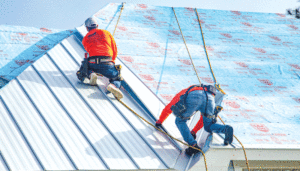
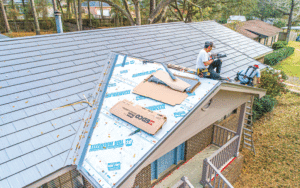
Whether installing a new roof or having work done on the roof, hire a certified, licensed professional. If, for whatever reason, a claim needs to be filed, the insurance company could deny it because a professional did not handle the roof. Experienced installers can help navigate proper local building codes and recommend ways to further increase the protection and longevity of a roof through methods such as choosing the appropriate underlayment, using the right attachments and clips, and ensuring the roof is weather-tight.
How old is the roof?
Generally, insurance companies charge more on home insurance premiums for older roofs. However, what should be considered is that quality roofing materials like metal can last three times longer than other types with no compromises in performance. Ramey says asphalt roofing (with ~70 percent market share in residential) suffers from the most compromising performance. Beyond asphalt, other types of roofing can also see compromised performance based on region. Weather events can be the most significant performance issue. For example, strength and durability are key in areas with high winds
(i.e. hurricanes and tornadoes).
If the home insurance policy is for replacement cash value, then the carrier will pay for the roof’s replacement cost value, which is the replacement cost value minus the deductible. Under replacement cost value, there is no deduction for depreciation.
How well is the roof maintained?
Proper maintenance and upkeep are essential to help extend the longevity of any roof and reduce the risk of filing a claim. Gutters need to be kept clean. Damaged or broken shingles should be replaced, debris like branches, leaves, moss, and mold removed, and overhanging branches must be pruned back. Residential roofs should also be inspected every two to three years to check for pests. Ramey says pests, such as termites, ants, and beetles, are mainly an issue with shake roofing. Pests such as squirrels, birds, and mice are common with asphalt roofing.
To ensure residents and their homes are protected, MRA encourages homeowners to carefully review their policies to determine whether they have the right coverage for potential perils particular to their region. Document everything, including upgrades, and keep a paper trail. If the plan is to install a more reliable roof, the insurance agent should be one of the first to know. Some savings could depend on it.
Notes
1 Visit myfloridacfo.com/docs-sf/consumer-services-libraries/consumerservices-documents/understanding-coverage/consumer-guides/premium-discounts-for-hurricane-loss-mitigation.pdf
2 See tdi.texas.gov/company/roofing-discounts.html
3 Review ibhs.org/wp-content/uploads/2019/06/ibhs-impact-resistance-test-protocol-for-asphalt-shingles.pdf
- [Image]: https://www.metalarchitecture.com/wp-content/uploads/2024/11/08.2023THFullHouseShot2.gif
- [Image]: https://www.metalarchitecture.com/wp-content/uploads/2024/12/08.2023TodaysHomeownerinstallshot.gif
- [Image]: https://www.metalarchitecture.com/wp-content/uploads/2024/12/2022.06THIntegratedEpisodeRoofShot.gif
Source URL: https://www.metalarchitecture.com/articles/pocketbook-protection/