Pristine Planning, Potential, and Pod A + D
by hanna_kowal | December 22, 2025 11:21 am
 [1]
[1]Photo courtesy pod a + d
Where brand identity meets design, artistic buildings emerge to reflect the needs and cultures of the people they serve. In this month’s edition of The Firm, Metal Architecture sat down with the founders and owners of pod architecture + design (a + d). The Chapel Hill, N.C.-based company delivers harmoniously thoughtful designs that incorporate sustainability and creative uses of metal.
A small team with a significant impact, the firm employs between four and eight people. They foster global industry learning by contributing to events such as Venice, Italy’s Time Space Existence biennial architecture exhibition, and by offering internships, recently supporting a student from Scotland’s MacIntosh School of Design. Working on a range of projects, including cultural hubs, residential spaces, and industrial structures, the firm brings an artistic perspective to the many communities it supports.
 [2]
[2]Photo courtesy pod a + d
From collaboration to incorporation
Combining strong design perspectives, after years of collaboration and moonlighting while working for other offices, Youn Choi and Doug Pierson incorporated their firm under their current name in 2016. They began their partnership in Los Angeles, working under the name pod design studios, and completed several projects, including an award-winning Venice beach house in 2012, the success of which spurred them to start their business.
Brewing building blockbusters
 [3]
[3]Photo courtesy pod a + d
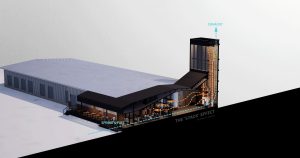
The firm has designed numerous breweries and distilleries, offering some interesting perspectives on the opportunities and considerations involved in the process. “Distilleries are manufacturing spaces and at the same time, especially more recently, a hospitality space as well,” Pierson explains. He describes the environments as “an industrial space that’s also inviting, draws people in, relates to the process equipment, especially with distilleries, and has transitional spaces directly adjacent to and in view of the process.”
 [4]
[4]Photo courtesy pod a + d
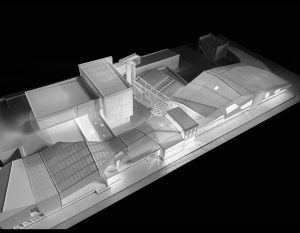
In the Rabbit Hole, an award-winning bourbon distillery in Louisville, the design plans strike a balance between aesthetic and functional elements through the use of metal. Pierson shares that the project involves “concealed fasteners on a large-scale industrial building for different metal skin types,” exploring opportunities for transitional aesthetics. Choi’s design choices create the building’s identity, effectively incorporating the expressive nature of metal into an integrated pattern that embodies the company’s branding in its style.
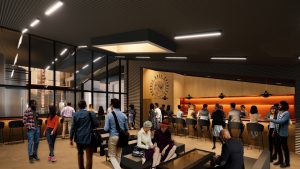
The firm shared their current project, Liberty and Plenty, a distillery that will have North Carolina’s second-largest capacity for distilling. This design uses corrugated metal interior surfaces, and Pierson emphasizes the benefits of design flexibility and versatility that metal offers, appreciating the way the material serves an industrial and inviting aesthetic.
Optimization in specifying and analysis
 [5]
[5]Photo courtesy pod a + d
When it comes to sizable projects, metal is at the heart of many of pod a + d’s designs. From foundation to building envelope, their designs use the benefits of metals. For large-scale expressiveness, the firm uses steel primary structures and appreciates the size and material options made available by metal skins.
They also approach site analysis with an open mind, considering community interface needs, such as residences, parks, and roads, in their large-scale designs.
Embodying nature with impactful designs
 [6]
[6]Photo courtesy pod a + d
Several of pod a + d’s designs for residential and hospitality spaces embrace the natural landscapes that surround the projects in their plans and material specifications.
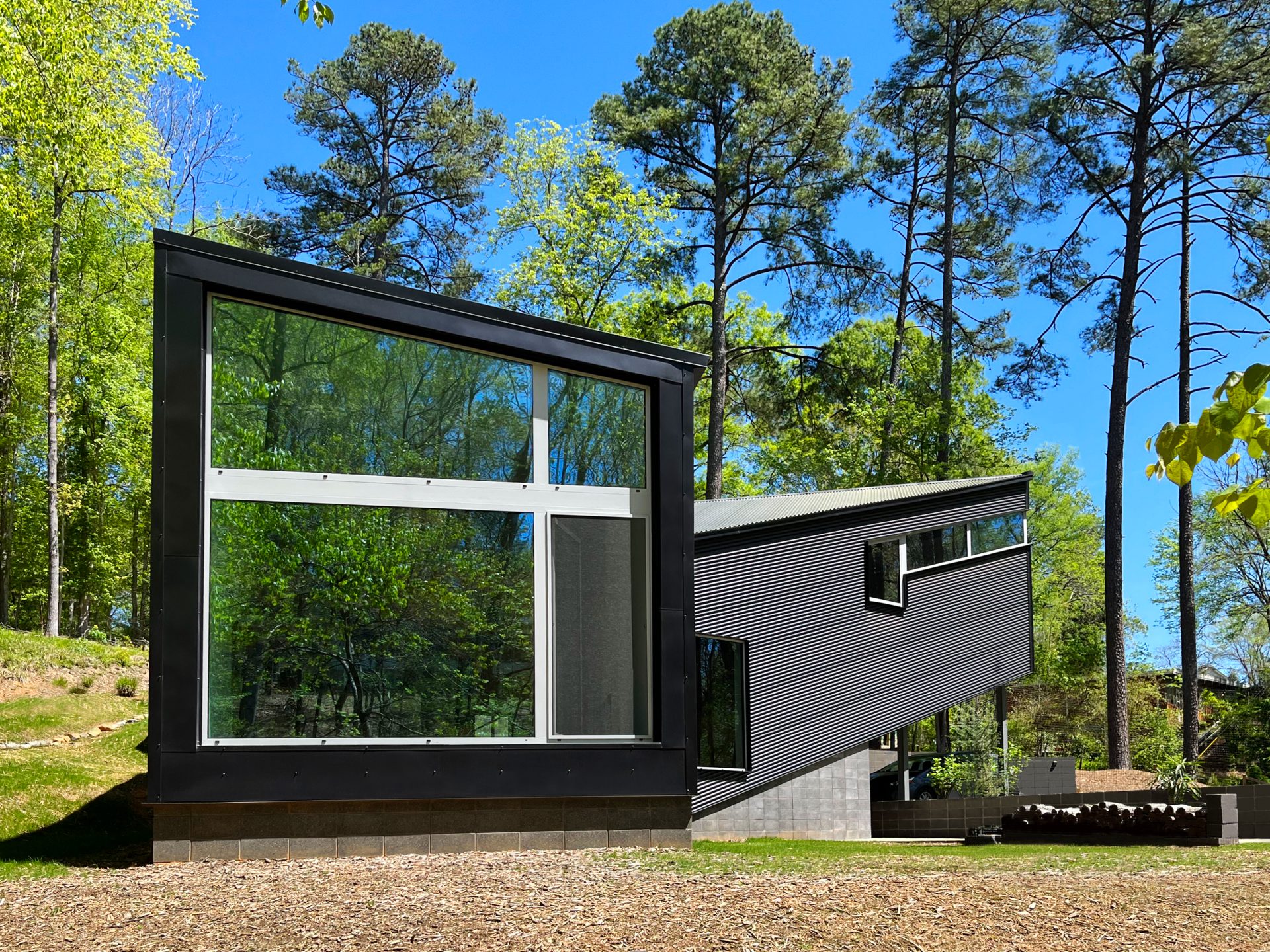
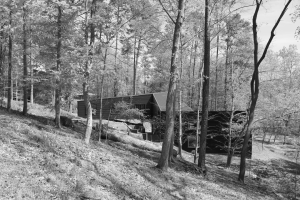
In designing their own home in Carrboro, N.C., Pierson and Choi created the structure with the intention of having it “almost disappear” into its environment, the forest. The building is composed of glass and black corrugated metal. Constructed on a hillside, the building accommodates both a high and low slab using the adaptability of metal to wrap around the structure and smoothly connect the two levels. Pierson describes the home as “corrugated metal that sits on a polished block kind of foundation that rises from the grounds of the corrugated metal, just kind of floats above.”
Delving further into residential designs surrounded by nature, the firm is working on mountain light-touch, compact metal homes on two combined properties of approximately 5 ha (13 acres) to 5.5 ha (14 acres) in Flat Rock, N.C. Their plans respect the environment by minimizing the use of retaining walls, raising the structures above ground level, and allowing natural rainfall processes to continue.
In an upcoming project in Harlan County, Ky., pod a + d designs mountain retreats spanning 202 ha (500 acres). The project, an ecotourism hub, includes a lodge and a nature walk.
 [7]
[7]Photo by Ted Wathen
Designing for sustainability with metal
Pod a + d’s exemplary sustainable strides include integrating systems like geothermal heating and cooling, as well as designing the first LEED Platinum adaptive reuse building in Kentucky. The firm understands that the nature of creating new structures inherently impacts the environment. Pierson states, “It seems counterintuitive, but one of the greenest, most sustainable things you can do is not build—then you have a zero-carbon footprint to start, but it doesn’t help with our profession, so the next best thing is using what you’ve got.” The firm’s approach reduces waste by using any pre-existing materials and supplies possible, maximizing their longevity and potential, and sustainably adapting them to fit current building needs both functionally and aesthetically.
 [8]
[8]Photo by Ted Wathen
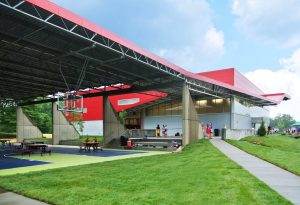
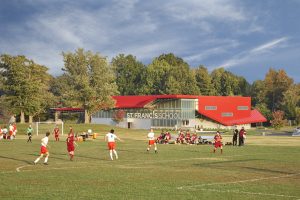
A prime example of pod a + d’s adaptive reuse in action is the St. Francis School athletic facility, which began as an aged barn—a pre-engineered metal building (PEM)—that detracted from the overall look of the 19.4-ha (48-acre) campus. The structure acts as a focal point for the school, and thus the firm’s large-scale retrofit offers a refreshing building identity not only for the structure but also for the campus as a whole.
With PEMs, adaptive reuse presents a challenge, as the initial structures are designed to be lightweight and slender, resulting in less tolerance for larger loads. Pierson explains: “Steel can still take on at least five to 10 percent additional load before you start having to add new structure.” This contrasts with PEM’s low load-bearing ability, holding itself up with little to no leeway. The firm met the challenge with creative strategies to minimize costs while optimizing resources, including creating new construction for loads.
In its pursuit of fostering building identity, the firm takes care to specify interesting metal materials for its projects. They appreciate perforated metal for its versatility and wide flange beams for what they call “the expressiveness of the primary structure.” In designing the Rabbit Hole, the firm aims for a net-zero carbon-neutral building. Perforated metal in the project plans aims to support the function of a contemporary Trombe wall, also known as a thermal cavity wall, which enhances the U-value or thermal transmittance efficiency.
Balanced perspectives make balanced designs
In its design approach, pod a + d brings together two critical perspectives. Choi ensures buildings reflect the unique cultures and styles through communication with brands and thoughtful consideration of the environment, while Pierson embodies a parts-of-a-whole perspective that ensures the separate factors of a structure’s plan work together seamlessly. In reflecting on their work, he explains, “that process has allowed us to think in different ways for different projects about not only sustainability, but expressiveness and purposefulness.”
- [Image]: https://www.metalarchitecture.com/wp-content/uploads/2025/12/pod-ad_View-from-meadow_hillside-house.jpg
- [Image]: https://www.metalarchitecture.com/wp-content/uploads/2025/12/Screenshot-2025-12-19-160438.png
- [Image]: https://www.metalarchitecture.com/wp-content/uploads/2025/12/pod-ad_Liberty-and-Plenty-Distillery_THE-‘STACK-EFFECT-Section-Diagram1.jpg
- [Image]: https://www.metalarchitecture.com/wp-content/uploads/2025/12/pod-ad_City-Block-of-Campus-Expansion_Louisville.jpg
- [Image]: https://www.metalarchitecture.com/wp-content/uploads/2025/12/pod-ad_Liberty-and-Plenty-Distillery_tasting-Lounge.jpg
- [Image]: https://www.metalarchitecture.com/wp-content/uploads/2025/12/pod-ad_Wooded-West-Elevation_hillside-house.png
- [Image]: https://www.metalarchitecture.com/wp-content/uploads/2025/12/pod-ad_St.Francis_outdoor_indoor-athletic-facility.jpg
- [Image]: https://www.metalarchitecture.com/wp-content/uploads/2025/12/pod-ad_St.Francis_roadside-view.jpg
Source URL: https://www.metalarchitecture.com/articles/the-firm-pod-ad/