2026 Building Safety Month: Shining a Light on Essential Strategies
by hanna_kowal | May 4, 2026 8:57 am
 [1]
[1]Recent increases in weather events have made building safety a topic of discussion among many in the architectural community. May 2026, the 45th annual Building Safety Month,[2] is a golden opportunity to expand on this conversation by considering the broader scope of what it means to design a safe building, within and beyond current shifts.
This ongoing international event, spearheaded by the International Code Council (ICC)[3], provides members of the built environment industry and the general public with the opportunity to reflect on safety in their communities. This month also celebrates code officials for their vital role in keeping infrastructure sustainable and safe.
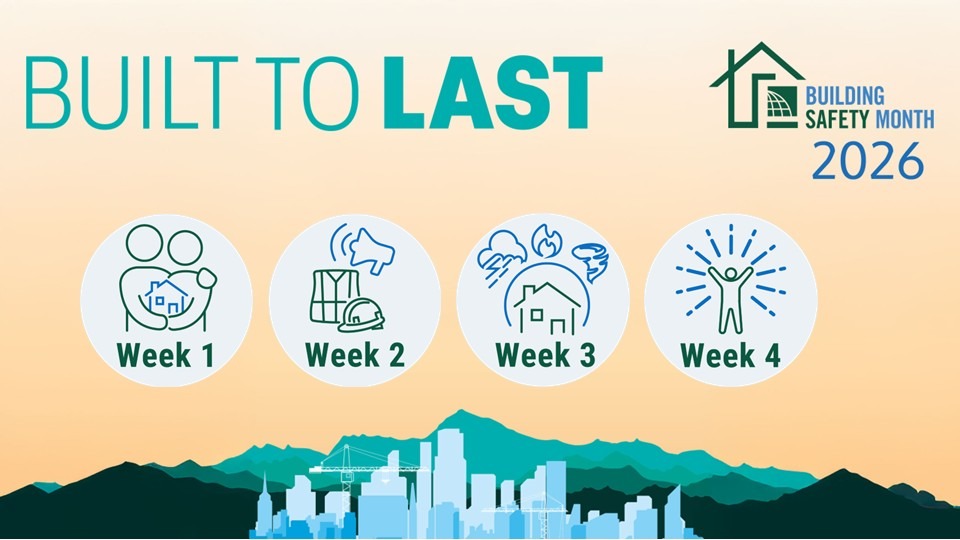
Each week of the month centers on a specific theme, enabling deliberate reflection on how to design and maintain safer buildings.
Unpacking the themes of Building Safety Month
Safety starts at home
The ICC draws focus to safety on a small scale, with week one’s theme: “Safe Homes, Strong Communities.”[4] From May 1–10, attention focuses on hazards often overlooked in residences. Resources from the ICC include quick fact sheets with tips on topics such as exit, fire, electric, and permit safety.
The people behind the buildings
Week two of Building Safety Month runs from May 11–17 and spotlights the “Voices of the Built Environment”[5]. This theme looks at working with and becoming a building safety professional, with resources including building safety career material, explanations of building permits, and information on virtual inspections.
For design professionals, this week highlights the importance of collaboration. Ongoing engagement with building safety and code professionals helps buildings conform to codes on the municipal, state, federal, and international level.
Resilience and proactive properties
The third week’s theme, “Prepared to Protect”[6], runs from May 18–24 and examines disaster preparedness from individual buildings to communities as a whole. Extending on an ongoing conversation of resilient design, the ICC puts an emphasis on preventative measures for new builds and retrofits to mitigate the risks of flooding, hurricanes, wildfires, and seismic forces.
Inclusive, accessible designs
The month finishes off with the theme “Communities Without Limits.”[7] Between May 25 and 30, it is time to reflect on where buildings can improve to become safe, inclusive spaces. In new builds and retrofits, it is critical to consider accessibility features that support all building occupants including easily navigated layouts, wayfinding aids, sensory elements, and more. Resources from the ICC include podcasts, a video, and articles that provide a wider look at what “accessible buildings” really means.
Ongoing progress in architecture:
where metal fits in
While Building Safety Month takes place in May, the conversation on building safety is continuous and informs design strategies year-round. Metal material innovations can be an asset in this endeavor. Innovations in safer, resilient metals—both new and tried-and-true—make the themes above more attainable.
In consideration of the “Preparing to Protect” and “Safe Homes, Strong Communities”, roofing and facade designs can include metal materials that are weather-resistant, durable, and designed to withstand severe weather events. This also reduces risk in residential spaces and beyond, as necessary maintenance is often less frequent.
Together, the themes “Voices of the Built Environment” and “Communities Without Limits” mean considering everyone from the people who keep a building safe to the people who use it. One way to enhance accessibility and provide safe environments for building safety professionals is the use of guardrails. Metal guardrail options offer a lightweight, durable solution that can be used as accessibility aids, attached to roofing to increase safety for laborers and code professionals conducting inspections, and coated strategically to act as a wayfinding element.
Safety is an essential part of the design process, and as such, the list of key strategies and materials continues to evolve. As architects partner with building safety professionals to shine light on how projects can best support occupants, the built environment has unlimited potential to become safer, more resilient, and accessible for everyone.
—With files from www.iccsafe.org.
- [Image]: https://www.metalarchitecture.com/wp-content/uploads/2026/05/FinalImage-1.jpg
- Building Safety Month,: https://www.iccsafe.org/advocacy/building-safety-month/building-safety-month/
- International Code Council (ICC): https://www.iccsafe.org/
- “Safe Homes, Strong Communities.”: https://www.iccsafe.org/advocacy/building-safety-month/bsm-week-1/
- “Voices of the Built Environment”: https://www.iccsafe.org/advocacy/building-safety-month/bsm-week-2/
- “Prepared to Protect”: https://www.iccsafe.org/advocacy/building-safety-month/bsm-week-3/
- “Communities Without Limits.”: https://www.iccsafe.org/advocacy/building-safety-month/bsm-week-4/
Source URL: https://www.metalarchitecture.com/news/industry-news/building-safety-month/