The New WELL Ratings: What Architects Need to Know
by hanna_kowal | February 11, 2026 12:53 pm
 [1]
[1]As standards for the built environment continue to evolve to foster occupant health, safety, and wellness, the International WELL Building Institute (IWBI) has introduced two new ratings: the WELL Real Estate Rating and the WELL Operations Rating[2]. Metal Architecture connected with Jessica Cooper, chief product officer at the IWBI, to discuss the architects’ role in achieving these ratings.
“Architects play a critical role in helping owners plan and implement strategies that enhance base building infrastructure, and thus the WELL Real Estate Rating falls well within the architect’s purview,” says Cooper. Meanwhile, the WELL Operations Rating can be made more attainable through foresight in the design process, enabling the integration of monitoring technology into designs.
With attainable and adaptable standards, the new ratings allow organizations to maximize their impact by using them as what Cooper calls “initial milestones,” providing the opportunity to grow into applying “high-impact WELL strategies across a subset or all of their assets.”
The pre-existing WELL Building Standard v2 is a comprehensive verification of success in buildings that support occupant health through 10 concepts: air, water, nourishment, light, movement, thermal comfort, sound, materials, mind, and community. The new ratings build towards the full certification in a scalable, accessible way.
Cooper notes, “while WELL Certification remains the gold standard for holistic health and well-being performance, it requires coordination across multiple stakeholder groups and a broad scope that isn’t always practical as a first step.” With a focus on base building control, the WELL Real Estate Rating emphasizes healthy infrastructure, while the WELL Operations Rating looks at ongoing wellness-promoting performance.
Unpacking the WELL Real Estate Rating
As architects work with real estate owners, managers, and professionals, they can support clients’ needs in designing healthy spaces for building occupants. “From addressing acoustical comfort to selecting healthier, more transparent building materials, architects help translate health goals into practical, high-performing design solutions that create long-term value for tenants and visitors alike,” Cooper explains.
Achieving the WELL Real Estate Rating means earning the WELL Built designation, which empowers real estate owners and professionals with the confidence that their buildings support occupant wellness. According to Cooper, the objective of this rating is to “enhance base building infrastructure for health and well-being, driving long-term asset and tenant value.”
Achieving WELL Built means meeting indoor environmental quality (IEQ), responsible material selection, and resiliency goals to promote an overall enhanced and wellness-focused occupant experience.
Copper explains: “The rating includes 75 strategies worth up to 133 points, with locations earning the WELL Built designation upon achieving 40 points or more.”
With respect to indoor environmental quality, as an example strategy, architects can ensure that designs incorporate ventilation systems that maintain healthy air quality and thermal comfort so that when real estate professionals monitor and adjust the air quality and temperature accordingly, necessary adjustments and additions are minimal.
For asset and community resilience, architects can ensure designs are equipped for emergency situations. For example, in the case of extreme weather events, a building designed with insulated metal panels can provide a secure building envelope in the case of extreme temperatures, ensuring occupant comfort.
In terms of materials, architects can ensure their specified paints, coatings, and adhesives restrict the use of volatile organic compounds (VOCs). Importantly, occupant experience and amenities support this rating and can be developed in the design of a building; for example, in an existing structure, architects can specify a pre-engineered metal building (PEMB) to integrate a designated meeting room into an existing space. The addition can serve as a meeting or wellness space, offering a noise-separated area for occupants.
Unpacking the WELL Operations Rating
Where the WELL Real Estate Rating concerns the infrastructure of a building, the WELL Operations Rating focuses on a building’s ongoing use. Tenant engagement, system maintenance, IEQ performance, as well as resilience and emergency preparedness policies, drive the criteria that support achieving the WELL Operated designation.
With the ratings’ emphasis on facility management and tenant engagement, it is important to determine the role an architect can play in a building’s health-forward performance when the criteria are evaluated after architectural work is typically complete.
 [3]
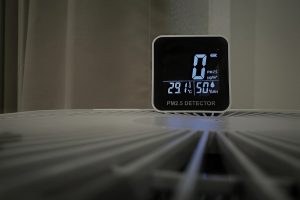
[3]In working with builders, owners, and real estate professionals, architects can engage in meaningful conversations to inform the operations trajectory of the building and determine who the building occupants and maintenance personnel will be. This supports architects in designing buildings to make continuous performance monitoring easy and accessible to them. For example, in the design of hospitality or entertainment spaces, where variable capacities can impact thermal comfort and seamless aesthetics are a priority, architects can introduce creative solutions for “hidden” air quality monitoring devices with the use of materials like perforated metals.
The new ratings, architects, and design clients
Integrating WELL strategies into designs can provide owners and real estate professionals with the confidence that their buildings are high-performing and equipped to foster health and wellness amongst building occupants. While this is critical in new builds, Cooper explains the importance of collaboration between design professionals and owners and operators as architects can “conduct a gap analysis on the base building to identify what’s been in place and what additional strategies to implement.” She adds, “Architects play a key role in translating those goals into design solutions—such as material selection and daylight optimization—that support base building performance.”
- [Image]: https://www.metalarchitecture.com/wp-content/uploads/2026/02/bigstock-Panoramic-and-perspective-wide-69737821.jpg
- introduced two new ratings: the WELL Real Estate Rating and the WELL Operations Rating: https://resources.wellcertified.com/press-releases/iwbi-expands-well-with-two-new-ratings-to-help-real-estate-leaders-deliver-on-investor-and-tenant-demands/
- [Image]: https://www.metalarchitecture.com/wp-content/uploads/2026/02/bigstock-Sensor-Detects-No-Small-Harmfu-329702449.jpg
Source URL: https://www.metalarchitecture.com/news/industry-news/well-ratings/