Metal Roofing Retrofits
by hanna_kowal | December 26, 2025 3:23 pm
 [1]
[1]Photo courtesy Force Engineering and Testing
Many metal roofing retrofits involve taking an old low-slope roof that has reached the end of its useful life and upgrading it to the latest, long-life, low-maintenance, code-compliant metal roof system. While this process may not share the glamour of designing a new building and floor plan, it is a critical part of the architectural design and specification process, ensuring the client achieves the best possible result.
There are methods for repairing existing damaged or degrading roof systems. A common method involves foam insulation, filling the flutes of old panels, and stretching single-ply thermoplastic polyolefin (TPO) roofing. Installing a new metal roof over an existing, troublesome roof, however, has numerous benefits for both the short-term and long-term life of a structure. Designers and specifiers familiar with metal roofing often make it their first choice over single-ply TPO or its equivalent.
Reducing roof fastener damage
 [2]
[2]Photo courtesy Roof Hugger
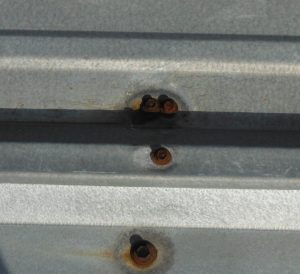
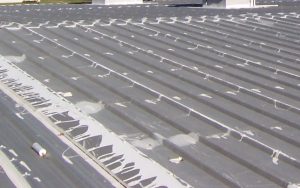
Most older roofs are through-fastened, and fastener failure is a common issue. This is compounded by improperly repairing these fasteners by applying caulk over the top of them, which shortens the remaining lifespan of the roof. New standing seam metal roofs have very few exposed fasteners, plus they have the added ability to move with the expansion and contraction of the panels. Standing seam roofing employs sliding clips that are seamed into the side laps of the new roof system and do not require the panels to be penetrated with fasteners. The fewer the number of penetrations, the lower the possibility of water intrusion. Most metal roof manufacturers now offer weathertightness warranties that last 20 years or longer.
Boosting longevity and functionality
New metal roofing material options include premium finishes with 45 percent zinc and 55 percent aluminum, many of which have a life expectancy of 70 years or more, accompanied by finish warranties of up to 50 years. This option ensures the lowest lifetime roofing cost, unlike single-ply TPO roofing, which has an expected lifespan of 18 to 24 years, one-third the life of metal roofing.
 [3]
[3]Photo by Charlie Smith/courtesy McElroy Metals
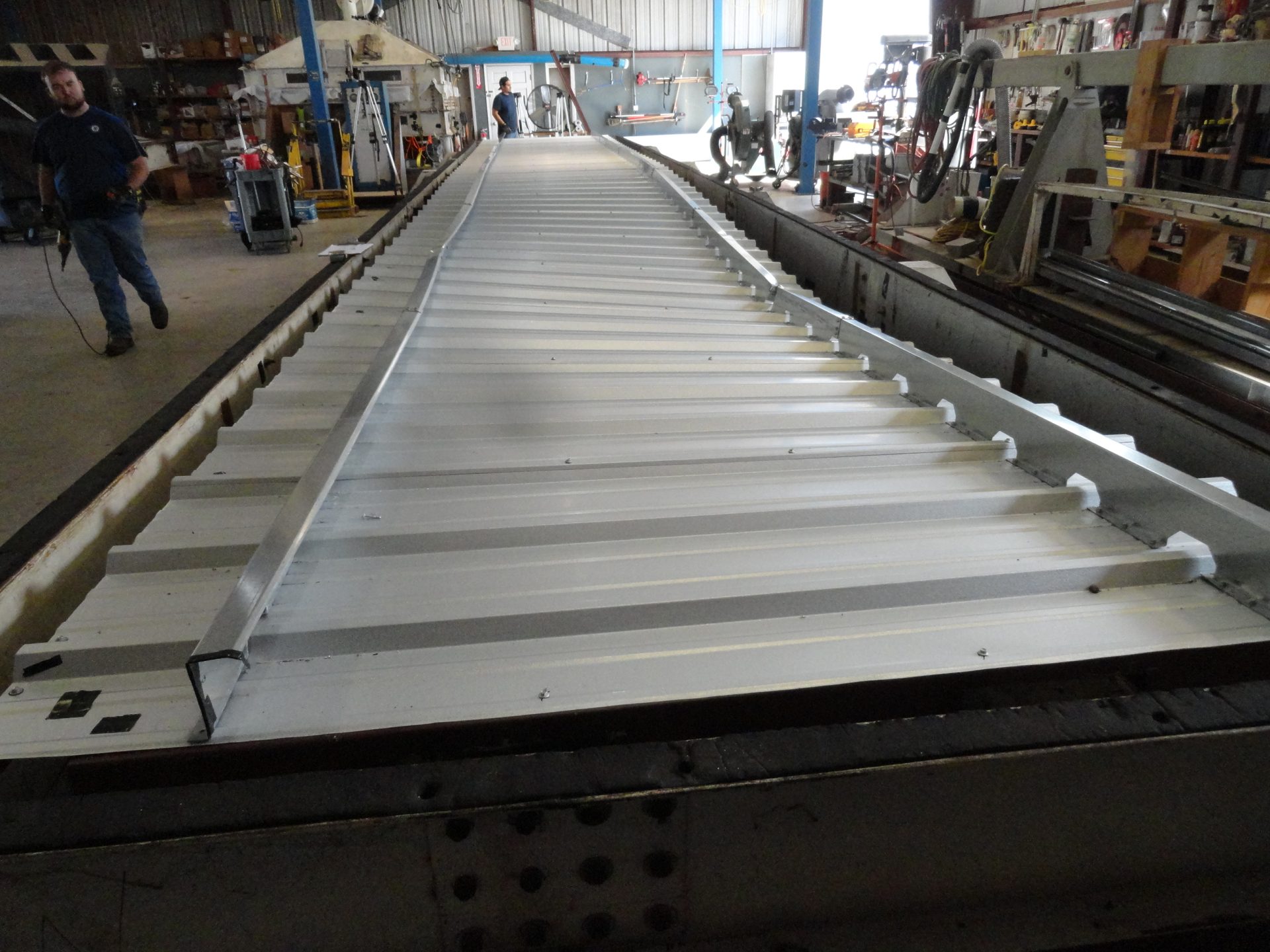
Weight, a common concern when it comes to re-roofing, can be addressed with the use of a tested notched zee retrofit system, which has been shown to add capacity to the existing roof purlins in most cases. These products attach directly to the existing roof purlins through the existing roof panels and effectively add depth to the existing purlins, giving them an added load capacity. Single-ply systems, however, only add additional weight.
Code compliance
Code compliance for new wind and snow loads is handled on the building exterior without disruption of ongoing operations or security within the building. Metal roofing is a structural component of existing metal buildings. Screw-down roofing provides diaphragm strength to the entire building and must remain in place when re-roofing. The panels transfer the wind and snow loads to the building purlins. Older metal buildings typically have purlins placed 127 mm (5 in.) on-center (o.c.); however, when the latest wind and snow codes are applied, the old panels do not meet current requirements. In high snow load areas, single-ply systems that rely on the old non-compliant panels for support do not meet these code mandates and actually make things worse by adding more deflection from their weight.
 [4]
[4]Photo courtesy Roof Hugger
Frequently, the new metal panels must also have the purlin spacing reduced for proper support. Fortunately, external sub-framing easily allows additional members to be installed more closely, reducing purlin spacing to properly support the new panels.
Maintaining design engineering
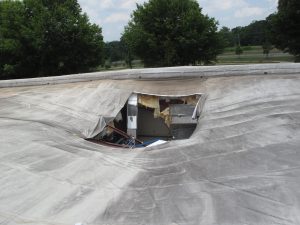
It is important to note that single-ply TPO roofing alters the original engineering design of metal buildings by changing them from a channeled water flow between the panel ribs to sheet flow across the roof. This sheet-flowing water or snow will accumulate on the roof between the main frames, where purlin deflection is highest, as it moves toward the eave. Metal roofs were never designed to allow standing water to accumulate. Single-ply systems can alter water flow and cause roof water ponding, particularly in buildings with parapet walls that extend above the roofline. This creates a risk of catastrophic failure and potential liability, resulting from excessive weight being placed on the existing roof panels and purlins.
Sustainable adaptability
 [5]
[5]Photo courtesy Roof Hugger
Standing seam metal roofing is ideal for attaching photovoltaic (PV) panels. Exterior seam clamps enable the attachment of solar panels without penetrating the metal roof. Single-ply roofing requires numerous penetrations, and further, it must be replaced before the solar panels reach the end of their useful lives. Metal roofs far outlast the life of PV panels.
Aesthetic appeal
Retrofitting offers exciting and attractive design benefits, especially on high-slope, highly visible roofs or facades. Breathing life into an older building with a new 40-year-plus metal system, the materials are available in a full palette of colors and rib styles. This means that, beyond solving the problem of a failing roof, curb appeal and a tangible increase in building value are added benefits.
The option to add PV systems without penetrating the new roof at any time within the next 15 years is also a valuable feature. Researching and specifying the correct roof panels and framing system for a metal-over-metal retrofit ensures durable, long-lasting structures and optimizes roofing opportunities. These critical considerations achieve the best result and value for the investment in a structure.
Dale Nelson is a founding partner and the current president of Roof Hugger. He is also a member of LSI Group in Logansport, Ind. Nelson holds a Class A Florida contractor’s license and a Florida real estate broker’s license. He is a past chairman of the Metal Construction Association (MCA) and has received both the Patrick R. Bush and Larry A. Swaney awards from the MCA. Dale is a 25-year member of the International Institute of Building Enclosure Consultants (IIBEC) and a two-time recipient of the Metal Building Manufacturers Association (MBMA) Innovation Award. He was also inducted into the Metal Construction News’ Metal Construction Hall of Fame in 2019.
- [Image]: https://www.metalarchitecture.com/wp-content/uploads/2025/12/Purlin-Strength-Testing.jpg
- [Image]: https://www.metalarchitecture.com/wp-content/uploads/2025/12/Fastener-Failure-3.jpg
- [Image]: https://www.metalarchitecture.com/wp-content/uploads/2025/12/Roof-Failure.jpg
- [Image]: https://www.metalarchitecture.com/wp-content/uploads/2025/12/Code-Compliant-Framingjpg.jpg
- [Image]: https://www.metalarchitecture.com/wp-content/uploads/2025/12/Poor-roof-repair.jpg
Source URL: https://www.metalarchitecture.com/news/metal-roofing-retrofits/