Why Metal Architecture is Entering a Defining Moment
by hanna_kowal | February 4, 2026 2:55 pm
 [1]
[1]Photos by Bill Timmerman/courtesy CO Architects
In Metal Architecture‘s State of the Industry roundtable, six industry leaders examine current conditions and emerging directions shaping the metal and architecture sectors. This summary highlights key points from the discussion, organized around three themes: associations and accreditations, material and design trends, and contemporary considerations influencing architectural practice today. Watch the full recorded roundtable for a deeper look at the conversation.[2]
Meet the experts
 [3]Eric Pros is the director of design at DS Architecture, where he has dedicated his career to architectural design excellence. Pros has led a collaborative practice based in Northeast Ohio for 14 years, which works nationally through strategic partnerships. He is an active mentor and volunteer, organizing civic design initiatives and supporting professional development for students and peers. He serves as an advisor and juror for the Metal Building Manufacturers Association (MBMA) Student Design Competition, promoting smart, high-performing applications of metal systems while inspiring college students throughout North and Central America. Pros also serves as a presenter for the National Coil Coating Association (NCCA) and other industry organizations, speaking at their annual conferences on material innovation, building envelopes, and lessons learned from public-sector work.
 [4]
[4]
Alan Scott, FAIA, is a registered architect and sustainability practitioner with more than 35 years of experience and a lifelong commitment to the environment. He is the director of sustainability with Intertek’s Building and Construction division. As a solutionist, his consulting advances sustainability, healthy buildings, and resilience goals for built environment projects. Scott currently serves as vice-chair of the U.S. Green Building Council (USGBC) Resilience Working Group, incoming chair of the AIA Resilience and Disaster Response Committee, and as a member of the LEED Environmental Quality Technical Advisory Group.
 [5]
[5]
Tony Bouquot is the general manager of the Metal Building Manufacturers Association (MBMA). He is also the on-screen talent for the popular “Travels with Tony” YouTube series and speaks regularly at conferences and conventions throughout the U.S.
 [6]Anna Arnot, a New Jersey-born architect, joined RODE Architects in 2018. Before becoming a Dorchester resident, she lived, worked, and studied in Washington, D.C. for 10 years. She earned her Master of Architecture and Master of Sustainable Design degrees from Catholic University. As a designer, Arnot is passionate about helping clients through the early stages of design, including developing and understanding the project’s program and vision. She focuses on blending building function with strong conceptual design and passive strategies. Outside of architecture, she enjoys traveling, hiking, and exploring the city with her dog and son.
 [7]
[7]
Arnold Swanborn, AIA, principal of CO Architects, has created a diverse portfolio of award-winning projects in his 28-year career that includes university research and academic facilities, academic health sciences facilities, healthcare facilities, and K-12 schools, as well as national and international commercial, residential, and mixed-use facilities ranging from 100,000 to more than 2 million square feet. Swanborn leads and sets design direction within the office and on projects, and he is responsible for developing and integrating those principles into the firm’s projects. He received his Master of Science in Advanced Architectural Design from Columbia University and his Bachelor of Architecture from the University of Southern California. He joined CO Architects in 2008.
 [8]
[8]
Mike Weis, vice president of sales at Carlisle Architectural Metals (CAM), began his career at Reynolds Metals Company in 1995. He then joined Petersen Aluminum in 1999 as Southeast sales manager, later advancing to vice president of sales and marketing. With more than 30 years of experience in the architectural metals industry, Weis has established himself as a respected leader in architectural metal envelope solutions. In his current role, he oversees sales strategy and execution across Carlisle Architectural Metals’ (CAM) portfolio, which includes some of the industry’s most recognized brands: PAC-CLAD | Petersen, Drexel Metals, Metal-Era, Hickman Edge Systems, and Citadel Architectural Products. With a steadfast focus on the customer, Weis is committed to delivering high-performance building envelope solutions.
Associations and accreditations
The foundational support for sustainable advancement and continued excellence in the metal and architecture industry is provided by active engagement with professional associations and participation in rigorous accreditation processes. These elements work in tandem to promote shared knowledge, advocacy, and adaptive solutions to the evolving demands of the built environment.
Members of the metal and architecture industry empower and stimulate the built environment, and fostering connection throughout the community is essential for continued growth and mutual support. Tony Bouquot aptly expresses the power of organizations and associations, saying members hold “a more resounding voice, because we’re speaking as one.”
Platforms for connection and support: MBMA and MCA
In the context of industry associations, Bouquot, as general manager of the Metal Building Manufacturers Association (MBMA), emphasizes that the organization’s key current focus is collaboration. He offers this perspective: “When companies in the same industry come together in a trade association, they are much stronger as a group than they are individually.” This collaborative strength is harnessed in a wide range of activities, including collective representation in code hearings, conferences, and marketing efforts.
From the perspective of practitioners, associations like the Metal Construction Association (MCA) are essential advocates. Mike Weis offers a member’s point of view on the MCA, calling them “advocates in our industry.” These organizations serve as essential forums for promoting the community collectively and provide vital support through a network of passionate and engaged professionals.
The value of associations extends to the integration and synchronization of the entire architecture, engineering, design, and construction (AEDC) process. Eric Pros describes the associations as a “vital bridge between the manufacturers, the suppliers, and the end users,” adding, “The architects are a part of that supply chain as well.” He further emphasizes the crucial role of associations in publishing technical information and resources that support project-related questions, truly streamlining the integration of metal materials into designs.
Associations amplify collective advocacy at the regulatory and code levels, facilitate the sharing of research and technical expertise, enhance opportunities for industry-specific networking and mentorship, and increase the capacity to respond to market demands as a unified, adaptive entity.
Shared sustainable objectives: LEED and AIA
Professional associations and accreditation frameworks, such as the AIA and LEED, serve not only as support mechanisms but also as guiding pillars for industry progression, emphasizing sustainability, resilience, and lifelong learning. As AIA Ohio president, Pros shares: “It’s been a very busy year, and it’s been a very effective year as well.”
He explains the three-tier AIA structure, comprising national, state, and local levels, each operating under separate guidelines.
Pros aptly summarizes the current focuses of each tier:
- Nationally, “there’s a lot of emphasis on climate change and resiliency; things like housing and equitable practice that affect firms across the country.”
- On the state level, “we’re much more focused on advocacy and some of the connectivity amongst our members and making sure that the members in Ohio are connected to national resources, as well as some of the local events that are happening.”
- Locally, “that’s really where you get that one-on-one kind of mentorship and networking.” Pros elaborates, “You get things like hard hat tours and things that really make it personal and bring that value back home.”
As a LEED fellow, Scott notes the overlap between AIA and LEED objectives. He also offers current updates on LEED certification. LEED version 5 (v5) was released in spring 2025. Currently, there is an overlap period between version 4 and version 5; the ability to register projects in version 4 will end in March 2026. From then on, the projects must be completed within six years, and all new projects will only be able to register with LEED v5. He shares that LEED adoption numbers are still increasing, despite being slower than in past decades. He also explains that there is notable growth in the number of certifications for operation and maintenance.
Scott observes a significant overlap between LEED and AIA updates. He explains, “LEED v5 references the Common Materials Framework (CMF), which is an expanded ranking of the environmentally preferable materials going into LEED certifications.” He notes the framework “fits in with the AIA introducing the new AIA Materials Pledge, which is similar to the 2030 challenge that architects have been part of for a while, and now focused on architects committing to specifying more sustainable options for materials and reporting those achievements on an annual basis with their projects moving forward.”
The new version also introduces a property resilience assessment prerequisite as well as resilience-related credits. Scott notes, “The AIA recognizes that conducting resilience assessment and informing clients about current and future hazards is part of the architect’s evolving standard of care, and so whether they’re doing LEED projects or not, architects should be thinking about doing resilience assessments for each project and having that conversation with their owner about their risk tolerance and their concerns moving forward, but for LEED v5 projects, that will be required for every one of them.”
Resilience with LEED v5 entails:
- An assessment to identify the hazards a project faces, and which hazards are most significant.
- Qualitative consideration of how the project team can respond to that element.
- Optional credits focused on specific hazards identified in the assessments.
Pros notes, in working with clients, the LEED process encourages the adoption of “energy modeling as a part of our design process to evaluate performance of the project throughout design.” He explains that using it as a framework, even with projects not intended for LEED certification, ensures “real-time feedback as we’re making design decisions and getting client input.”
In forecasting the direction of this process, Scott mentions: “Energy modeling that looks at future climate, using future typical meteorological data as opposed to typical meteorological year data, and modeling might become an important part of that process.”
As codes and specifications evolve, they grow towards similar values and metrics used in accreditation. Anna Arnot remarks, “Outside of accreditations, now codes are really requiring these enhanced properties to the buildings.” She stresses the importance of integrating accreditation criteria early: “Even if we aren’t going through the full accreditation, the understanding of those credits and utilizing them in the design early on, because we are designing against them, is really important.”
In response to this industry-wide movement towards sustainable practices, the specification of metals becomes more sophisticated as Arnold Swanborn observes, “There’s definitely an impact on how we specify metal now,” and adds, “natural materials and plate materials, or gauge materials that can span without oil canning and without plastic substrates are becoming much more popular amongst owners.”
Engagement with associations and accreditations thus accelerates innovation, ensures risk mitigation, promotes transparent sustainability metrics, and enriches the profession through powerful networks and mentorship.
 [9]
[9]Industry trends
Steel stability, aluminum adaptability, and the natural metal movement
Material and design decisions in architecture are highly dynamic, shaped by both evolving aesthetic ideals and increasingly stringent sustainability standards. The evolution of metal as a principal design and construction material is central to this progression. The panel discusses how the AEDC process and metal have complementary evolution. Pros explains that metal has become “a form of expression, and not just a cladding solution.”
“Steel is the common denominator in a lot of these projects, but I’m seeing a trend towards aluminum,” says Weis on the topic of metal materials that have gained or maintained popularity in 2025. He emphasizes the increased demand for aluminum, highlighting its sustainable, lightweight, durable, and high-performance qualities. From corrosion resistance to perforation opportunities, the versatility of aluminum in both functional and aesthetic applications is driving an increased demand.
The appeal of natural metals is also on the rise. Further on Swanborn’s observations of sustainability’s movement towards natural metals, Weis explains that there is an increased demand for copper and zinc, two timeless materials. These metals are critical for projects with a historic restoration component, describing their value in ensuring “the original design intent is held.” Despite the installation challenges, he asserts their worth: these are materials that “will stand the test of time.” This renewed appreciation for authentic finishes parallels an owner-driven interest in sustainability, durability, and heritage-driven design.
 [10]
[10]Rendering courtesy RODE Architects
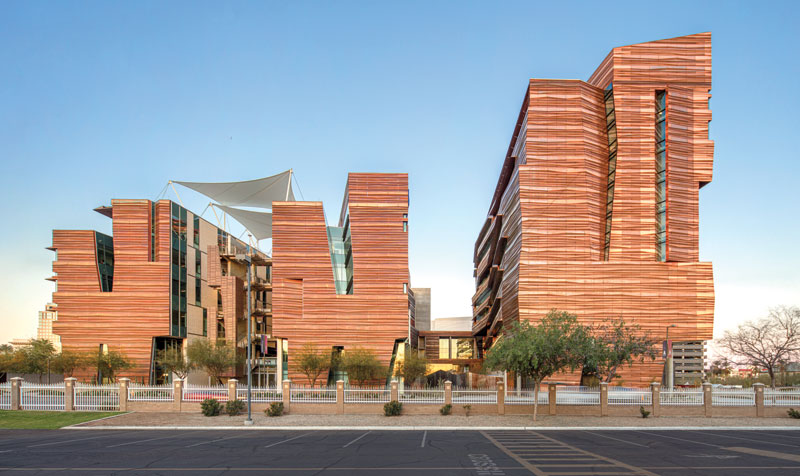
Beyond historical projects, natural metals are increasingly used in designs to represent local landscapes. Swanborn describes a project in Phoenix, Ariz., in which copper unlocked the opportunity to mimic geological processes. The design utilized a brake press to create diagonal lines, successfully evoking the natural look. He explains the material “allowed us an amount of freedom that not many products would have allowed us to do.” The material’s light weight, sustainable qualities, and versatility allowed for a truly expressive design.
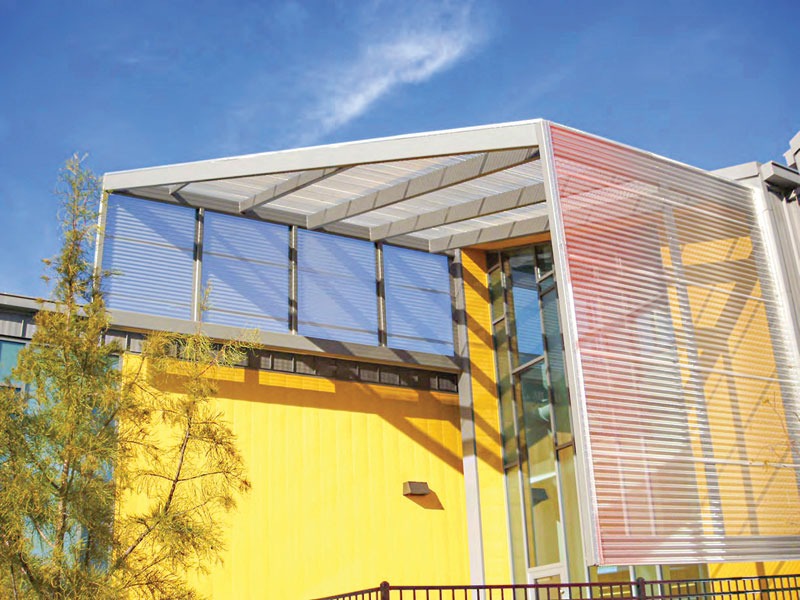
Metal rainscreens and insulated metal panels (IMPs) are increasingly used in building envelopes, as Arnot emphasizes, due to their provision of high performance in terms of continuous insulation (c.i.) and their support for energy modeling goals. Swanborn highlights the key value of metal sunscreens in enhancing thermal and operational performance.
Offering a perspective from the metal building system standpoint, Bouquot shares that the MBMA’s number of IMP manufacturing members has doubled over the last three years, with the largest growth coming from European manufacturers moving into the U.S. market. A testament to the material, he explains that the Davidson Center, home to the Saturn V rocket at the U.S. Space and Rocket Center in Huntsville, Ala., is clad in IMPs. He explains, “Within one product, they were able to get this beautiful white exterior that matches that space look of NASA and this black interior that gives good contrast for all of the displays in the building.”
Adaptive reuse, local longevity, and blending function with aesthetic
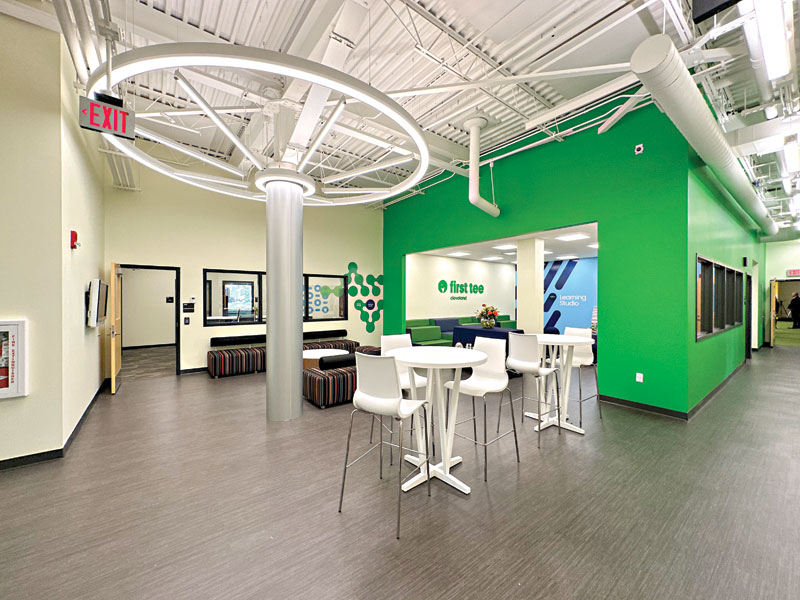
In keeping with the sustainable movement in associations and accreditations, material, longevity, and versatility are key. Pros notes a spike in the adaptive reuse of existing metal buildings. He mentions an example of the expansion of a local non-profit. Re-designing and adapting a pre-existing structure on the property proved to be the most economical and sustainable option. The project involved recladding and an emphasized focus on the interiors. He draws in the importance of material durability, saying, “It’s another way of looking at the kind of life cycle of these products and these buildings that have longevity to them, as they can be reimagined many times.” He projects that this emerging trend will continue in future designs.
 [11]
[11]Photo by Eric Pros/courtesy DS Architecture</e
As design attitudes shift away from temporary trends in favor of enduring, resilient styles, Swanborn offers a critical observation: “Timeless architecture is coming back; trendy architecture needs to be replaced over time because it gets old very quickly.” Technological advancements support this movement as Swanborn explains, “The options of choices to clad a building have significantly increased … We can effectively mimic terracotta panels out of metal now. And that wasn’t possible five, 10 years ago.” Metal now accommodates blended aesthetics as well.
When considering the built environment on a cultural level, metal supports designing for specific building occupants. With the innovative aesthetic developments and opportunities now available with metal, there is a shift away from metal structures that lack a distinct identity. Arnot expresses the essential considerations of the community’s sense of architectural belonging, that “the project is of the place.”
Integrating culture into designs is essential on the community level. Pros highlights the importance of authentic structures from material to design. The idea of cultural designs ties in with resilience and sustainability through “working with these municipalities and designing buildings that will outlive them.”
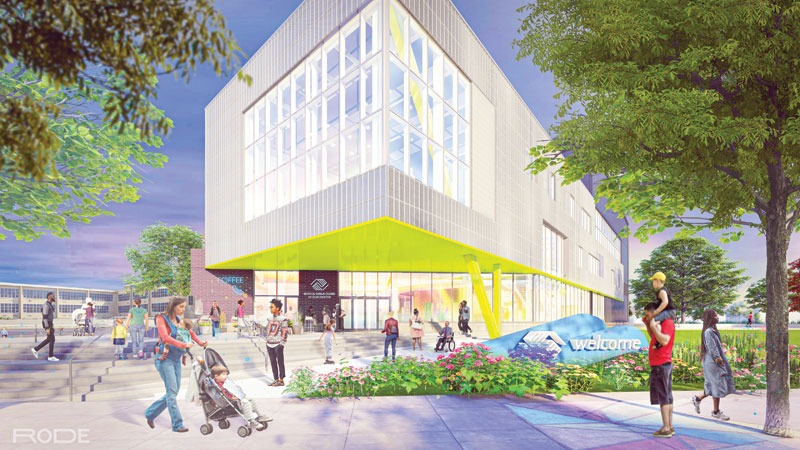
A current project, called Fieldhouse+, in Dorchester, Mass., exemplifies the adaptability of metal. This 6,967.7 m2 (75,000 sf) design is an urban community center developed in collaboration with the local Boys and Girls Club.
Arnot described the balance of function and form that went into the project: “It really needed to be for the kids. It needed to be industrial, though, because it is a huge field house. It needed to have the durability of metal but then start to feature colors and textures that really represent the community and the colors and methods used by children. It becomes a lot more approachable and a space they feel welcome in.” The project features a double-facade system with IMPs, perforated panels, and inviting coating colors.
Forecasting design demands
 [12]
[12]Photo courtesy Metal Building Manufacturers Association (MBMA)
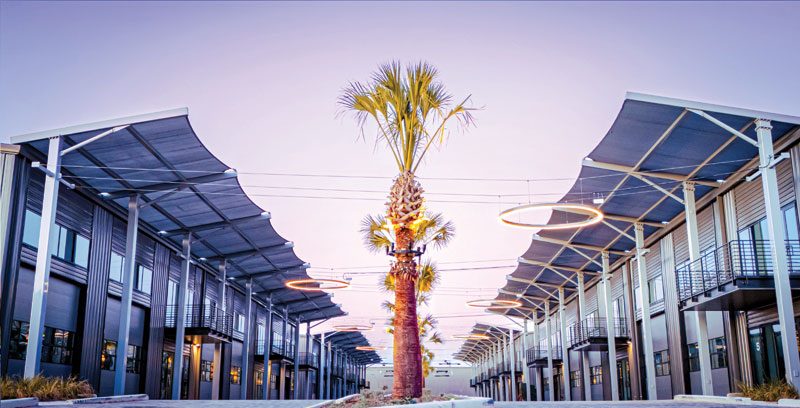
New developments are also dependent on community demands, and Bouquot notes two widespread phenomena that have led to the erection of many metal buildings over the past few years: indoor pickleball courts and private automotive clubs. These pickleball court structures often hold the capacity for dining as well as recreation, and the auto clubs act as a recreation and event space beyond their transportation storage capacities. Integrating metal prominently into these designs as they increasingly emerge will foster sustainability and style in these niche aspects of the built environment.
Modern-day considerations in architectural practice
Modern architectural practice is characterized by a deeper integration, technological innovation, and a drive to design with foresight in a rapidly changing regulatory and environmental context.
Pros describes this evolution, stating the projects across the industry are “much more integrated these days. Architects are no longer just designing buildings; we’re coordinating and collaborating with teams in real time.” He identifies cloud models, fast information sharing, and artificial intelligence (AI) as transformative elements in the profession.
The responsibility architects bear is adapting to meet future requirements. Scott observes, “Architects are not just designing for now, but they’re designing for the future, and there’s an increasing number of municipalities and states are adopting building performance standards, which, while the architect doesn’t have to make sure the building complies with that on day one of a new building opening, the owner will have to comply with that in future years.” This forward focus necessitates rigorous attention to emerging standards, lifecycle adaptability, and holistic resilience.
The architectural conversation has thus turned strongly toward the enduring: sustainable materials, adaptive reuse, lifecycle design, and a rejection of passing trends in favor of buildings that remain relevant and resilient long into the future.
Conclusion
The current narrative in architecture and metal design is one of heightened unity, foresight, and ethical responsibility. Through associations and accreditations, high-performance and aesthetically versatile materials, and an integrated, future-ready approach to professional practice, the metal architecture industry is equipped not only to meet the needs of today’s built environment but to shape one that is sustainable, resilient, and adaptable for generations to come.
- [Image]: https://www.metalarchitecture.com/wp-content/uploads/2026/01/CO_AZ-HSEB-BSPB_Timmerman_032.jpg
- Watch the full recorded roundtable for a deeper look at the conversation.: https://www.metalarchitecture.com/videos/state-of-the-industry-roundtable/
- [Image]: https://www.metalarchitecture.com/wp-content/uploads/2026/01/Eric-Pros-Headshot.jpg
- [Image]: https://www.metalarchitecture.com/wp-content/uploads/2026/01/Alan-Scott_headshot_2024_cropped.jpg
- [Image]: https://www.metalarchitecture.com/wp-content/uploads/2026/01/Tony.jpg
- [Image]: https://www.metalarchitecture.com/wp-content/uploads/2026/01/Anna-Arnot.jpg
- [Image]: https://www.metalarchitecture.com/wp-content/uploads/2026/01/CO_Arnold-Swanborn_2022_Photo-BethColler_N202_print.jpg
- [Image]: https://www.metalarchitecture.com/wp-content/uploads/2026/01/MikeWeis_Petersen.jpg
- [Image]: https://www.metalarchitecture.com/wp-content/uploads/2026/01/pix-MS-Childrens-Museum-2.67-shade-screens-2022_Page_17.jpg
- [Image]: https://www.metalarchitecture.com/wp-content/uploads/2026/01/EXT_Entry-Plaza.jpg
- [Image]: https://www.metalarchitecture.com/wp-content/uploads/2026/01/IMG_4336.jpg
- [Image]: https://www.metalarchitecture.com/wp-content/uploads/2026/01/Circuit-of-the-Americas-T11-Car-Condos-3.jpg
Source URL: https://www.metalarchitecture.com/news/state-of-the-industry-summary/