How metal anchors the culture
of a Jersey Shore municipal building
by hanna_kowal | June 29, 2026 2:12 pm
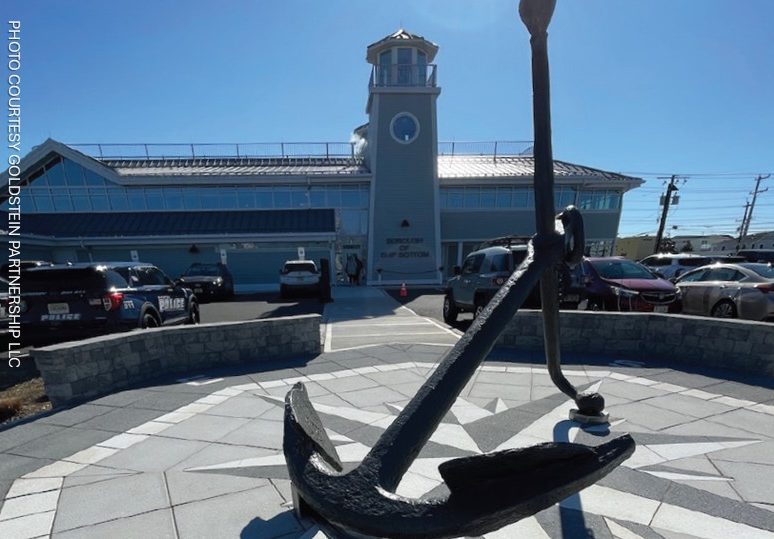 [1]A salvaged metal anchor sits in the center of a plaza in Ship Bottom, a Long Beach Island borough in Ocean County, N.J. This artifact comes from a steel-hulled cargo ship called the Fortuna[2], which capsized off the coast of New Jersey in 1910. A symbol of Ship Bottom’s coastal spirit, the strength of metal is embedded in this community’s culture and architecture.
Alongside this anchor, a municipal building[3] constructed in 2025 now complements the historic charm of the locale with its prominent metal elements. The facility houses offices for the council, court, and police and postal services.
The building faces the Atlantic Ocean, on a strip peppered with historic lighthouses. It is this location that ingrains the facility’s design into the local culture; it makes an impression on travelers and locals alike. “The population quadruples in the summertime,” notes Eliot Goldstein, managing partner of The Goldstein Partnership[4], the architecture firm for the project.
For Goldstein, a New Jersey-based architect, this design was a meaningful opportunity to create a local landmark.
Nautical views from above
Goldstein explains the unique situation of the location: “You’ve got the ocean just a block away on one side and a bay just one or two blocks away on the other side.”
Standing seam aluminum snap-lock panels from Architectural Design Panels Inc.[5] and installed by Coffey Brothers Inc.[6] provide a durable and distinctive roofline, with a coating designed to withstand the weathering conditions of waterside properties.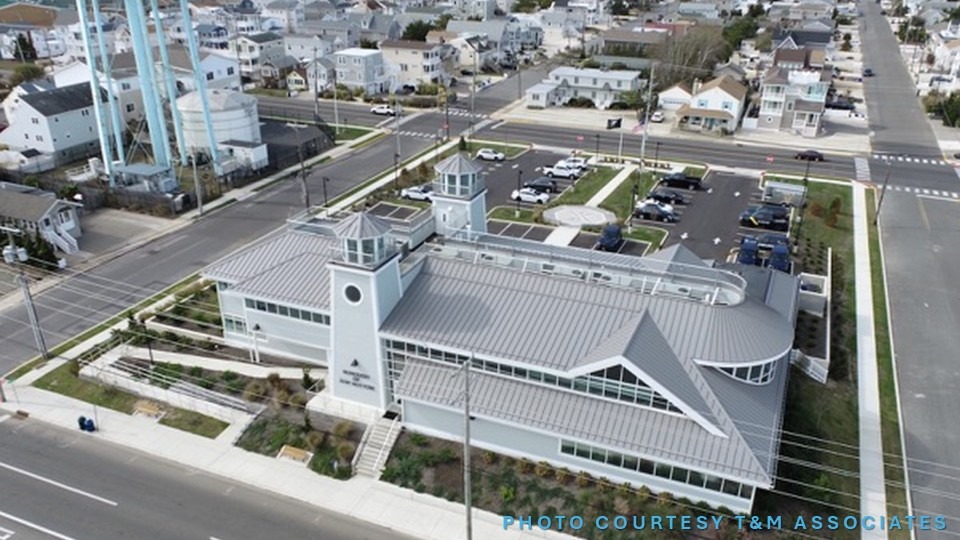 [7]
[7]
Beyond its climate compatibility, the geometry of the structure—with a prominent oblong second story section, lighthouse-inspired platforms, and rectangular portions of the first story—works with the slate-colored material to create an imaginative effect. From some angles, it mimics the appearance of a ship deck and pays homage to widow’s walks on traditional fishermen homes.
Guardrails line the oblong rooftop equipment well and lighthouse-like platforms, further contributing to the structure’s nautical aesthetic. These field-painted shop-fabricated fixtures include 2.5 in. (63.5 mm) O.D. aluminum top and bottom rails infilled with 0.75 in. (19.05 mm) aluminum balusters at 6 in. (152.4 mm) o.c., secured to stainless steel posts.
Steel strength from within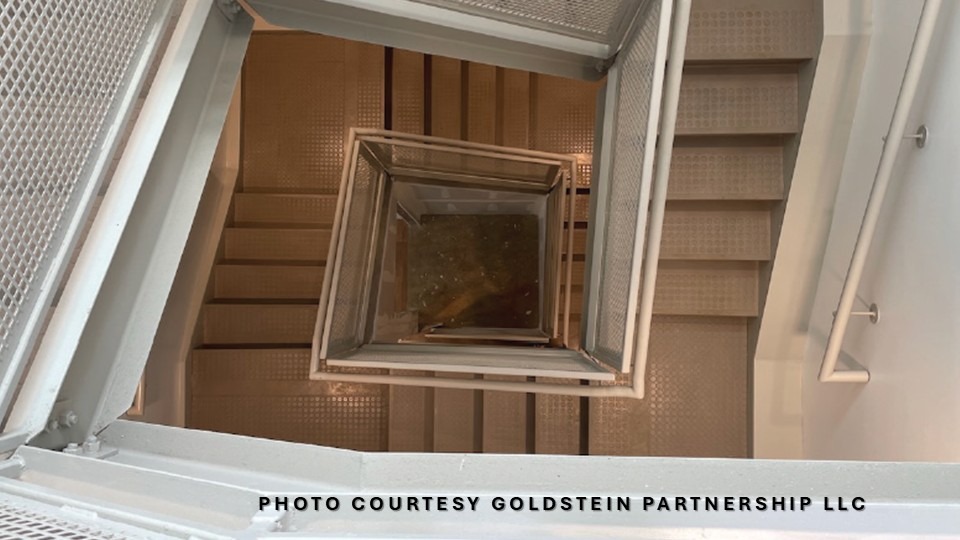 [8]
[8]
Embodying the strength of metal from the inside out, this structure uses 16 gauge perforated cold-rolled carbon steel for infill panels at the interior stairs. These field-painted panels from McNichols[9] include 0.75 in. (19.05 mm) openings at 1 in. (25.4 mm) straight centers, with 56 percent open area, and with 1 in. (25.4 mm) steel edge trim. They were attached to the railings with steel railing clips.
Architecturally, these metal features integrate the new Ship Bottom municipal building into the naval dialect of Jersey Shore.
- [Image]: https://www.metalarchitecture.com/wp-content/uploads/2026/06/Anchor-4-e1782756675492.jpg
- Fortuna: https://rivertonhistory.com/2021/02/how-the-fortuna-shipwreck-became-an-icon-for-ship-bottom-nj/
- municipal building: https://shipbottom.org/government/departments/municipal-court/
- The Goldstein Partnership: https://goldstein-architects.com/
- Architectural Design Panels Inc.: https://www.adpius.com/
- Coffey Brothers Inc.: https://www.coffeybrothersinc.com/
- [Image]: https://www.metalarchitecture.com/wp-content/uploads/2026/06/Overheadview-1.jpg
- [Image]: https://www.metalarchitecture.com/wp-content/uploads/2026/06/Perforated-metal-stairs-1.jpg
- McNichols: https://www.mcnichols.com/
Source URL: https://www.metalarchitecture.com/projects/historic-jersey-shore/