

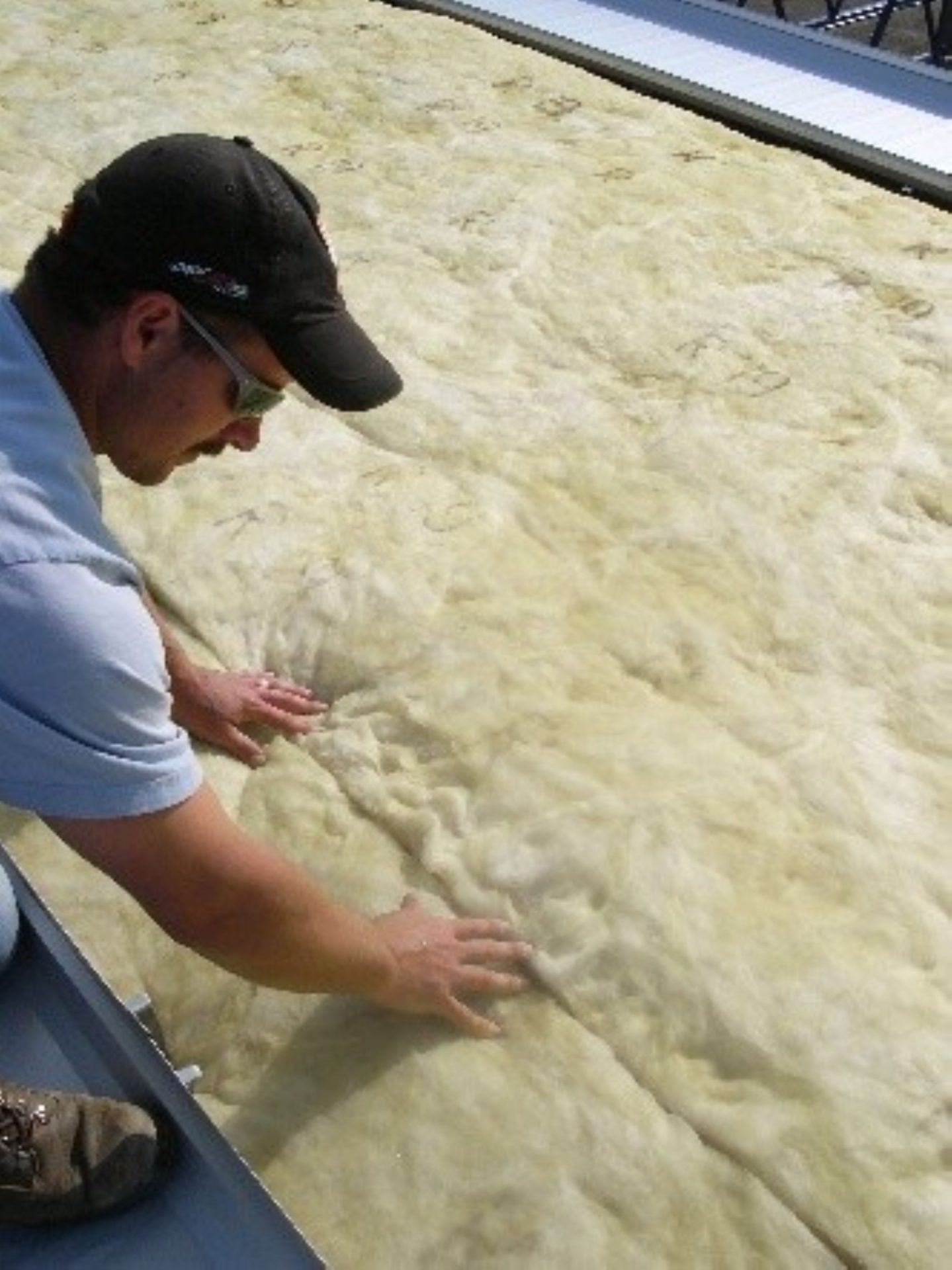
The R-value of an insulation product is a thermal resistance rating that communicates how well a material resists heat flow. The higher the R-value, the better the insulation restricts heat transfer. Most insulation manufacturers use the ASTM C518 test to measure a material’s resistance to heat flow. Established by the American Society for Testing and Materials (ASTM), the ASTM C518 test is a standardized method that assesses the steady-state thermal transmission properties of a material using a heat flow meter apparatus. In addition to serving as an essential tool for many industries, ASTM C518 is a building code requirement for insulation.
R-values for metal building insulation range from R-8 to R-30. The most common fiberglass metal building insulation R-values include:
- 50.8 mm (2 in.): R-8, before lamination
- 86.4 mm (3.4 in.): R-10
- 94 mm (3.7 in.): R-11
- 109.2 mm (4.3 in.): R-13
- 134.6 mm (5.3 in.): R-13
- 160 mm (6.3 in.): R-19
- 203.2 mm (8.0 in.): R-25
- 235 mm (9.25 in.) R-30
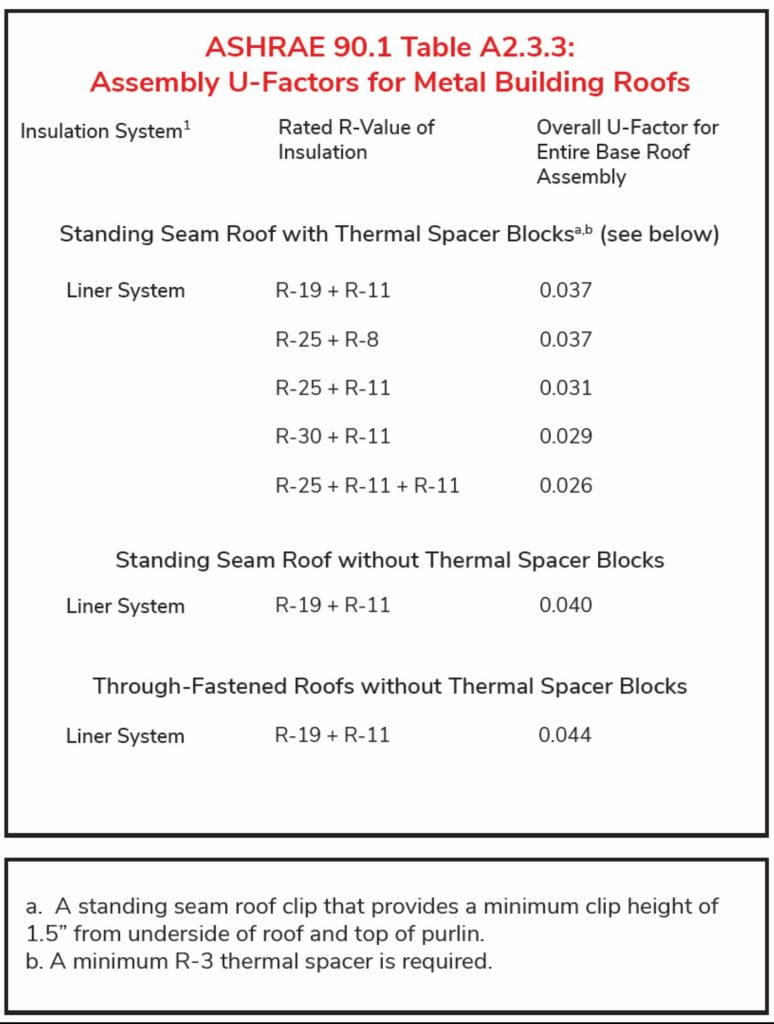
Figure 1. ASHRAE 90.1-2016 liner system roof R-values and U-values.
Photos courtesy National Insulation Association (NIA)
It should be noted that thicknesses are nominal, as manufacturers produce different thicknesses to meet R-values. Commercial energy code requirements dictate the minimum R-value necessary for all new construction, additions, and alterations performed in the United States.
Once the R-value is determined, designers can use this data to better understand how a material will perform in an assembly. Heat flow through a material is driven by the temperature difference on each side of the material or assembly. Most construction types and code tables leverage the R-value table as a guide to code compliance. However, it is important to remember that the R-value table should not be mistaken for a reference for the total performance of an assembly. Metal-framed walls, wood-framed walls, and metal building walls and roofs undergo testing that determines the U-value of the entire assembly. The result of that testing can be found in the U-value table.
Photos courtesy National Insulation Association (NIA)
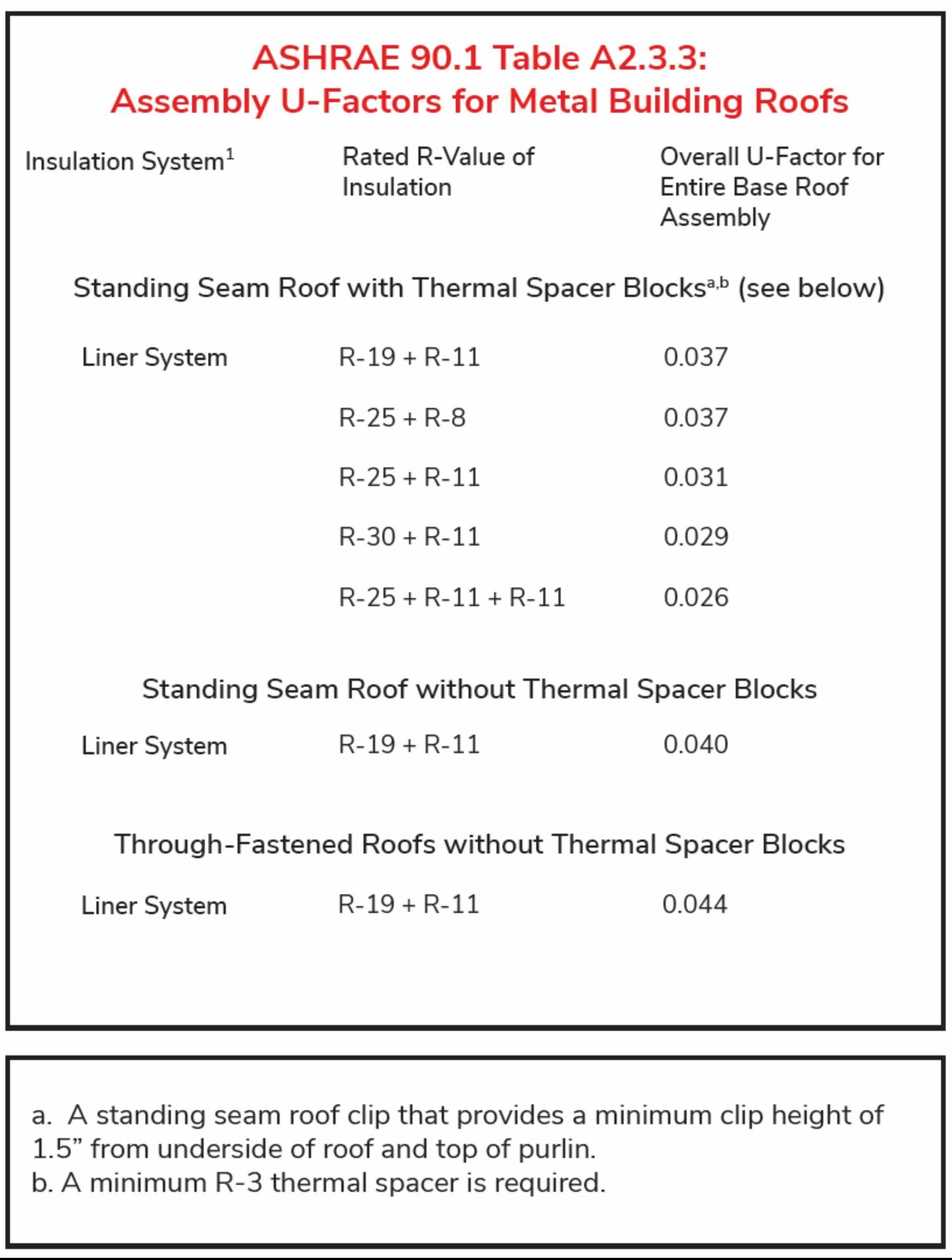
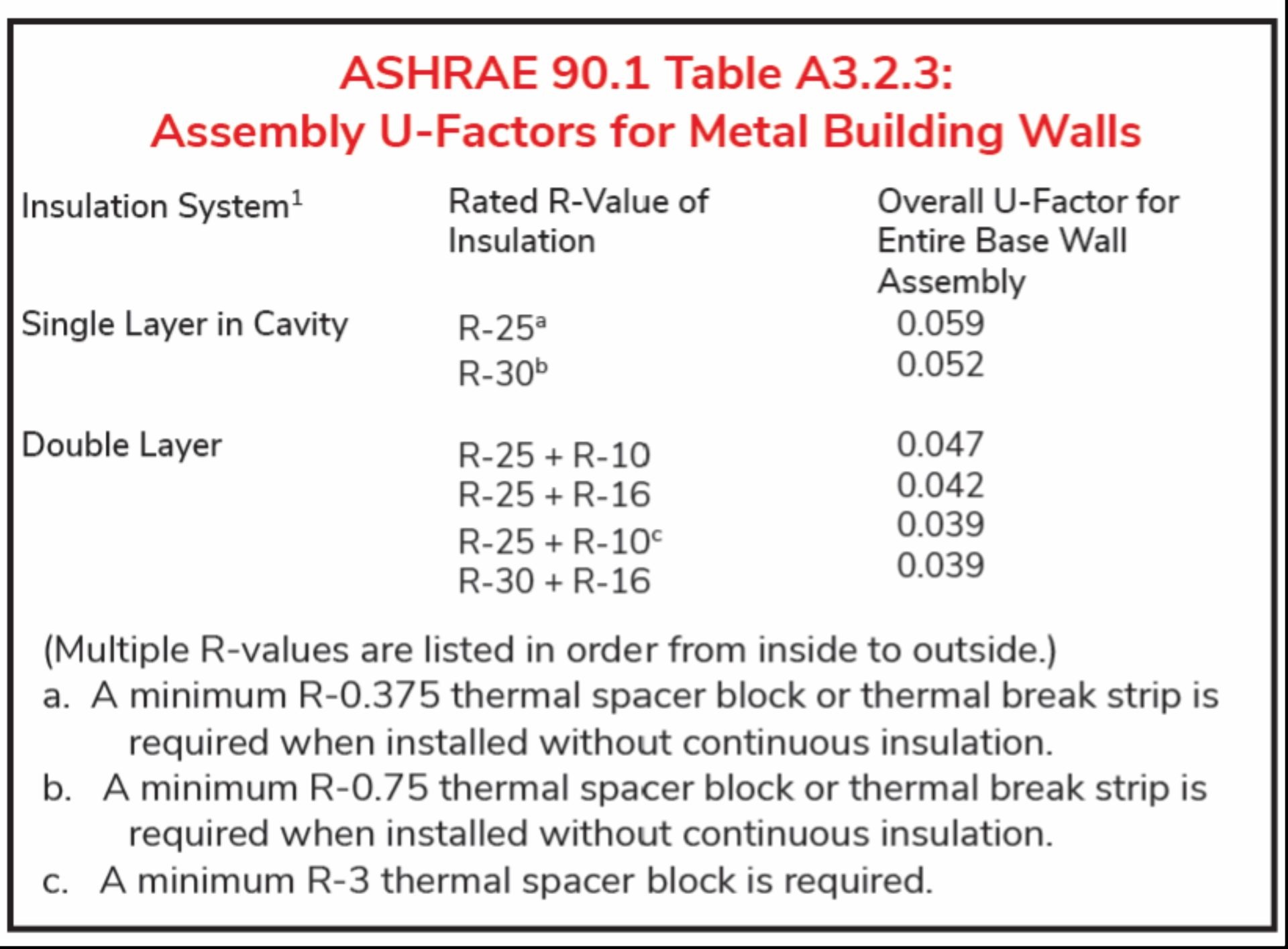
A U-value, also called a U-factor, measures heat transfer, or loss, through the assembly over time. While the R-value measures a single product’s ability to resist heat, the U-value measures the entire assembly’s resistance to heat transfer. The lower the U-factor, the better the insulation. Mathematically, R-values and U-values are reciprocals of one another: U-value = 1/R-value, R-value = 1/U-value. ASTM C1363 is the standard test method of U-values and includes a hot box apparatus. See Figure 1 and Figure 2.
This article was written by a task force from the National Insulation Association’s (NIA’s) Metal Building Laminator Committee. The member companies that make up this committee include Bay Insulation Systems, Inc. (www.bayinsulation.com); DAW Construction Group, LLC (www.dawcg.com); The E.J. Davis Company (www.ejdavis.com); International Insulation Products, LLC (www.iiproducts.com); L&L Insulations (www.llinsulation.com); Silvercote, A Service Partners Company (www.silvercote.com); and Therm-All, Inc. (www.therm-all.com).
This article was reprinted with permission and was originally published in the September 2024 issue of Insulation Outlook magazine, copyright © 2024 National Insulation Association (NIA), all rights reserved. Since 1953, NIA has been the voice of the insulation industry and is dedicated to keeping the commercial and industrial insulation industry up to date on the latest industry trends and technologies. For more information, visit www.insulation.org or email niainfo@insulation.org. Learn more about metal building insulation at www.insulatemetalbuildings.org.