

Natural daylight can have a positive impact on building interiors. It can reduce dependency on artificial lighting and create bright, vibrant environments that improve occupant morale. If not properly managed however, direct sunlight will place a heavy burden on interior cooling systems, resulting in higher energy consumption.
Energy codes are becoming more stringent across the nation, moving green building design to the forefront. Architects are thus pressed to find methods of improving a building’s thermal performance by reducing solar heat gain.
Sunshades can play an important role in energy-efficient building design. When properly specified and positioned, they can help mitigate the effects of direct sunlight on the building envelope, particularly during the summer months when the sun is at its peak and glass façades are most vulnerable.
Sunshade Types and Applications
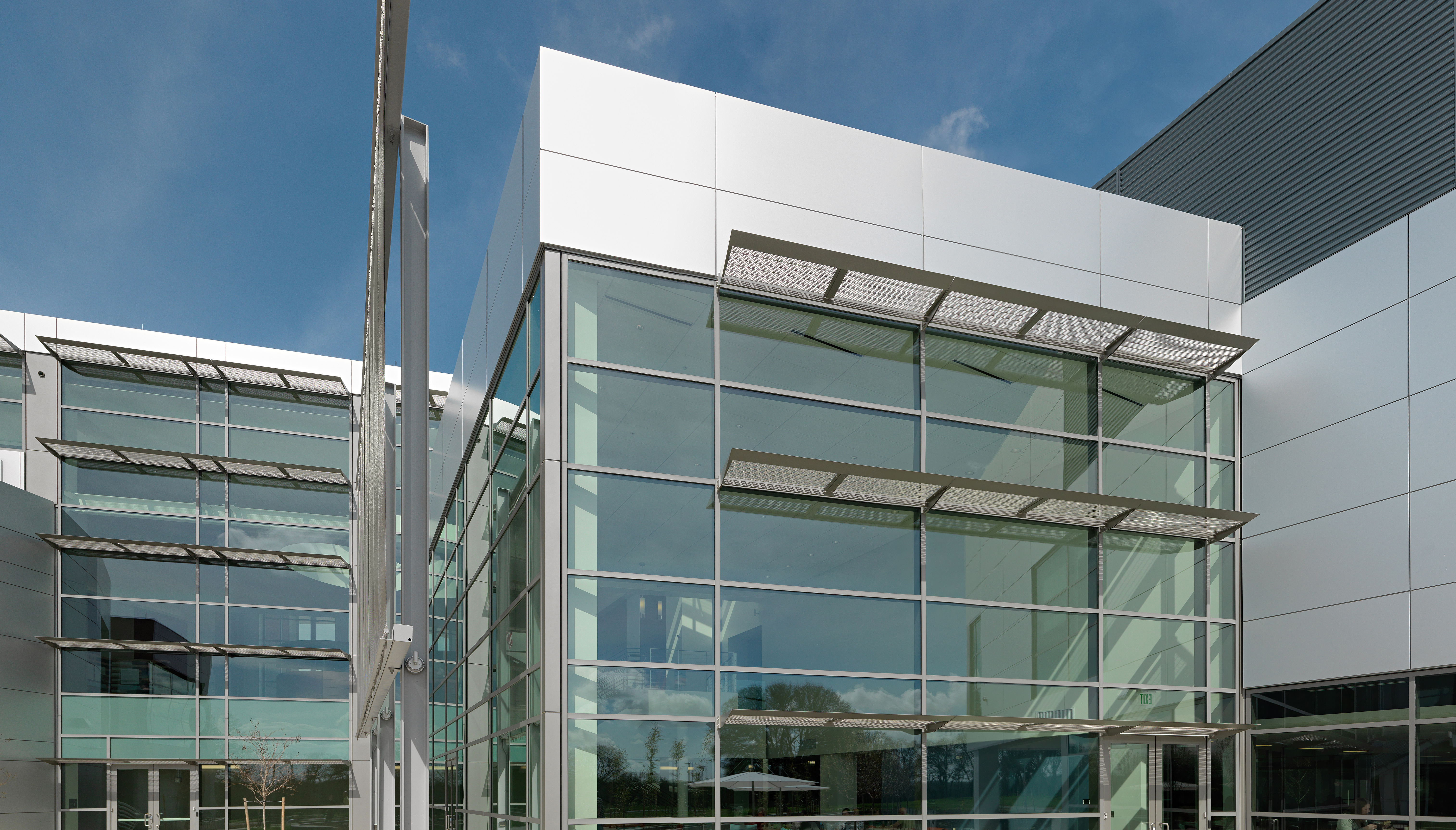
Sunshades can either be attached directly to the building structure or to its façade. In the northern hemisphere, sunshades are commonly installed on the south-facing walls of the building envelope. This allows them to block a significant amount of direct sunlight during the summer season when the sun is higher in the sky. The result is a reduction of a building’s cooling loads at peak times.
A typical sunshade system projects 3 feet from above a window or glass span. During the colder winter months, the sun follows a lower path in the sky, so this minimal projection lets an ample amount of sunlight enter the building to help reduce heating loads.
A project’s geographic location should be carefully considered before specifying sunshade systems. This will dictate the extent of sunshade coverage needed on the building’s south-, east- and west-facing walls. It will also define the sun’s progression across the sky at different times of the year, which will identify critical areas to be shaded.
Aesthetics are another key consideration when specifying sunshade systems. They should complement and not clash with the building envelope’s design intent. Fortunately, manufacturers offer custom sunshade programs that give complete control over visual elements. For example, there are various blade styles available such as rectangular, square, round and airfoil blades. Outrigger options include square, tapered square, bullnose and tapered bullnose. For added customization and visual compatibility across all building envelope systems, sunshades can be finished with powder-coat paints, Kynar coatings, or RAL color-matched paints. If complete sunshade customization is not a prerequisite, you can select from standard or stock options.
Sunshade systems with perforated panels not only help protect interiors from solar heat gain, but also create a distinct visual element that enhances building aesthetics. The perforated panels typically have a notched design to allow ample daylight to pass through while effectively blocking solar radiation during peak times to reduce cooling loads.
Single-blade sunshades are also available. Most sunshades are passive in nature, meaning their orientation cannot be adjusted based on the sun’s trajectory throughout the year. On the other hand, single-blade sunshades are inherently active. They feature operable mounting brackets that allow vertical blade adjustment anywhere from 30 to 50 degrees. Single-blade sunshades offer a streamlined aesthetic and are a good standardized solution for most curtainwall and storefront framing systems.
Regardless of the design, sunshades can help mitigate solar heat gain while improving aesthetics by creating dimension and depth. The earlier in the project implementation process that sunshades are considered, the more likely they are to be well integrated into the architectural theme.
Sunshades and LEED Points
Green building design has become a critical aspect of contemporary architecture, not only because of environmental factors, but because of increasingly stringent energy codes such as California Title 24. That’s why the construction industry is seeing a rise in net zero energy buildings.
Many architects are aiming to design LEED-certified structures, and sunshade systems can provide some of the credits needed for certification. The use of solar shading can help reduce energy consumption through reduced HVAC usage and operating costs. This qualifies for LEED points under Energy and Atmosphere 1–Optimize Energy Performance.
Another way sunshade systems can provide LEED points is under Material and Resources 4.1–Recycled Content. Most sunshades are made of aluminum, which is a highly recyclable material that helps minimize a building’s environmental impact.
Takeaways
The benefits of sunshades are numerous: they mitigate solar heat gain to reduce energy consumption from air conditioning systems; they help create more comfortable interior environments to improve occupant productivity; they can protect glazing from harmful UV rays over time; and they can enhance aesthetics by adding visual depth.
The costs associated with sunshades are offset over the life of the building via savings in energy usage and reduced wear of HVAC systems. New technologies and components are being integrated into sunshades, including photovoltaic panels and automated mechanisms that can adapt to solar conditions throughout the seasons. Working directly with a trusted manufacturer will let you specify the best sunshade system to meet the performance and aesthetic requirements of a project.
Keep in mind that sunshades are just part of the equation when designing energy-efficient building envelopes. They should be used in conjunction with low-E insulating glass and thermally broken fenestration systems to achieve optimal performance.
David Banuelos manages the architectural services team at CRL-U.S. Aluminum, Los Angeles. For more information, visit crl-arch.com.