

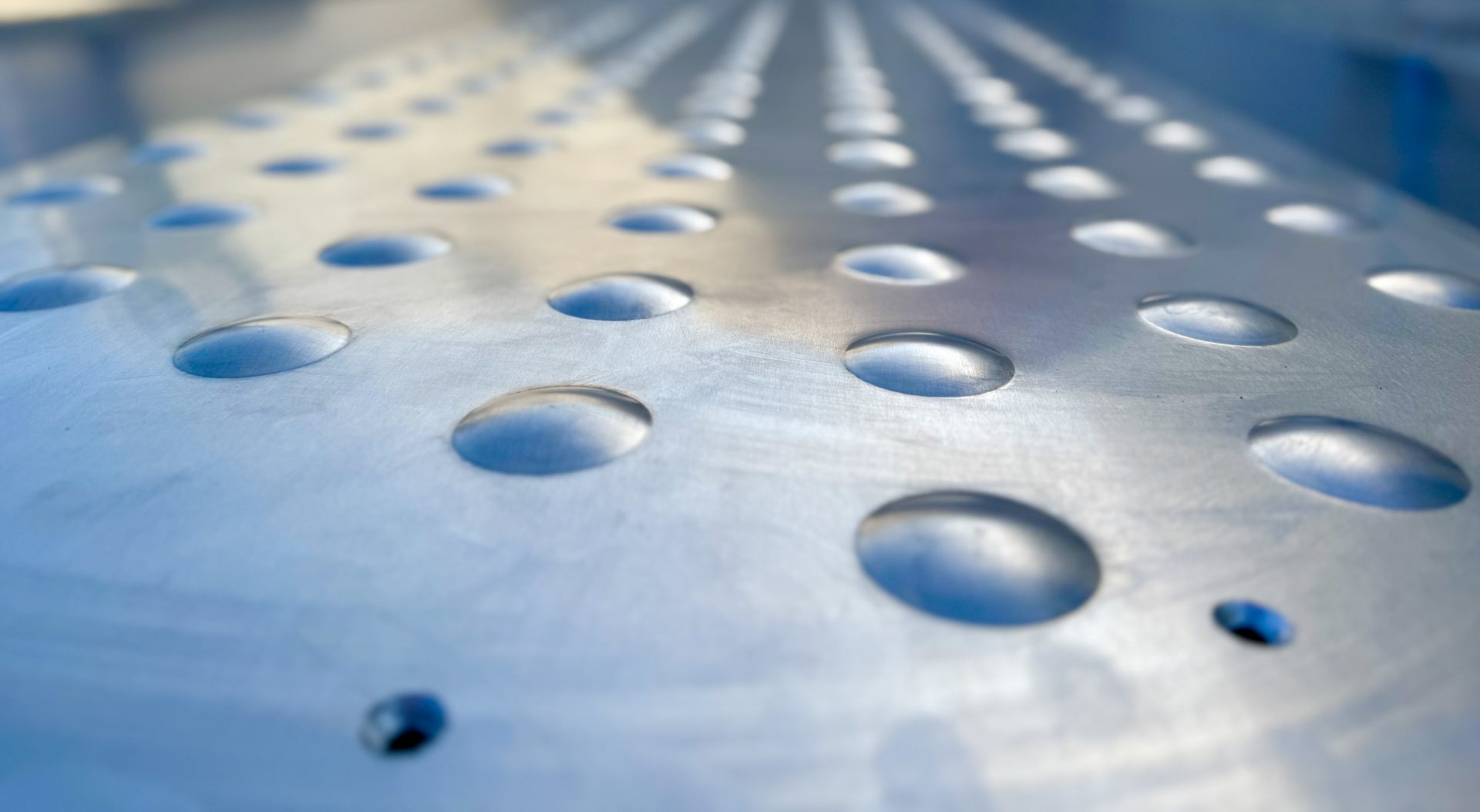
Between a constant architectural desire to push design and aesthetic boundaries and seemingly limitless materials being introduced or repurposed for unique uses, there has been an exciting push to amalgamate interesting materials with advanced fabrication techniques.
Zinc
With a notably extensive palette of surfaces ranging from light silvery gray to deep black, each major zinc manufacturer has advanced its offerings to include colored finishes over zinc substrates. While staying within the natural palette of earth tones, surface aspects have been developed beyond standard monotone to include rich browns, reds, blues, greens, and even gold, taking advantage of the extraordinary workability and longevity of zinc and combining it with an expanded custom color offering. Zinc demand continues to grow, is 100 percent recyclable, exhibits low primary and secondary energy requirements, and is very sustainable.
Weathering/Corten steel (A606)
Photos courtesy Sheet Metal Supply
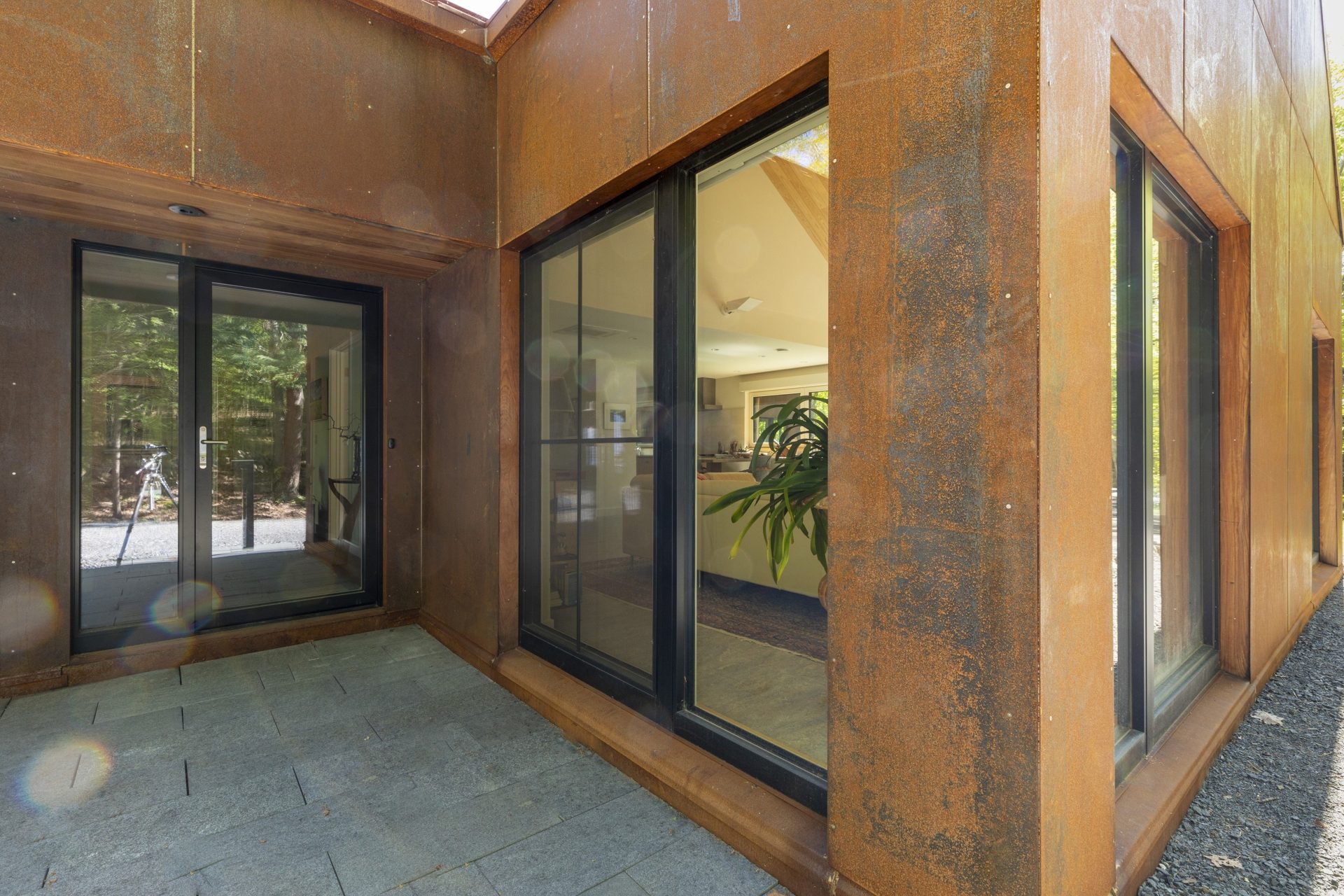
Originally developed by U.S. Steel in the 1930s for corrosion resistance and tensile properties and utilized in coal wagons and shipping containers, this material began to appear in architectural uses in the 1960s. While the material surface appearance is limited to its rust-like patina layer, the stability of the material, the availability of large sheets and thicker gauges, longevity, and the formability of A606 make it a great choice of material for either monolithic appearances or used as an accent. Either way, the properties of A606 lend themselves to carrying the aesthetic off the building and incorporating the material into barriers, signage, planter boxes, and hardscape. A606 is produced with less energy compared to other corrosion-resistant steels and can be fully recycled or repurposed at the end of its lifecycle without loss of material properties.
Colored stainless steel
Photos courtesy Sheet Metal Supply
From chromium oxide for a rich, corrosion-resistant walnut finish to electrochemically processed Light Interference Colored (LIC) stainless steel finishes, stainless steel has the potential to elevate an aesthetic from mild to wild. Unlike painted materials, these finishes do not react or fade with exposure to UV light. Further, they shift in appearance and vary in hue depending on viewing angle, environment, and lighting. Stainless steel is highly durable and long-lasting, while maintaining a high level of formability. Alloys themselves can vary between 304 and 316 on the more common end, to more exotic “duplex” alloys, which increase resistance to even the most challenging marine environments, though at the expense of increasing the difficulty in forming and fabricating. Stainless steel-based products are typically produced from a minimum of 75 percent post-consumer/industrial content and are 100 percent recyclable at the end of their useful life.
Painted products
Not to be outdone by some of the aforementioned niche materials, the painted metal industry continues to innovate and produce viable alternatives that mimic not only patinated natural metals in the case of zinc, copper, and A606, but also offers color shifting prismatic surfaces, prints that appear as natural stone, and a plethora of options to match a multitude of species of wood. Most recently, the Japanese tradition of shoshugibon, charring wood to enhance durability, rot, insect, and fire resistance, has been translated into a metal finish, capitalizing on aesthetic trends while combining the ease of forming, low maintenance, and longevity of metal. Industry standard paints are high performing, offer hundreds of preformulated color and print options as well as viable warranties for up to 40 years. Whether the substrate for these painted finishes is steel or aluminum, both are produced with a very high post-consumer/industrial content and are 100 percent recyclable.
Processes
Photos courtesy Sheet Metal Supply
Most sheet metal shops start with a simple shear and folder arrangement in a garage space or the back of a warehouse and grow from there. In many ways, that methodology is largely unchanged since the introduction of the folding bench and cornice brake was introduced in the late 1800s. Mechanics and hydraulics replaced brawn in the early 1900s, and computer numerical control (CNC) was further implemented in the 1970s to drastically improve repeatability, consistency, and quality of fabricated parts. Even entry-level machinery can produce ornamental cornices and facades through embedded programs to radius and taper parts.
Press brakes bring aerospace precision to gauging and bending, with the advanced capability of being retrofitted with customized tooling for specific radii, adding holes, and even introducing louvers and textures. Even more importantly, press brakes are typically utilized when a material exceeds the capacity of a folder and are able to form heavier, structural, and larger parts.
Cutting options

Photos courtesy Sheet Metal Supply
Crown Hall at the Illinois Institute of Technology (IIT), a Mies van der Rohe-designed building erected in 1956 in Chicago, is a stunning example of macro and micro details, coordinated by architectural details and accomplished by trades. A standout subtlety is how the terrazzo floor is sectioned into the same scaled dimension as the building itself. While this may seem a departure from an ornamental metal discussion, there is so much potential in metal architecture and fabrication to both push bold limits and surprising details forward.
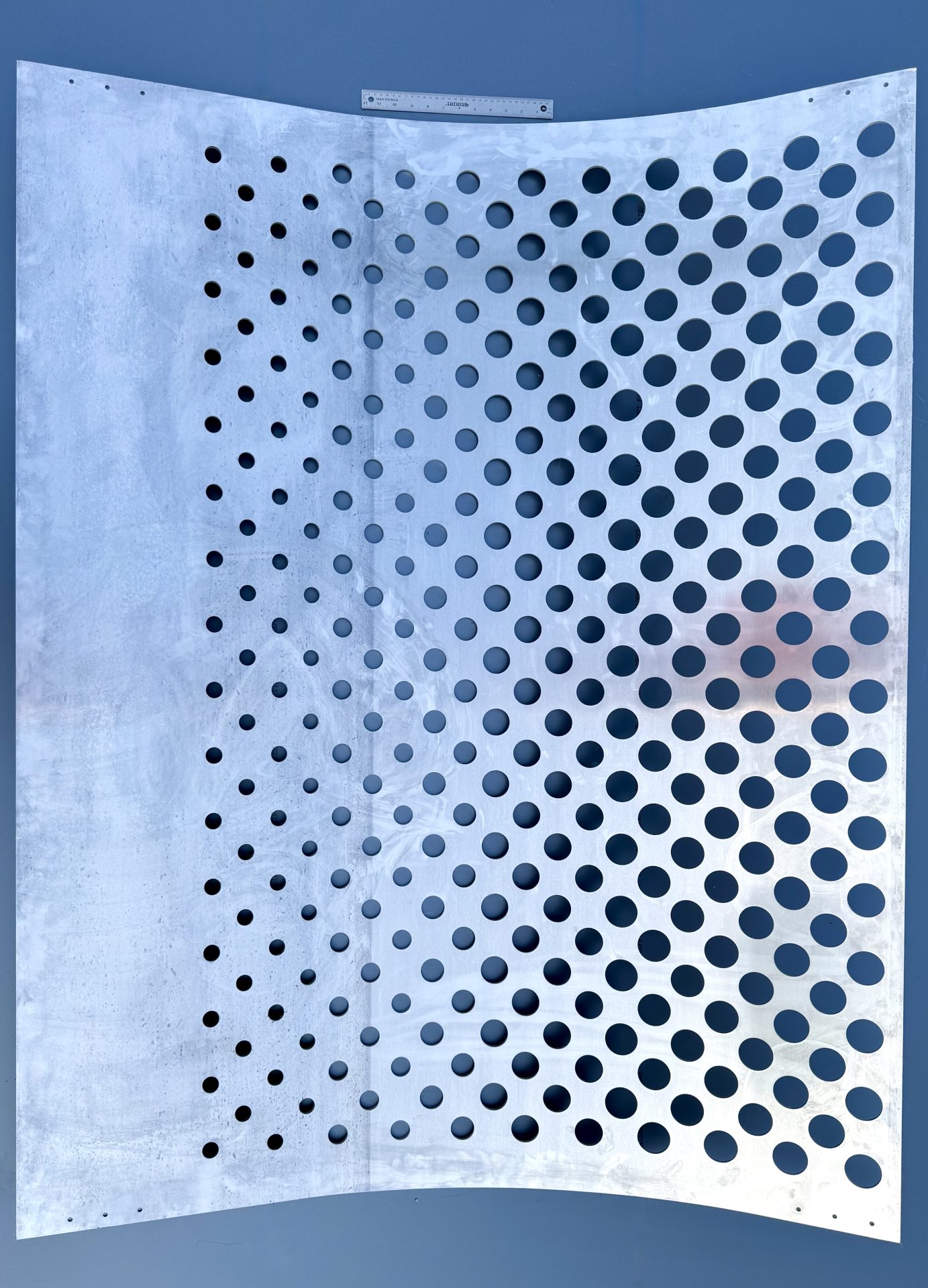
Laser cutting is often used for blanking custom parts and custom cutting designs, perforations, and logos. Modern fiber lasers have improved cut quality not only for traditional steel and stainless substrates, but now cut aluminum, copper, and red metals, and exotics with speed, accuracy, and minimal requisite post-processing. Perforating material with a custom hole pattern and cutting custom designs, whether those be perforations in a specific shape, company logo, gradient of sizes, or even a perforated image, are all possible.
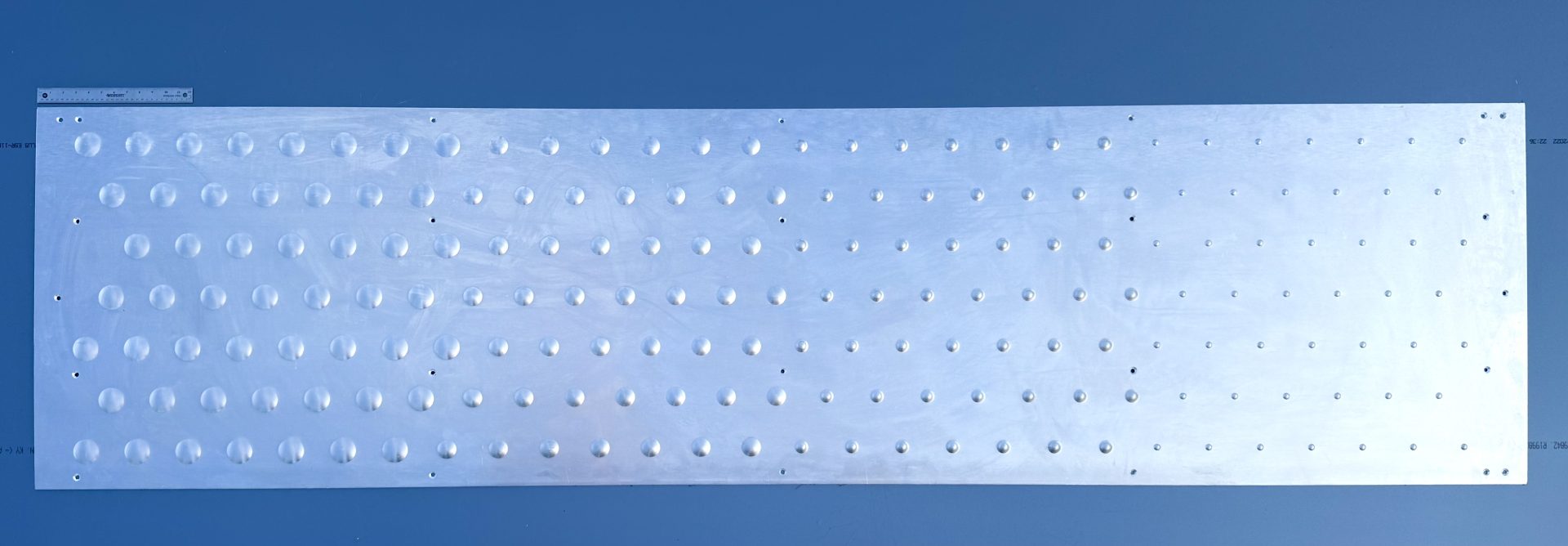
Turret punches, while seemingly mechanical and arguably less exciting than a laser, are also able to cut and blank parts, oftentimes more quickly, but add the ability to do some forming within the material, including ribbing, dimpling, countersinking, and tapping. Custom dies can be designed, so long as the machinery tonnage and geometry are sufficient in relation to the material to be processed. Entire facades of custom-cut panels can create a bold aesthetic and smaller details of a favorite fish or animal, or a silhouette of a mountain range, can be incorporated into snowguards, mailboxes, signage and numbering, planters, and landscape, much like the terrazzo at Crown Hall.
Texturing
Texturing architectural single skin metal has been an option for decades, most commonly done by rolling a coil of metal through embossing dies, which serve to make lighter-gauge metals more rigid and higher performing while visually adding interest and helping counteract the perception of oil-canning. Texturing can bring a whole new level of detail and interest to metal, whether through a consistent pattern such as quilting or cross-hatching, micro-embossing a dull and dirt-resistant appearance, or producing deep and interesting textures, all helping visual appeal and to make the base metal more rigid. To cut, especially when using deeper textures, advanced lasers have the ability to sense the torch’s proximity to the material and thereby float the head over the texture, ensuring accurate and clean cuts while preventing damage to expensive parts.
Off the envelope
Using metal as a medium for ornamentation for both the roof and walls is becoming more and more common as equipment, software, and fabricators become more adept and committed to pushing the envelope on the building envelope. There are, however, tremendous opportunities to make an impact beyond the building envelope as well. Interiors can use the same materials and panel designs and create a continuum between the exterior and the interior of a building for visual appeal. Metal ceiling panels can use much of the same hardware as off-the-shelf acoustical solutions, with nearly endless potential to make design ideas a reality. A thoughtful collaboration between exterior, interior, and landscape can inform a whole project design with increased appeal, attention to detail, and a sustainable, achievable, and bespoke outcome.
Ben Kweton is the president of Sheet Metal Supply Ltd., a leading and vastly capable North American fabricator/supplier of architectural zinc, custom-formed perimeter edge systems, wall facades, flat lock tiles, substructural components, ES-1 rated products, glazed-in panels, standing seam, aluminum composite material (ACM)/metal composite material (MCM)/plate panels, and much more. The company ships internationally and is regarded for its high-quality products and quick turnaround. For more information, visit www.sheetmetalsupplyltd.com.