

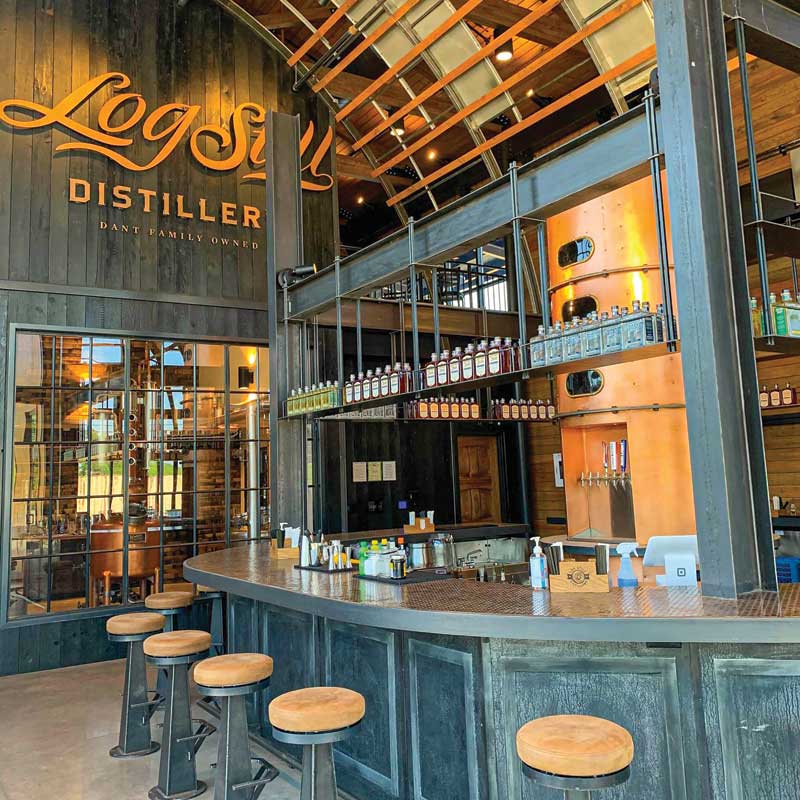
Photo courtesy Jim Brady
Natural metals have become increasingly popular in architectural innovations. Their distinctive qualities and visual allure are earning them top ranking. Copper, zinc, and weathering steel, all boast unique characteristics, making them suitable for specific purposes.
When it comes to choosing between the three, there are various factors to take into consideration. Factors such as installation, versatility, maintenance, durability, cost, and environmental impact all come into play. Each metal brings unique qualities to architectural projects, allowing designers to tailor their choices to meet specific aesthetic and
functional requirements.
Versatility
Copper, with its natural warmth and adaptability, lends itself well to various architectural styles. According to Tim Murphy, marketing and architectural services manager at Revere Copper Products, Inc, you can’t get more versatile than copper. “It has been used in architecture, plumbing and even cladding warships. Copper is a highly malleable metal, allowing it to be shaped into various forms and intricate designs.”

Photo courtesy Taiyo Watanabe, Atelier Taiyo Architecture and RHEINZINK
Zinc has also long been known for its versatility, “Architectural zinc coils are unwound, cut, and fabricated into panels, tiles, and other formed exterior and interior architectural products such as roofing and wall cladding,” explains Rheinzink, producers of titanium zinc since 1966. Sheets also can be perforated and fashioned into ornamental accents. “Because zinc is a lightweight material, it can help reduce the structural load and associated materials on a building.”
Weathering steel can also be added to the versatility category. According to Keith Woods, president of Central Steel Service, Inc., weathering steel panels can be produced to a variety of profile panels for roofing and siding applications.
Aesthetics
The choice of metal often depends on the desired architectural style and the visual impact the designer seeks to achieve. Not only versatile, weathering steel’s weathered, rusty finish provides a rugged and industrial look. Woods says, “Weathering steels are an excellent aesthetic choice in many applications and environments. I consider weathering steels to be ‘ever living’ as the patina is always changing year to year, so the aesthetics of the structure remains alive.” Woods adds historically weathering steels were mostly used in wooded and/or rural environments where the material would blend into its background. But more recently weathering steel are being used for downtown, urban building facades to create a unique aesthetic.
Murphy says when it comes to copper, the product speaks for itself. “Just take a look at a copper roof; it is elegant, stands out and has timeless appeal.” Murphy adds over time, copper develops a natural patina as it reacts with the surrounding environment. This patina can range in color from green to brown, giving copper a unique and evolving aesthetic.
Zinc’s matte gray appearance also offers modern visual appeal. According to Rheinzink, untreated, architectural-grade zinc looks bright, shiny, and light reflective. Over time, a natural matte patina develops, creating a dynamic appearance as the material ages. Zinc’s self-healing, natural patina protects the material against the effects of weather and corrosion.
Installation
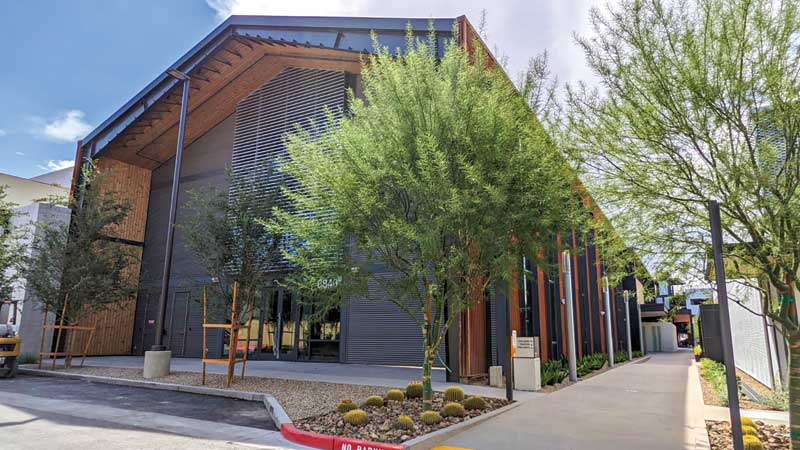
Photos courtesy
Ryerson Construction
& Burke Construction
Installation can vary among natural metals, though relatively straightforward to install, especially when working with skilled craftsmen. “When properly designed and installed, copper roofs, wall claddings, gutter, flashing and other weatherproofing constructions can be expected to give many decades of service,” says Murphy.
Rheinzink says architectural zinc supports climate-resilient, low-maintenance performance, and occupants’ safety and health. Qualified contractors can install zinc products as wall cladding and facade systems; on low-sloped, steep-sloped, flat, and mansard roofs; and as hip and ridge caps, drip edges, alleys, step flashing, dormers, cupolas, parapets, gutters, downspouts, and more. Seam profiles can be customized to the project’s requirements.
Woods feels when it comes to installation there really is not a difference between weathering steels and other metal products, except that weathering steels are normally heavier due to producer’s inability to produce weathering steels lighter than 24ga, compared to other metals that may be produced down to 26ga.
Maintenance, durability, and cost
Copper and zinc develop a natural patina over time, which acts as a protective layer, minimizing the need for frequent maintenance. Murphy says there is virtually zero maintenance when it comes to his respective metals and Woods says weathering steels can last over 100 years. They are meant to be left alone to react with the atmosphere.
During their many years of use, Rheinzink says zinc building products do not rot, rust, or need repainting. “No paint, varnish, or sealants are required. Architectural zinc products require very little maintenance, repair.”
Cost considerations vary depending on factors such as material, installation complexity, and maintenance requirements. Murphy says with copper it depends on a few things. “If you just look at the initial cost and installation, it would be on the high side. If you consider that the roof you invested in will last 100 years or more versus conventional roofing that would need to be replaced three to five times in that same period, the cost is much less.”
Environmental impact
Understanding the characteristics and differences among these natural metals is essential for making informed decisions in building and design applications. All three metals are recyclable, contributing to their environmentally friendly profile. In fact, Murphy says copper is 100 percent recyclable.
Architectural zinc supports climate-resilient, low-maintenance performance, and occupants’ safety and health. At the end of its long life of use on a property, the zinc is infinitely recyclable, which further lowers their associated economic and environmental costs. Zinc continues to add value beyond the life of the building.
“Zinc’s highly efficient production requires very little energy and has a very small carbon footprint. Choosing zinc manufacturers that have minimized their already low carbon footprint is one more step toward reducing overall greenhouse gas emissions,” says Rheinzink.
Architectural zinc’s low environmental impact not only includes its efficient production, but also its application when fabricated and installed as wall panel cladding systems. “As a waterproof building material, zinc’s runoff is minimal, non-staining and non-toxic. When considering fireproof building materials in environments that are susceptible to fires, zinc provides a noncombustible solution,” explains Rheinzink. “When installed properly, zinc cladding systems will resist air and water infiltration. For regions with high winds and hurricane conditions, zinc systems have been tested to withstand high winds as required by codes and local jurisdictions.”
Woods says weathering steels are also an excellent choice for sustainability. “Weathering steels require no painting, and therefore no re-painting, or coatings of any type, thereby further increasing its sustainability.”