

Bringing the same quality professionals have come to rely on to a new fire protection steel spray, Hilti announces yet another market innovation. The new Fire Protection Steel Spray CFP-S WB is a water-based, low VOC solution designed to help protect load-bearing steel through an intumescent coating in indoor applications. Tested to ASTM E119 for up to 4 hr rating, common uses include wide flange steel columns, hollow section columns, restrained and unrestrained beams and steel floor and form unit. The Fire Protection Steel Spray CFP-S WB also features a reduced dry time which helps increase productivity due to a shorter interval between coats. Available in white, in a 55 lb. pail, infinite color options are possible with approved topcoats. For more information, on the Fire Protection Steel Spray CFP-S WB, please contact Hilti Customer Service. From the U.S. call Hilti, Inc. at 1-800-879-8000 or go directly to our steel protection website www.us.hilti.com/steelprotection ; from Canada, call Hilti (Canada Corporation at 1-800-363-4458 or visit www.hilti.ca.
Hilti Innovation Meets Steel Protection – Fire Protection Steel Spray CFP-S WB
This Month’s Features

Education, advocacy, and metal building excellence
Metal building systems extend far beyond the basic, box-like structures that many architects may still associate with them. Today, they support complex designs, varied...

Bracing for the future
In metal building design, owners want to know the cost and delivery. Architects think about openings, elevations, space planning, and how the building will...

Champions Run
Recognizing the growing popularity of pickleball, Champions Run Golf Course in Omaha, Neb., developed a new year-round facility designed to provide an inviting environment...

From basic shelter to building blocks with infinite possibilities
When 13 metal building system manufacturers came together 70 years ago as the founding members of the Metal Building Manufacturers Association (MBMA), they did...
Read the latest issue
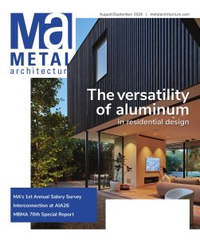
September 2026