

The U.S. Environmental Protection Agency’s 2008 Sector Performance Report brings good news to the American steel sector. The steel industry is recognized as having the steepest decline of total emissions among nine manufacturing sectors studied (cement, chemicals, food and beverages, forest products, metal castings, paint and coatings, refined petroleum, ships, and iron and steel). The report noted the steel industry reached a 67 percent decline of total normalized and absolute emissions between 1995 and 2006—while production increased. “Despite rising production and product values in the steel industry during this period, emissions dropped as a result of new steel plant technologies and greater operational and control efficiencies,” said Tom Tyler, EPA’s national sector leader for iron and steel. “It is through our continued investment in new steel making technologies and our commitment to a sustainable future that has allowed our industry to reduce our emissions and become a leader among the manufacturing sector,” said Thomas J. Gibson, president and CEO of the American Iron and Steel Institute, Washington, D.C. The American steel industry already is known for reducing energy per ton of steel produced by 29 percent since 1990, the Kyoto benchmark year. In fact, the United States would exceed Kyoto accords if every segment of the U.S. economy had achieved the same energy improvements as the domestic steel industry. According to the report, the industries studied represent about 35 percent of total air emissions reported to the EPA’s Toxic Release Inventory, which is one of many government data sources EPA used to compile its report.
Steel industry sets an emissions example
This Month’s Features
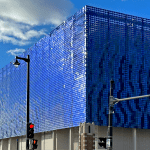
Kinetic Facades Rise on University Campuses
Unlike conventional cladding, these systems rely on natural forces to animate buildings, providing design functionality and reducing environmental impact while producing striking visual effects.

Case Engineering: Strength, Steel, and Structural Appeal
Working with a diverse range of industries, Case Engineering encounters opportunities to use innovative metal solutions.

Material Expression, Fabrication Intelligence, and System Flexibility in Metal Facades
For architects exploring metal as a primary facade material, these projects underscore the value of early manufacturer collaboration in preserving design intent while navigating...

In Plane’s Sight
Sporting both a striking layout and distinct coatings used for the metals, the design makes a substantial visual impact.