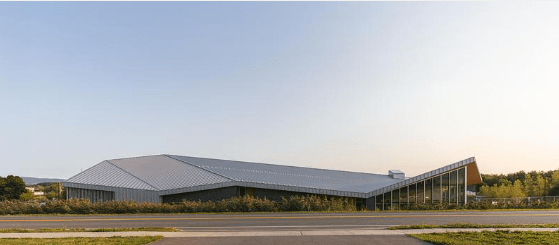
A new police station situated at the juncture of an urban and rural setting uses steel in its design to reflect its location.
This public architecture project is designed to meet the functional and security requirements specific to this type of infrastructure, while integrating environmental, territorial, and human considerations. The building was designed by STGM Architecture in consortium with CIMAISE.
Located at the western entrance to the city of Waterloo, in Quebec, Canada, in the heart of the MRC of Haute-Yamaska, the project site sits at the junction between agricultural land and the urban core. This strategic location highlights the transition between the rural landscape and the existing built environment, with the structure’s design acting as a bridge between the environments. From the earliest stages of design, the project took into account the physical and environmental characteristics of the site.
The decision to locate the building within already disturbed areas helped limit interventions in adjacent sensitive natural environments, including a wooded area and a wetland. This approach reduced the project’s footprint on the territory and preserved existing natural features. The siting of the police station reflects a commitment to responsible site management that goes beyond applicable regulatory requirements.
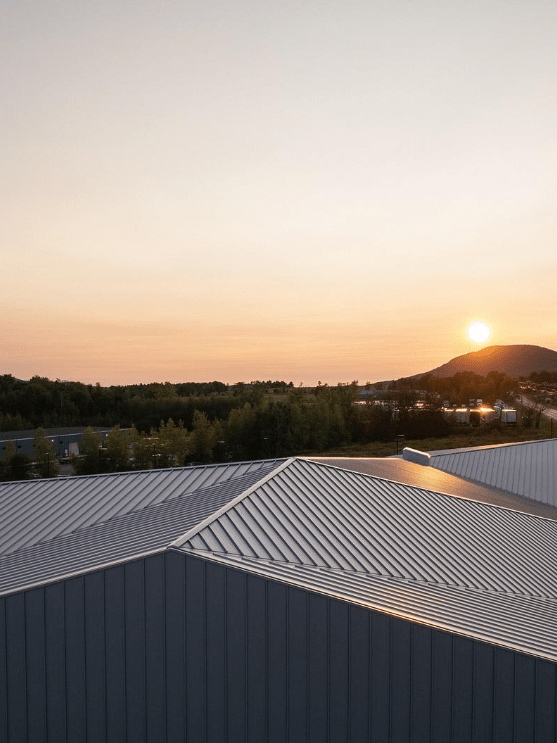
The project, which is targeting LEED certification, is based on structural and technical choices that promote environmental performance and durability. The mixed structure, combining steel and wood, meets functional constraints, while reducing the building’s carbon footprint.
The building envelope is designed according to the perfect wall principle, with continuous air and insulation layers aimed at minimizing thermal bridging and optimizing energy efficiency. Mechanical systems, material durability, and the management of rainwater and snow accumulation were integrated into a performance-driven approach focused on reducing long-term operating costs. Steel champions this longevity, as the material can weather harsh outdoor conditions including snow and ice loads without the need for excessive maintenance. Also supporting the prominent windows on the building’s facade, metal framing compliments the silver-colored appearance of the roof.
Designed to evolve over time, the building features an adaptable spatial organization and a restrained architectural language, allowing it to respond to the future needs of the community without major interventions.
The landscape as an architectural reference
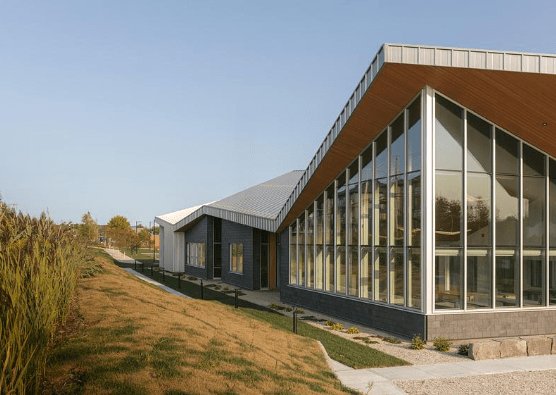
The project draws direct inspiration from the Montérégie landscape, particularly the presence of Mount Shefford and the surrounding hills, which are visible from the site. These topographic features influenced the building’s placement, massing, and architectural expression. The building’s form, roof modulation, and visual openings were designed in dialogue with the local topography.
Views toward the landscape are emphasized through the orientation of spaces and the placement of openings, fostering a continuous visual relationship between the building and its surroundings. This approach supports the integration of the police station within its context and strengthens the connection between the civic facility and the territory it serves.
Functional organization and security
The interior organization of the police station is based on a clear hierarchy of spaces and a strict separation of circulation routes. Public areas, staff circulation, and secure zones are distinct, ensuring efficient operation and compliance with security requirements. The positioning of functions, access control, and differentiated treatment of facades all contribute to this organization.
The building’s architecture seeks to maintain a balance between openness and protection. This approach ensures a secure environment, while establishing a functional and legible relationship with the public. The project demonstrates that high security requirements can be integrated into an institutional architecture that is attentive to its context and its users.