Photos courtesy ATS
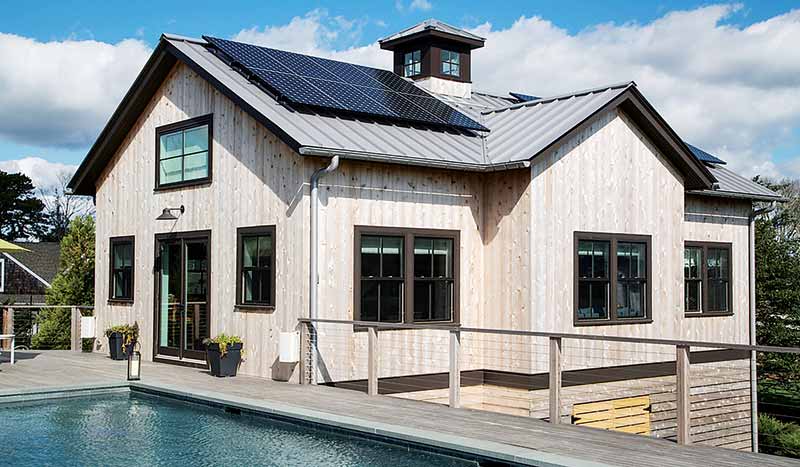
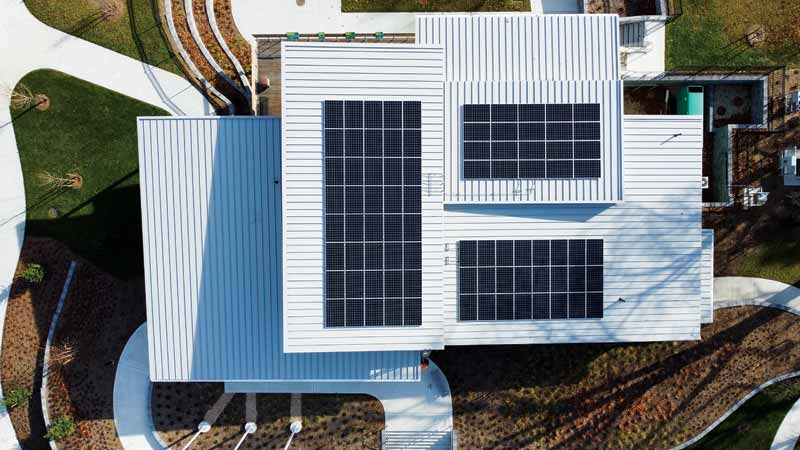
With increasing installation of rooftop solar arrays, a “solar ready” metal roofing system is the ideal choice for both crystalline and building integrated photovoltaic (BIPV) solar systems, because of its long service life. When installing a crystalline system (typically warranted for 25 years of power generation), a building owner benefits from a roofing substrate that has a greater life expectancy than the solar panels. Standing seam metal panels also provide a natural platform for attaching crystalline systems without any roof penetrations with the use of special attachment clamps that grip the metal seams. Additionally, highly reflective roofs with cooler rooftop temperature result in better performance of solar panels.
The reason the standing seam metal roof systems are considered “solar ready” is that even if it is not in the project’s budget to install both a standing seam metal roof and the solar panels at the same time, the addition of the solar panels can easily be done later. With the long lifespan of a metal roof, building owners can add solar panels to their metal roof 10 or 20 years later, and the roof will still outlive the performance life of the solar panels.
Even without the addition of solar panels to a roof, building owners can benefit from choosing a metal roof with a high-performance 70 percent polyvinylidene fluoride (PVDF) paint coating with cool pigment paints. These “cool roofs” reflect infrared radiation, allowing colors to resist chalking and fading, while maintaining cooler surface temperatures. These coatings meet national energy standards and guidelines, and many comply with stringent California Title 24 Building Energy Efficiency Standards. Numerous LEED credits can be acquired, contingent on the roof’s solar reflectance index, and solar-ready capabilities play a significant role.
According to the U.S. Environmental Protection Agency (EPA), daytime temperatures in urban areas are about -17 to -13 C (1 to 7 F) higher than temperatures in outlying areas, with nighttime temperatures about -16 to -15 C (2 to 5 F) higher. This is caused by the urban heat island (UHI) effect. The UHI effect is caused by a concentration of dark, impervious surfaces such as roofs, walls, roads, and parking lots that retain heat from the sun, combined with a lack of trees and green space. Waste heat released by vehicles and air conditioning units also contribute to UHIs.
The Cool Roof Rating Council (CRRC) on UHI mitigation states passive cooling strategies such as reflective “cool” roofs and walls provide immediate heat relief, improve health outcomes, reduce air-conditioning use, and lower energy bills. UHIs are commonly found within cities and contribute to heat-vulnerable communities, which experience heightened risk and increased sensitivity to extreme heat. They also have less capacity and fewer resources to cope with, adapt to, or recover from heat-related impacts, according to the CRRC. The EPA also states extreme heat increases peak power demand which can lead to power interruptions. This is where a solar-ready metal roof over which a solar array is installed could help, along with the cool pigments paint finish.
Above sheathing ventilation
Another way to contribute toward a more energy efficient roof system is to incorporate above sheathing ventilation (ASV). ASV is an air space between a roofing panel and the deck. Some metal roofing profiles, such as a metal tile, or standing seam metal panels installed with raised clips, create a natural air space, due to their product design and installation method. ASV can be implemented in retrofits when metal roofing is installed over the previous roof system.
Additionally, new commercial and residential roofing projects can include ASV by specifying an appropriate air gap. ASV creates energy savings by reducing air-conditioning costs in the summer and adding insulation value during the winter as proven by testing performance sponsored by the Metal Construction Association (MCA) at Oak Ridge National Laboratory. ASV also minimizes the effect of condensation between the roof layers.
ASV has a similar impact on a building’s cooling loads as does a cool roof, where the surface of the roofing material has a high solar reflectance index (SRI) value, so the sun’s energy is reflected and not drawn into the building. Cool roof coatings and ASV are measures that are working to accomplish the same thing, to reduce the roof surface temperature. The difference is the cool roof coating works at the roof surface while ASV works underneath the surface. They work independently from each other, however, and by combining the two, it can maximize the benefit of a cool roof.
By incorporating some or all these measures into a metal roof system, it will not only result in a more energy efficient building, but it will also reduce operating carbon emissions, contributing to a heathier planet.
Lee Ann M. Slattery, FCSI, CDT, CCPR, LEED AP BD+C is the sales support manager for ATAS International, and the treasurer for the Metal Construction Association (MCA). She has 30 years of experience in sales and marketing within the architectural building products industry.