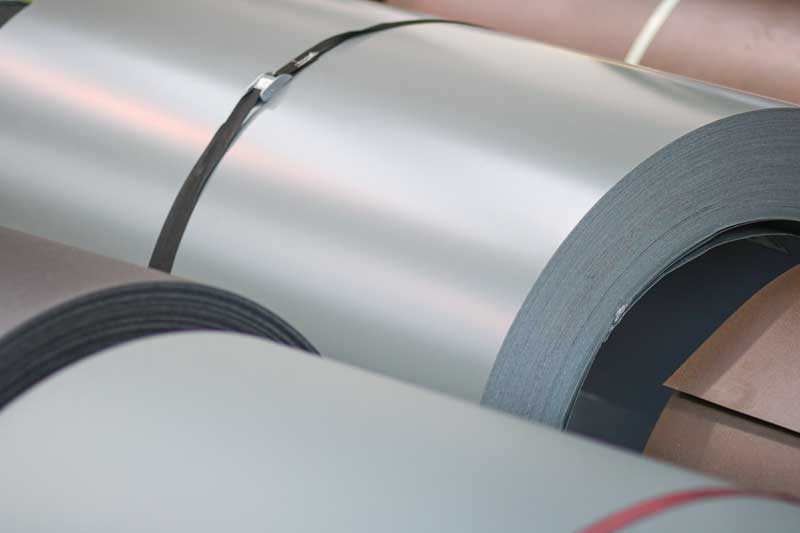
As governmental bodies around the world increase regulation to push the industry towards achieving net zero by 2050, all organizations working in or supplying the building and construction industries will need to comply to remain competitive. Becoming a good global citizen is a business imperative, which will ultimately decide who wins and who loses in building contracts. Companies are not only choosing better practices and processes to reduce their own environmental impact but will choose their downstream suppliers and upstream customers based on their ability to improve the circularity (i.e. reduce, reuse, recycle) of the built environment.
Producers and consumers of metal building and construction materials face many challenges as Environmental, Social and Governance (ESG) regulations change. It is complex to manage and measure ESG performance and provide regulators, customers, and suppliers with the emissions data they need. It is further complicated by the re-classification of critical raw materials used to manufacture building materials.
Introduction of other regulations may require companies to report annual reductions in carbon emissions based on carbon footprint calculations from cradle to grave and cradle to gate. Coil coaters and other suppliers will have to provide their customers with emission data for all products sold.
These changes are increasing customers’ expectations of coil manufacturers to inform them of more sustainable products and business practices. There is a growing need for achieving “greener” urban spaces without sacrificing performance.
Lowering CO2 emissions
The need for all players in the building and construction sector to reduce emissions is urgent. According to the United Nations (UN), in 2021 it had its largest total energy consumption and CO2 emissions increase in 10 years. Unless things change, it is unlikely to achieve decarbonization by 2050.
Coil producers can help specifiers and architects choose coatings which help the built environment achieve net zero in situ. Modern cool chemistry coatings, use heat-reflective pigments to help insulate buildings against hot or cold weather. The insulating effects lower a roof’s temperature by approximately 2.2 C (36 F) and minimize the use and requirement for air conditioning or heating, thereby lowering energy consumption and CO2 emissions.
Manufacturers of coil can also help by reducing their own energy consumption and the resulting emissions generated through the production process. The European Council of the Paint, Printing Ink, and Artists’ Colours Industry (CEPE) assessed CO2 emissions from manufactured coated steel cladding in 2019 and found 90 percent of emissions were generated during the production of the steel substrate, much of which can be recovered and reused. The relative energy consumption of coatings was found to be comparatively small, much of it coming from the curing process.
Past, present, and future scope
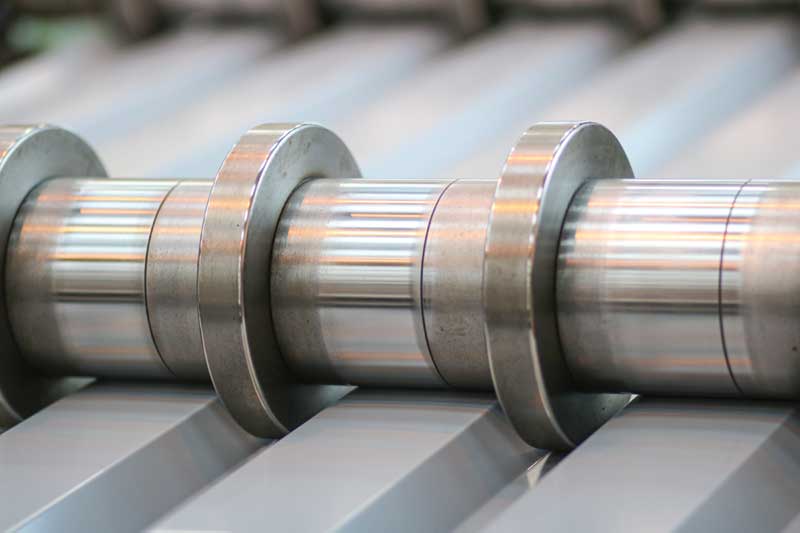
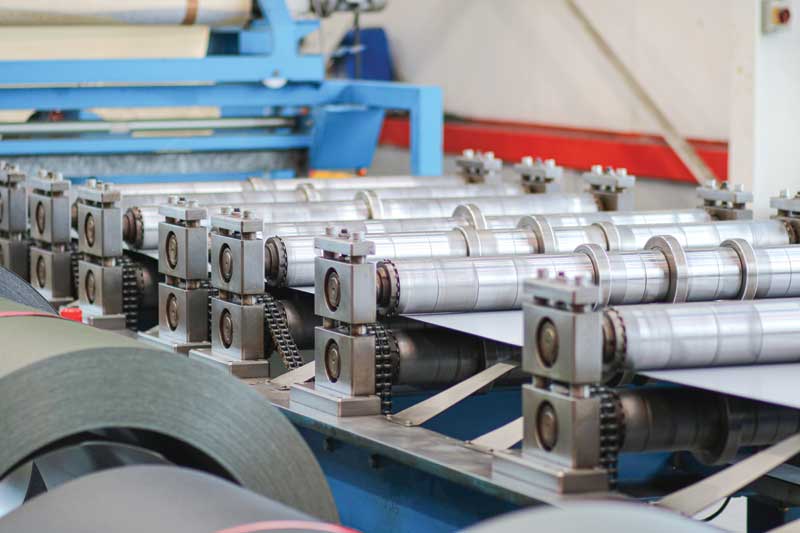
In the short term, coil coaters can reduce their Scope 1 emissions by increasing energy efficiency and reducing waste during production with new coatings, which need lower peak metal temperatures to cure and so will save energy. In the medium term, coaters can reduce energy consumption by switching to infrared and induction-type ovens. Longer term, coatings cured using electron beam radiation, which are in development, are expected to reduce energy consumption by five to nine times compared to thermal ovens.
Many coating manufacturers are striving to reduce energy consumption in all areas of coatings manufacturing, which reduces its own Scope 3 downstream, and a coil coater’s Scope 1. They have also developed the means to provide the carbon and emissions data for their coatings. Manufacturers of metal building components can then use these in reporting their Scope 3 emissions and share them with architects, suppliers, and construction companies when asked.
Reduce, reuse, recycle
Circularity is focused on reducing, reusing, and recycling materials. The most urgent priority according to the International Resource Panel (IRP), is to reduce the number of new buildings created by renovating and reusing buildings and materials and designing building stock to last as long as possible. The metal substrates in buildings can be recycled repeatedly if they are protected during the lifetime of the building. Coatings systems help to do that.
Coil coaters and coating manufacturers focus on reducing the amount of coating used and wasted during the manufacture of metal building components. To achieve a “first time right” approach, coatings manufacturers can use accurate dosing units, reuse excess material, and implement digital tools to help assess and improve efficiencies. Coil coaters are seeking advances in digital inventory tracking to help with just-in-time delivery, which reduces over-ordering, storing, discarding, or wasting excess coating.
Digitizing color sampling also helps. For example, reliable apps compare colors and finishes on various surfaces and buildings, reducing the need to make thousands of physical sample panels for customers. As technology improves, color scans can replace the physical panels currently used and shipped, reducing waste, emissions, and time.
Greener together
Speeding up the building sector’s move towards circulatory is increasingly urgent. The biggest impact will be achieved if buildings are renovated and reused, and minimizing the environmental impact of buildings over their lifetime starts at the design stage. There are new technologies and processes all along the supply chain which can help. Coil production processes are already lower in emissions than other coating methods, which feeds into the Scope 3 emissions of its customers. Coil components are created with durability in mind and enable the recycling and reuse of metal substrates, which increases the circularity of existing and new buildings. New SMP coatings deliver durability for the building and construction industry and support the efficient manufacturing of coil coaters to produce the highest-quality products needed. Together, the coatings and coil manufacturing industries have the opportunity to help architects, developers, and specifiers in their quest to a more sustainable
built environment.
Amanda Paterline is the commercial marketing manager – Americas, Coil & Extrusion Coatings, for AkzoNobel. She is a seasoned professional in the coatings industry and seamlessly blends her technical expertise with strategic vision, crafting impactful marketing strategies.