

The entire construction industry finds itself on the cusp of a revolution in how facilities are designed, built and even operated. The trend toward green building is rapidly changing design, materials specifications and operational routines for a variety of facilities. The axiom that a whole is the sum of its parts was never more relevant than in today’s facilities construction industry. That has been particularly true in the metal building systems industry where the mix of disciplines and sum of the material parts have created optimized structural, roof and wall assemblies that are uniquely interdependent.
“Our type of construction customarily instills a level of predictability in terms of cost, erection time and quality,” said David E. Evers, PE, vice president of research and development for Butler Manufacturing and chairman of the Energy Committee for the Metal Building Manufacturers Association, Cleveland. The growing interest in applying metal building structural, roof and wall assemblies to green buildings has led to their inclusion in the development and acceptance of a tool known as the EcoCalculator for Assemblies (http://www.athenasmi.org/tools/ecoCalculator/index.html) developed by the Merrickville, Ontario, Canada-based Athena Institute, in association with the University of Minnesota and Morrison Hershfield Consulting Engineers, which operates through the U.S. and Canada. This software provides architects, engineers, contractors and others instant access to Life Cycle Assessment for hundreds of common building sections, including a number of typical metal building assemblies. Butler spearheaded the initiative to include metal building assemblies in the database the EcoCalculator uses to quantify–and qualify–embedded variables in proposed building construction. The EcoCalculator takes into account how a qualitative change in any part or particular assembly affects the entire structure, either improving or detracting from the sustainable traits. The development of the EcoCalculator was inspired in many ways by the U.S. Green Building Council’s LEED Certification Program and a USGBC representative serves on the Athena EcoCalculator Advisory Council. The USGBC has included the software tool in a pilot LEED credit program to demonstrate it as a credible LCA tool for achieving another potential credit in the current LEED certification system.
“Metal building system assemblies can already contribute several credits toward LEED requirements, and the LCA can potentially identify a project’s eligibility for another credit toward LEED Certification.” Evers noted.
Butler spearheads metal building systems initiative
This Month’s Features
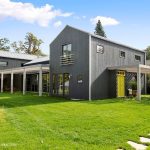
Education, advocacy, and metal building excellence
Metal building systems extend far beyond the basic, box-like structures that many architects may still associate with them. Today, they support complex designs, varied...
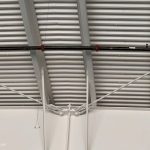
Bracing for the future
In metal building design, owners want to know the cost and delivery. Architects think about openings, elevations, space planning, and how the building will...
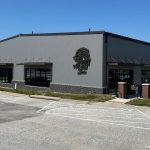
Champions Run
Recognizing the growing popularity of pickleball, Champions Run Golf Course in Omaha, Neb., developed a new year-round facility designed to provide an inviting environment...
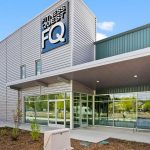
From basic shelter to building blocks with infinite possibilities
When 13 metal building system manufacturers came together 70 years ago as the founding members of the Metal Building Manufacturers Association (MBMA), they did...
Read the latest issue
September 2026