

The American Architectural Manufacturers Association released AAMA 509-09, a test and classification method based on the results of testing a representative sampling of drained and back ventilated rain screen wall cladding systems. Titled “Voluntary Test and Classification Method for Drained and Back Ventilated Rain Screen Wall Cladding Systems,” the document addresses air leakage of the air/water barrier, airflow/cavity ventilation and water management. The primary purpose of this test method is to quantify the volume of rainwater contacting an imperfect air/water barrier and the system’s ability to allow for ventilation/drying as measured by airflow through the cladding. The test method was developed by the Drained and Back Ventilated Rain Screen Study Group, chaired by Scott Warner of Architectural Testing Inc., York, Pa. “This voluntary test and classification method establishes the requirements for test specimens, apparatus, test procedures, test reports and performance data that may be used in the evaluation of drained and back ventilated rain screen wall cladding systems,” Warner said. “The test method is intended to provide test data that will help the user make an informed evaluation of the system performance based on the degree of wetting of the air/water barrier and the available ventilation/drying of the drained and back ventilated rain screen wall cladding systems.” The “Voluntary Test and Classification Method for Drained and Back Ventilated Rain Screen Wall Cladding Systems” is available to members at a cost of $15 for download, $30 for paper copy and $35 for CD. Non-members may purchase the document at a cost of $37.50 for download, $75 for paper copy and $80 for CD. To order AAMA 509-09, visit the AAMA Online Publication Store at www.aamanetstore.org. More information about AAMA and its activities can be found at www.aamanet.org.
Voluntary test and classification method from AAMA (December 2009)
This Month’s Features

Maximizing metal performance in mixed-use residential design
As mixed-use residential buildings continue to grow in scale, density, and program complexity, the exterior envelope must serve multiple programs. Contemporary projects routinely combine...

Aviation and automotive architecture with EMPAD Architecture + Design
EMPAD Architecture + Design is a 23-year-old full-service firm based in Florida that has worked across a wide array of sectors, from commercial to...

An all-metal experience for architects at METALCON 2026
Architects and designers heading to METALCON 2026 will find more than a traditional tradeshow. For three days, metal takes center stage.
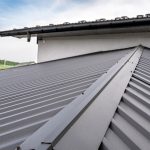
Where metal meets metal: integrating caulks and sealants into design
They are integral to managing movement, controlling moisture, supporting energy efficiency, UV/weather resistance, adhesion, and preserving aesthetics.
Read the latest issue
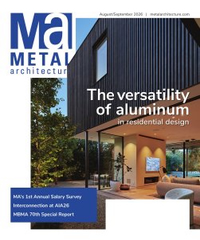
September 2026