Photos courtesy Triangle Fasteners
Sustainability captures attention, symbolizing both responsibility and endurance. Many companies proudly highlight their commitment to sustainability. Yet, what does it truly entail? Does anybody feel like they know for sure? Can one fastener be more sustainable than another? Can a fastener be sustainable at all?
Sustainability is defined as meeting the needs of today without compromising the ability of future generations to meet their needs. There are three pillars of sustainability: environmental, social, and economic. Environmental sustainability focuses on maintaining ecological balance and preserving natural resources. It involves minimizing the use of non-renewable resources, reducing pollution, and minimizing waste. Social sustainability focuses on the wellbeing and equity of current and future generations. It involves promoting social justice, inclusivity, access to education, healthcare, clean water, food security, and human rights. Economic sustainability involves managing economic systems in a way that promotes long-term prosperity. It emphasizes the efficient use of resources, responsible consumption and production practices, fair labor practices, and reinvestment rather than short-term financial gains.
The industry steps up
Fasteners are usually a small part of complex building systems, often taken for granted. Despite their small size, their importance is critical, and their strength and durability are crucial. The quantities used throughout the world daily are immense. Due to the hundreds of billions of fasteners produced yearly, the effect on the world cannot be ignored. Customers are increasingly taking notice and in turn, the fastener industry is taking greater responsibility.
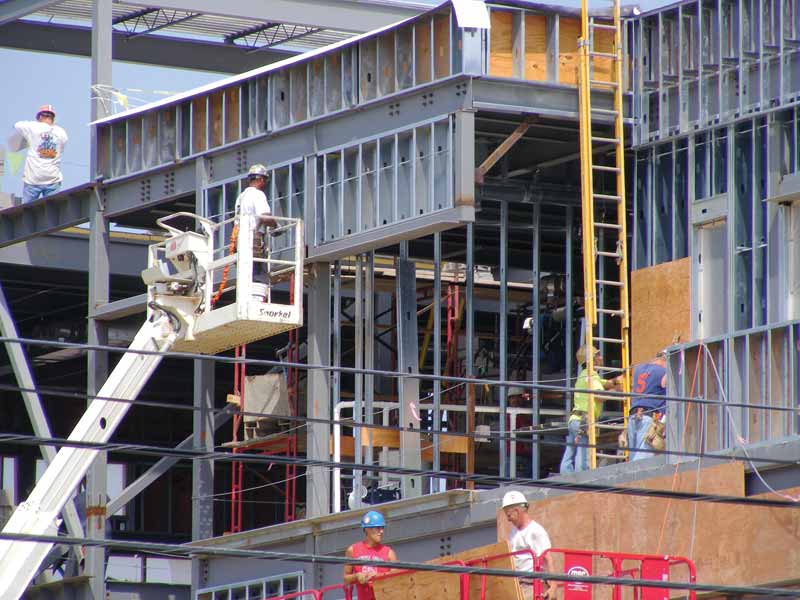
Acquiring raw materials and manufacturing fasteners often involves energy-intensive processes which contribute to greenhouse gas emissions and resource depletion. Although using alternative materials may not be feasible there have been some advancements in coatings and platings that are a little more earth friendly. Traditional zinc coatings require oven baking at a high temperature. The alternative use of zinc-aluminum flake coatings eliminates baking and reduces energy use tremendously. Hexavalent chromium previously used in plating processes is being replaced with environmentally friendly Cr3+ trivalent chromium coatings.
Responsible manufacturers are committed to sustainable business operations and to continuously improving their environmental performance. They use energy and other resources carefully and efficiently to reduce or avoid unnecessary pollution. They invest in and use clean energies and reduce their energy consumption. Their products and services are compatible with the environment and conserve resources over the entire life cycle. They have a goal of zero defects for all their processes, products, and services. They systematically analyze failure causes and solve them efficiently and effectively. They aim for lean processes and to avoid waste. They empower their employees so they can fulfill their environmental responsibility.
Options evolve
Without the demand created by green building practices, which employ sustainable construction materials and techniques to minimize environmental impact, more sustainable fasteners might not exist. Choosing durable, corrosion-resistant fasteners ensures longevity and reliability. Stainless steel fasteners are durable, resistant to corrosion, recyclable, have low maintenance costs, long service life and do not require surface coatings which can be harmful to the environment. Stainless steel fasteners are significantly more expensive than carbon steel initially, but the total cost of stainless steel can be lower than competing materials due to reduced repair, maintenance, and replacement costs throughout a building’s life cycle. The reduced need for repair and replacement of fasteners results in lower environmental impact in terms of raw material and energy use.
Packaging and transportation are additional areas of concern. Green building projects encourage the local sourcing of materials and manufacturers are looking for the most efficient ways to transport fasteners. Fastener suppliers use recyclable packaging such as corrugated cardboard and size boxes to maximize use of space in shipping containers. They use distribution centers and branch locations to efficiently deliver product to customers. Alternate fuels sources are being used more in transportation and material handling.

Achieving true sustainability requires a holistic approach that recognizes interconnectedness and balances environmental protection, social equity, and economic prosperity for all. Successful companies protect the health of their employees by providing safe and healthy working conditions. They strive to avoid employee accidents by promoting awareness and carrying out preventive programs. They involve employees on the subject of occupational health and safety. They provide fair wages and benefits and provide worker training and development programs. Engaging with local communities, supporting social initiatives, and fostering positive relationships with stakeholders helps build trust and goodwill. Investing in sustainable technologies, innovation, and supply chain resilience enhances the long-term competitiveness and economic viability of fastener businesses, contributing to job creation, economic growth, and industry innovation.
By embracing sustainable practices, the fastener industry can contribute to building a more resilient future. From reducing environmental footprint and promoting resource efficiency to fostering social equity and economic prosperity, the journey towards sustainability in the fastener industry is one of collective responsibility and opportunity for positive change.
Josh Krohn is the engineering service manager at Triangle Fastener Corporation. He has more than 20 years of experience as an engineer and has headed up the TFC Tech Center in Cleveland, Ohio, since 2018.