Photo courtesy Schweiss Doors
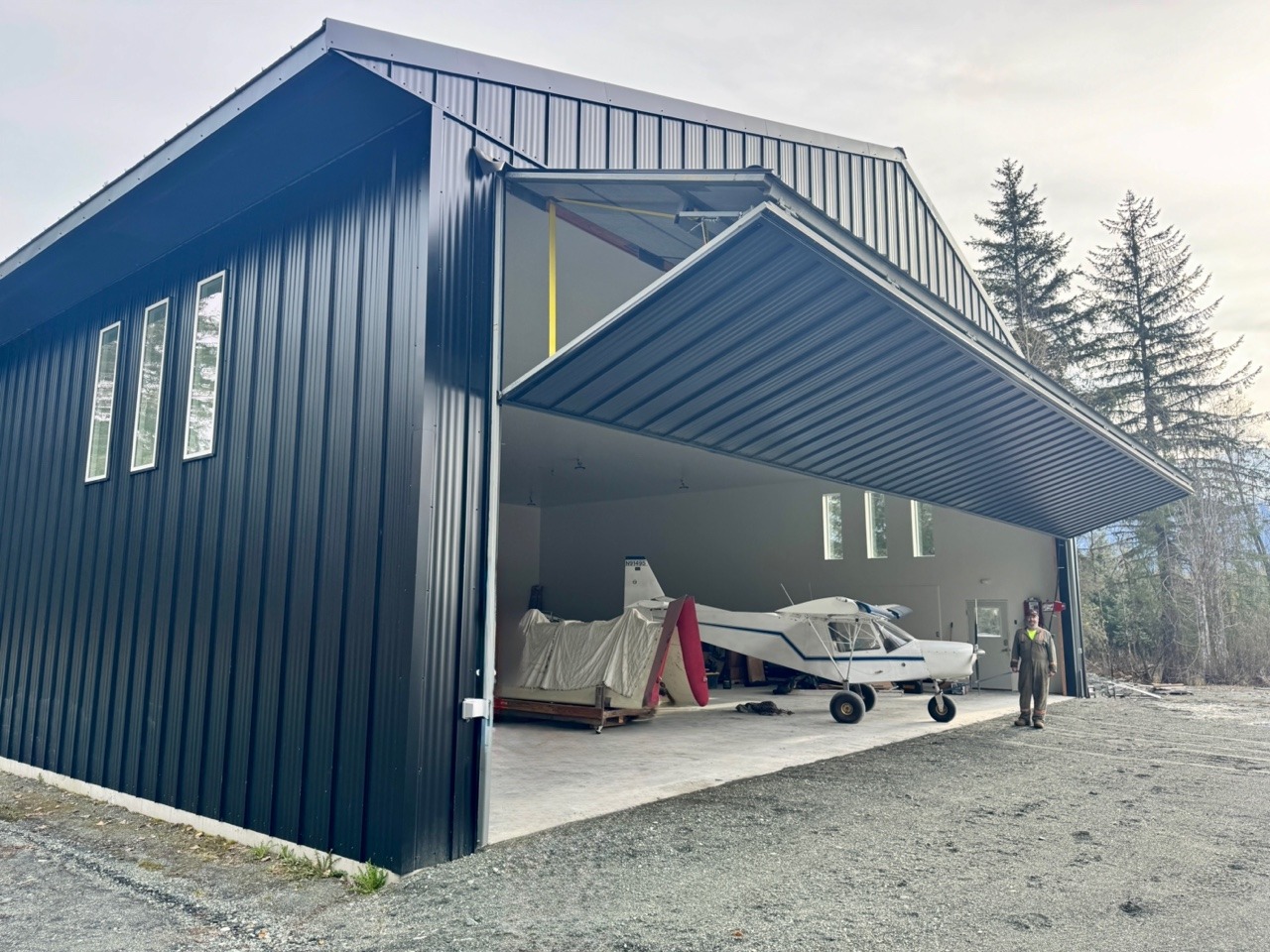
Airkat Airpark 9AA9, a private airport located outside Haines, Alaska, features a new hangar with an optimized functional design, supported by a bifold door and black sheet metal cladding.
Owned and operated by George and Lynette Campbell, the current runway is approximately 335.3 m (1,100 ft) long and 39.6 m (130 ft) wide. The new hangar is approximately 18.3 x 24.4 m (60 x 80 ft), with its liftstrap bifold door measuring 16.8 x 4.6 m (55 x 15 ft). In an eye-catching stark black color, the structure’s sheet metal cladding contrasts nicely with its environment, acting as a focal point against the white snow.
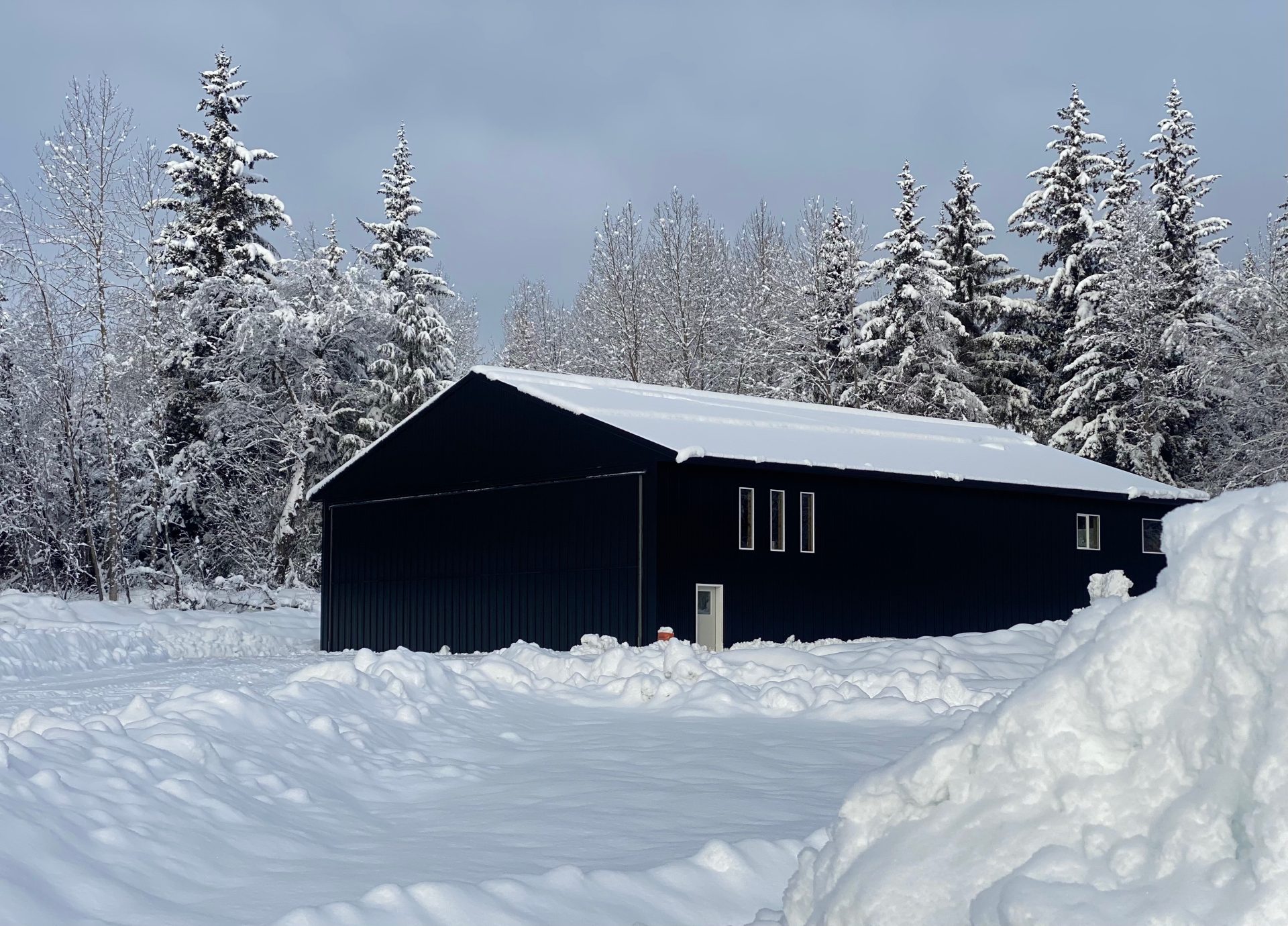
Photo courtesy Schweiss Doors
Both Lynette and George have long careers in Alaska Aviation. Beyond personal use, they wanted to create a landing area that could be used by other pilots in case of an emergency, such as a low-fuel incident or bad weather. Alaska’s small, rural airports and landing strips act a lot like a gas station does in the rest of the United States. The Campbells decided to register their landing strip with the Federal Aviation Administration as an airport, so it would be part of the larger network.
“You want to strategically place airports along the way, to fill in gaps so a pilot is never more than a few hours away from one,” Lynette says. “This airport does help fill a hole in the aviation system in the state. I’m real passionate about Alaska and Alaskan aviation, and I feel like this is my contribution.”
The hangar has a bunk room for visiting aviators to use and a more complete apartment above the hangar floor that may eventually be used to lodge visitors for extended visits. The building is clad in dark metal sheeting and includes several windows to let in the natural light.
An important piece of the Airkat hangar is the door. The Campbells knew they wanted a high-quality door that would be easy to operate while also standing up to Alaska’s challenging environment.
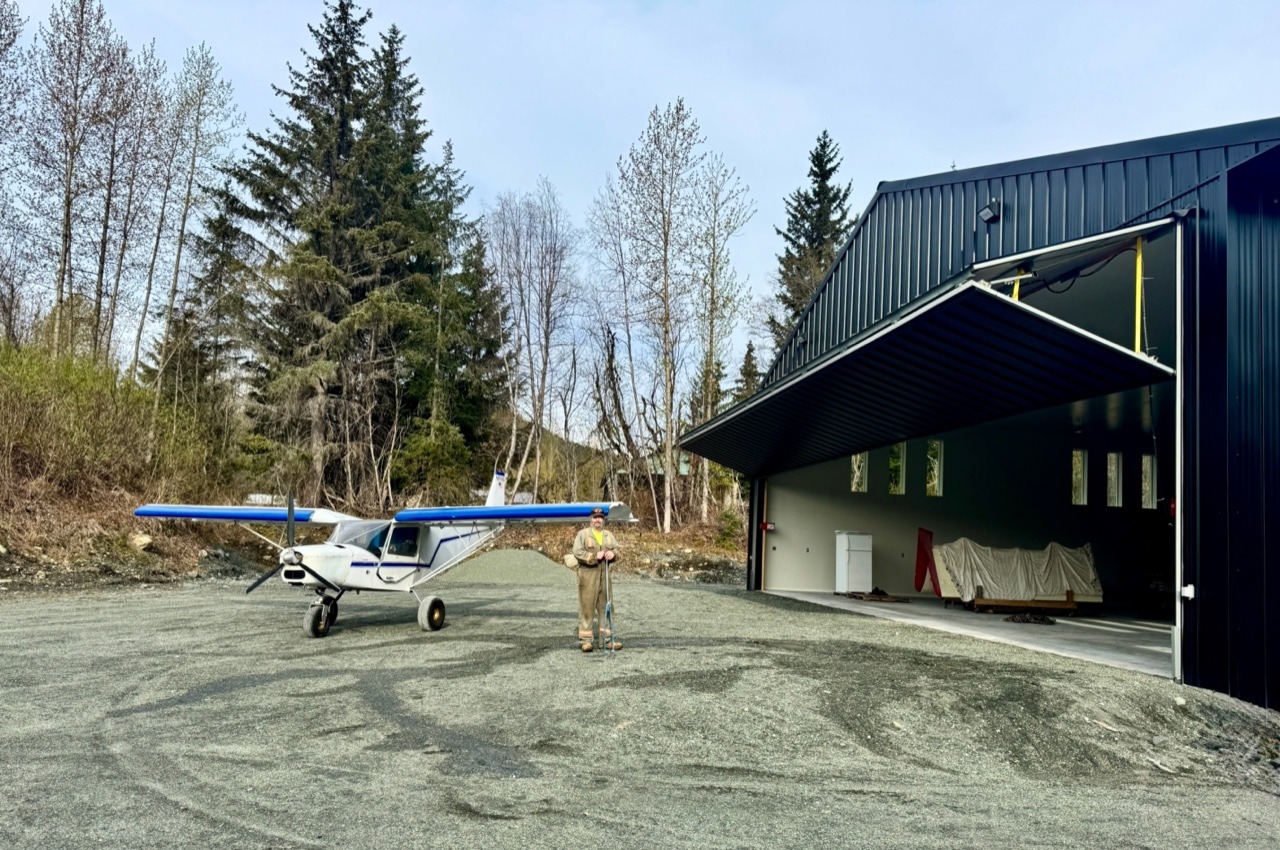
Photo courtesy Schweiss Doors
The bifold door had many features that made it the right choice for Airkat. First, it allowed the couple to maximize their hangar and apron space, since the door folds up and out of the way. Lynette says the hangar aprons in Alaska are usually on the small size so not having to worry about a door being in the way is a major positive.
Lynette is also a fan of the door manufacturer’s patented liftstraps. Instead of using outdated cables to lift the door, the bifold door uses nylon straps which are stronger, safer, quieter, and longer lasting than cables. Since many Alaskan towns are coastal, having straps means not having to worry about metal cables rusting or deteriorating in the damp, salty air.
The Campbells also wanted a hangar door that was strong. Living in Alaska means dealing with nature at its most unpredictable. Weather can change quickly; high winds are common; and the area can even be impacted by earthquakes.