In this edition of The Firm, Metal Architecture sat down with Jamie Farmer of Farmer Payne Architects. With main offices in Wyoming, Idaho, and Louisiana, the firm has established itself for its portfolio of community buildings, hospitality structures, mountain residences, and projects spanning the southern U.S. since opening in 2017. Now a team of 19 people, the company has grown significantly since Farmer and Scott Payne began their partnership.
Community in design practice and purpose
Farmer explains the mindset behind the company’s success: “We always try to provide the highest quality possible, and we do that through collaboration.” Different types of projects require different skill sets, and the firm’s approach capitalizes on the skills of various experts, tailoring them to each project and working with engineers, designers, consultants, and building scientists.
Reaffirming the firm’s values, Farmer shares, “We pride ourselves on quality and collaboration.” He emphasizes the universality of teamwork as an architectural asset, leaning into the adage that it takes a village. “The more talented and inspired team members we can bring on,” he notes, “the better the project can become.”
Beyond the community it takes to design truly supportive and impactful projects, Farmer Payne Architects also aims to support local communities in their work. Kelly Condos in Jackson Hole, Wy., is a prime example of the firm’s efforts in that regard. This multi-family residential structure offers 12 private residences and was made in collaboration with the Town of Jackson, Wy. With demand for cost-effective housing on the rise, the firm has worked on deed-restricted projects and aims to pursue more affordable residential projects. Farmer observes, “The cost of living is a driving factor in our community.”
The scope of collaboration in creation
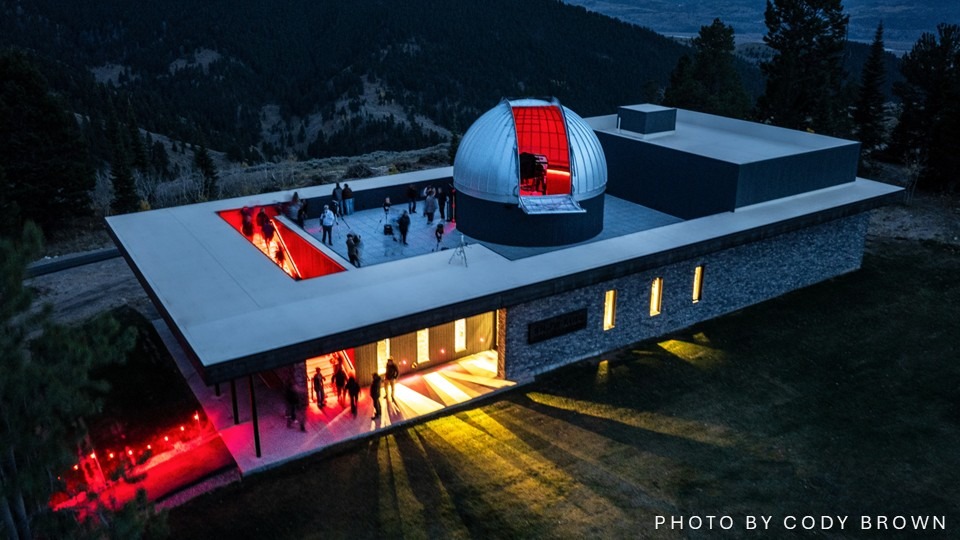
A large aluminum dome defines the design of a science and technology cultural hub, the Snow King Observatory in Jackson, Wy.
Jakub Galczynski, design lead and project manager for the facility, researched, designed, and drafted all construction documents for the Snow King Observatory in 2015.
Farmer Payne’s work involved protecting and concealing a 9.5 ft (3 m) telescope, as well as developing a classroom, an observatory, a telescope viewing platform, and a planetarium.
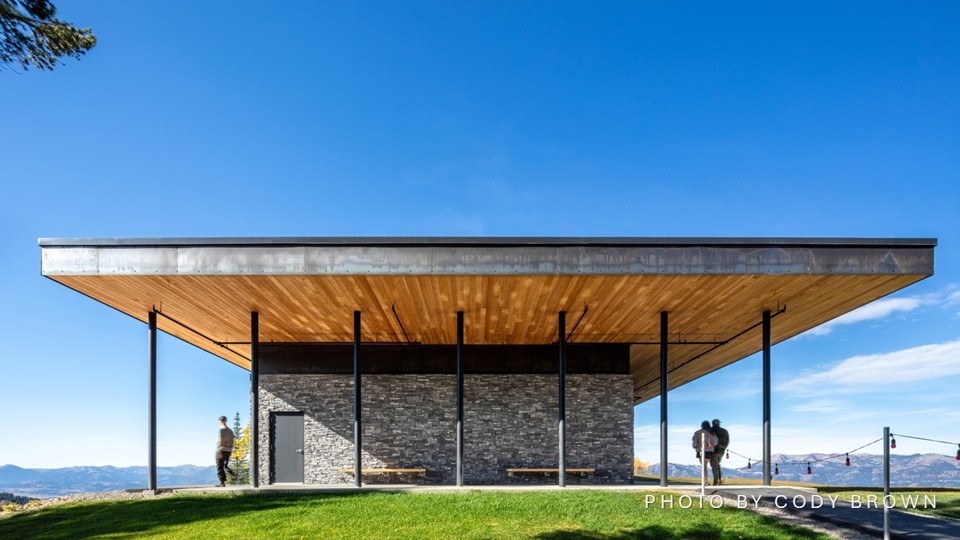
Farmer emphasizes the necessary collaboration for a project of this scope, mentioning the many additional consultants—telescope, dome, planetarium—involved in the design process, as well as a nonprofit in Jackson called Wyoming Stargazing, the intended occupants of the facility. The finished building is a stunning blend of indoor and outdoor spaces, a roof highlighted by shining silver-colored aluminum that draws attention to the stargazing purpose of the structure, and an overall integrated hub of community and astronomy.
Metal remodel from the ground up
A log structure once sat in a stunning location in Sun Valley, Wy., in need of a refresh. Farmer Payne Architects came in with the intention of delivering a concept design for refurbishing the structure, until the exciting possibility of a whole new building emerged. The wood structure was moved, and, in its place, the firm designed a stunning new home, championed by metal.
Farmer explains metal makes up “the roofing, the cantilever steel wide flange beams and columns, the steel paneling on the walls, and the steel railings.” In the design process, a welded metal panel railing was created using z-clips to form a hanging bar system, making the panels easily accessible for cleaning or repair. With these elements incorporated, the desired modern refresh was achieved in a way that will stand the test of time due to the material selection and design.
Metal versatility
The durability, low maintenance, and adaptability of metal have long been a selling point for its use in design. Farmer Payne Architects uses the material’s advantages to meet clients’ functional and aesthetic goals. Farmer reflects, “All of our projects have some form of metal, whether it’s roofing, structure, flashing, windows, or cladding.”
When navigating weather resilience in designs, Farmer notes “a lot of our requirements are that not only roofs but walls are also non-combustible.” He explains the trend toward metal as an easy, positive solution to meet these requirements.
Metal works well with other materials, offering adaptable design versatility. Throughout the firm’s work, there is a prevalent demand for glass openings, where metal is an ideal framing system for its strong performance and adaptable appearance. He observes, “Traditionally, wood siding and wood products are known to fade or deteriorate over time, where metal, if coated correctly and installed properly, can be a really long-lasting and durable material.”
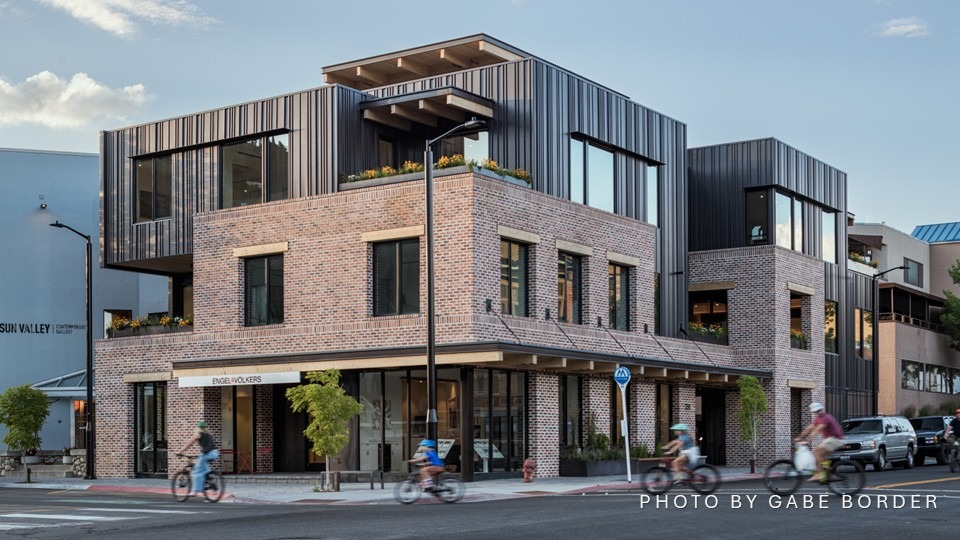
Farmer highlights the vital role that metal plays in the emerging need to design wildfire-resistant metal buildings. On the pre-existing tendency to use wood roofing on log cabins and local properties, he remarks that wood is “not really a very durable or safe product when it comes to wildfires in our areas. That’s a significant threat in our area during the summer, so policies and regulations now require the use of metal.”
The majority of the firm’s projects have metal roofs, and much of that metal is sourced from local companies, with the support and insights of builders and subcontractors to find the metal samples that best fit each project’s needs. He explains that local companies in the Nido Falls, Rexburg, and Salt Lake City areas have been a valuable source of steel for their roofing projects.
Sophisticated steel solutions
Blending contemporary styles into a historic neighborhood, the Gill 3 + 4 residence uses steel’s sleek profile to achieve a modern appearance.
Farmer explains, “When we’re designing some of these structures that are more modern and open structurally, steel allows us to span or support the structure in a thinner profile than timber.” Incorporating steel into designs through elements such as columns, rafters, and beams makes them more adaptable and more conducive to a modern look.
In the Gill 3 + 4 residence, steel provides framing for glazing and acts as a decorative and functional support in railings. The material’s longevity and durability make it ideal for both interior and exterior applications.
He explains the additional advantages of working with steel, namely, mitigating the risk of rust and achieving a suitable aesthetic by specifying the right finish, whether it be painted, galvanized, coated with powder or resin, or bonderized.
Detailing and defining character with metal
The firm’s projects often articulate themselves with intention and care, fusing structural elements with meaningful details that define the expression of their designs.
In a recently completed project in Idaho, Farmer Payne Architects embraced the local potato-farming culture in the design of a home. At the heart of this design is the traditional, agricultural, basic, simple, and durable vernacular that encompasses the culture of the surrounding architectural landscape. Drawing inspiration from the local seed and crop storage metal gable silos and corrugated, galvanized metal buildings that populate the area, the project comprises two large steel corrugated metal gables. The design carves out forms within the gables to create an elegant residence. The roofing and siding wrap together to create a visual flow. Farmer calls the project “a true metal building that was inspired by the local traditional architecture.”
Where the Idaho residence’s style was driven by its surroundings, with metal as a conduit of its expression, the use of steel in the design of a sticker store defines the project’s aesthetic. Farmer Payne Architects’ design for TGT Stickers is a testament to the artistic impact materials can have. This design embraces an industrial style, incorporating metal elements into everything from large-scale framing to small-scale storage. The project was a retrofit of an old traditional storefront, replacing dated wooden framing with steel, including steel columns and floors. Further, corrugated metal decking enabled the easy addition of a loft, creating an office space above the store.
Farmer explained the seamless process: “It was easy for us to retrofit everything he needed with steel structure and steel finishes, and then for all his stickers, all the compartments were these little steel storage systems.” A partial red Volkswagen microbus serves as a focal point within the store, complementing the building’s contemporary industrial style.
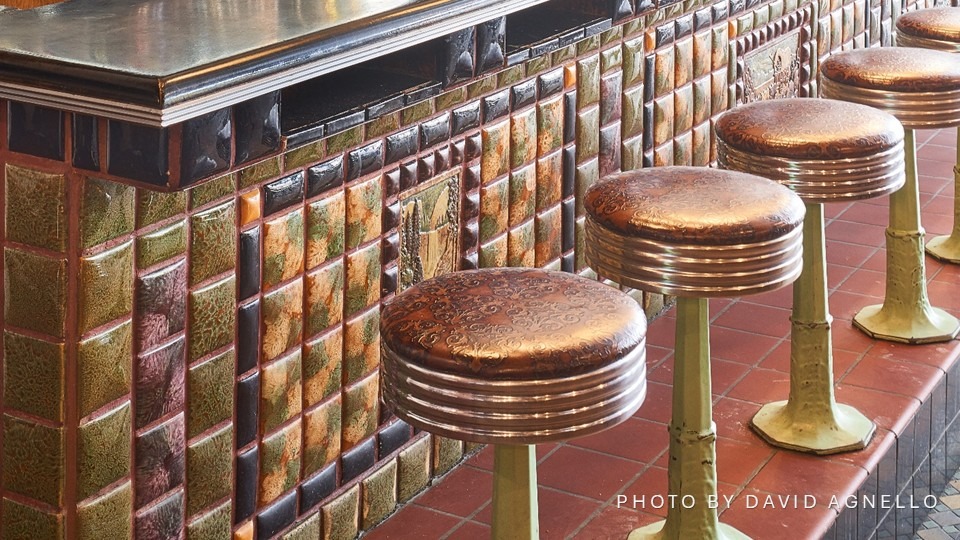
Jackson Drug in Jackson, Wy., is another example of how Farmer Payne Architects uses metal to enhance a structure’s character. One family has owned the original building for six generations, and the current owners wanted to convert the space into a restaurant and retail space. Preserving the property’s historical charm, copper panels with a retro-style pattern complement the warm appearance of metal accents throughout the interior, including light fixtures and bar stools. Farmer described the process as “an easy way to come in and retrofit an old building with a metal product that brought it back to life.”
Throughout these designs, Farmer Payne Architects uses community to create, inform, and communicate through the built environment. In its various applications, metal is used to pay homage to environments and legacies, and to inspire storytelling styles that reflect the identity of building occupants.