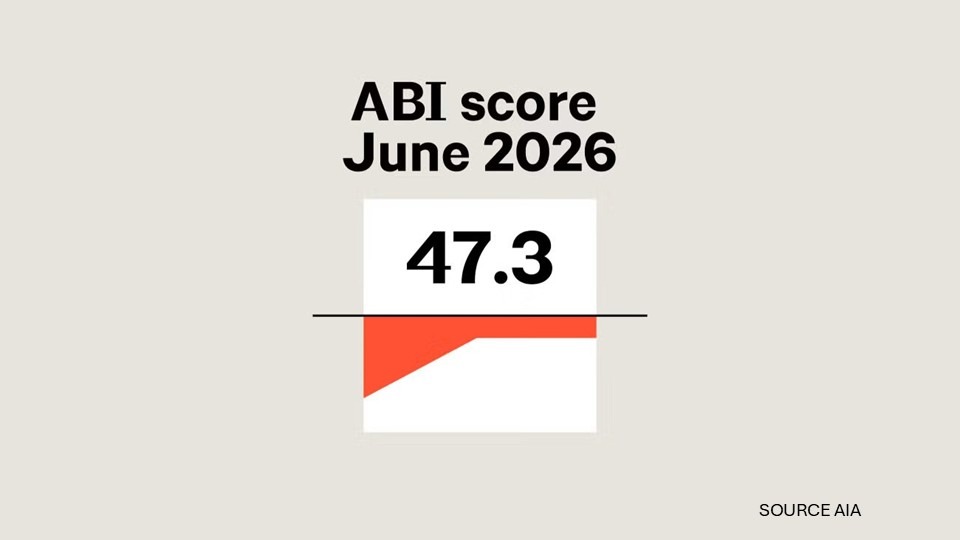
 The AIA/Deltek Architecture Billings Index rose to 47.3 in June, up nearly three points from May, but remained below the 50-point threshold that indicates billings growth. The result signals that a majority of architecture firms continued to report declining billings, extending a prolonged downturn for the profession.
While billings remained soft, leading indicators were moderately more encouraging. Project inquiries increased to 56.1 after a slight decline in May, suggesting client interest has not disappeared. Newly signed design contracts came in at 49.8, essentially flat, with nearly equal shares of firms reporting increases and decreases.
Backlogs softened in the second quarter, declining to an average of 6.3 months from 6.6 months in the first quarter. The steepest drop occurred among small firms with annual billings of less than $250,000, where backlogs fell from 4.9 months to 3.1 months. That decline suggests smaller practices may be feeling the downturn more acutely. 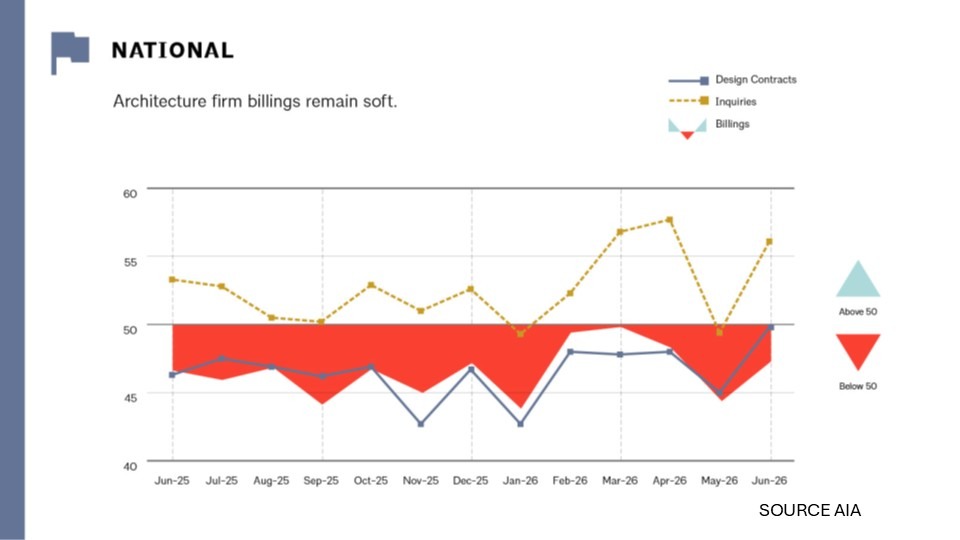
“Architecture firms remain mired in one of the longest running downturns in the 30-plus year history of the ABI, which now stretches to 41 months without a majority of firms reporting billings growth,” says AIA Chief Economist, Richard Branch. “The uncertainty over the conflict in Iran along with high interest rates and significant labor shortages will continue to weigh on construction and architect billings over the next several months.”
Business conditions remained negative across all regions. The South remained closest to growth at 49.5, followed by the West at 45.6, the Midwest at 45.1 and the Northeast at 44.9. Sector performance also remained negative, with institutional firms at 47.4, commercial/industrial firms at 46.7, multifamily residential firms at 45.6, and mixed-practice firms at 42.7.
The data points to an uneven market: current billings continue to contract, but inquiries remain solid and design contracts are nearly stable. For architects, manufacturers and project teams, that combination suggests project starts may remain constrained in the near term, even as owners continue to explore future work.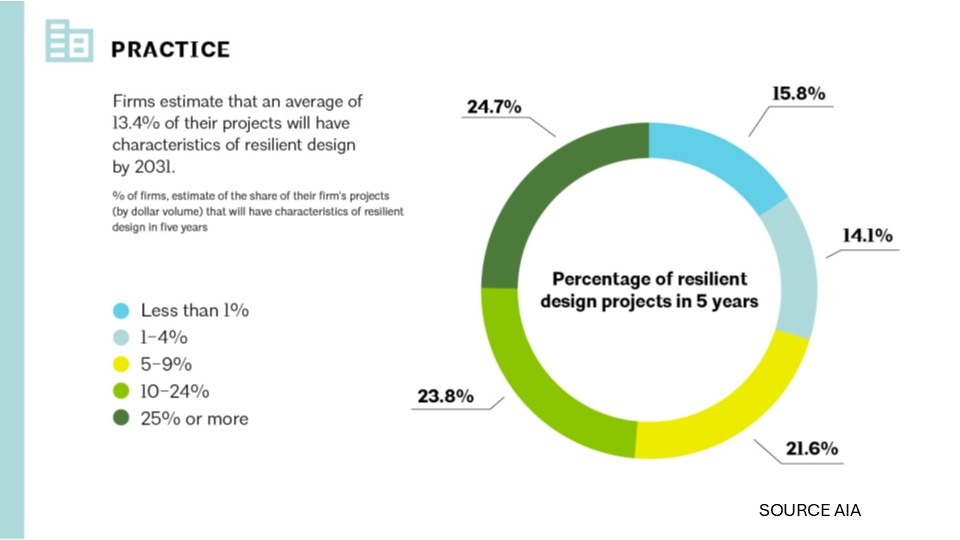
The June survey also points to growing long-term attention on resilience. Firms estimate that, by 2031, an average of 13.4 percent of their projects by dollar volume will include characteristics of resilient design.
For the metal architecture sector, that trend may support continued interest in durable enclosure systems, roofing, rainscreens, structural components and assemblies designed for longevity, weather resistance and climate-related performance demands.
—With files from AIA