Understanding the materials best suited for metal roofing projects involves considering critical elements of the coating’s performance and warranty. This article delves into the differences between silicone-modified polyester (SMP) and polyvinylidene fluoride (PVDF) coatings, providing insights to aid in making informed decisions when selecting materials for upcoming metal roofing projects.
SMP based coatings
SMP is a silicone-modified or siliconized polyester coating system for application in metal building products. SMP resin systems are typically blended with high-quality pigments and UV additives to achieve excellent color and gloss retention, as well as excellent weather resistance. Higher silicone levels can improve the gloss retention characteristics of these coating systems. With extensive research and performance testing, SMP-based coatings have been formulated and improved over decades, and today’s SMP coatings are much closer to the durability of PVDF. SMP offers more gloss options and textured finishes compared with PVDF coating systems and differs slightly when comparing color fade in medium and dark colors. The coating can begin to chalk and fade slightly quicker than PVDF coatings, especially when bright or dark colors are used in extreme conditions. However, lighter colors are inherently better at deflecting UV rays, and SMP is a viable option. SMP, once cured, is tougher than PVDF and has excellent scratch resistance, which can support reduced corrosion of exposed metal during the life of the building. of
PVDF based coatings
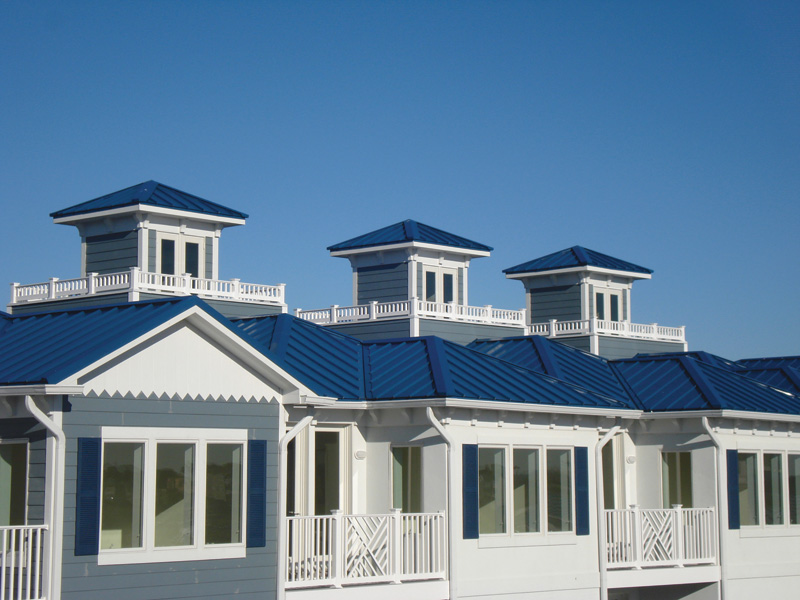
PVDF is a very stable fluoropolymer used in high-performance, highly durable exterior paint finishes. It was discovered more than
60 years ago as DuPont scientists created Teflon, most commonly used in non-stick cookware. Fluoropolymers are the most chemically inert of all polymers. PVDF’s strength comes at the molecular level. Its carbon-fluorine bonds produce one of the strongest chemical bonds in polymers, and the molecule’s spiral shape is structurally very stable. These thermoplastic polymers soften upon heating and are rigid again when cooled. This process is repeatable, making them flexible during the coil and extrusion manufacturing process. The unique molecular structure of these polymers provides its well-known performance. PVDF remains stable in most chemical environments at high temperatures and is highly durable in extreme weather conditions.
AAMA specifications
in extrusion coatings
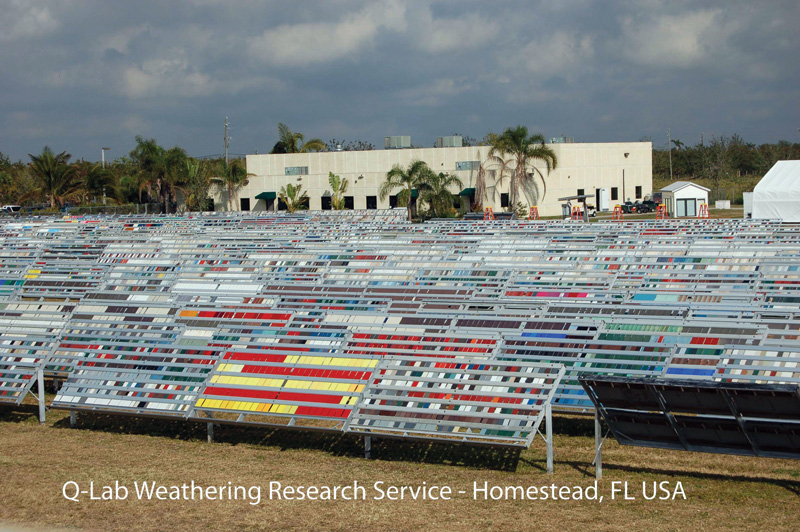
To help decide which coating is suitable for any given environment, it is worth looking at the performance rating of the Fenestration and Glazing Industry Alliance (FGIA), which uses three AAMA specification codes. These specifications, AAMA 2603, 2604, and 2605, use a mix of accelerated and real-world testing in the harsh South Florida environment to evaluate coatings. While there are other local standards worldwide, the AAMA specifications remain the leading standard, even outside of the U.S.
AAMA 2603 is mainly used for interior facades, retail points of sale, or commercial storefronts in shopping malls. Typically, high-solid polyester and acrylic coatings will meet the needs of AAMA 2603 specifications. They are not exposed to harsh weather conditions, so the need for exceptional performance in outdoor weather is unnecessary.
The AAMA 2604 performance specification aligns well with systems designed with SMP resins. These coatings can cost more than standard polyesters yet are five times more protective. Their weathering performance over five years is equal to one year for ordinary polyesters. SMP coatings are often applied to storefronts, windows, doors, and low-rise curtain walls. Although the ratings are for five years, they are usually supplied with a
10-year guarantee. The toughest specification (AAMA 2605) requires 10-year South Florida testing for color retention, chalk resistance, and gloss retention. AAMA 2605 is most commonly associated with the performance properties achieved with 70 percent PVDF coatings. This makes PVDF coatings ideal for use in any environmental conditions to protect exterior curtain walls, facades, windows, and doors of buildings, stadiums, and high-value residences. These polymers provide long lasting protection for buildings’ structural and aesthetic qualities with warranties of 20 years for color and gloss on aluminum.
Selecting the right coating system for your application
PVDF is particularly good for long-lasting protection of vivid and dark colors. However, a choice of bright colors is restricted if a two-coat rather than a three-coat system is used. The PVDF coating’s flexibility supports the manufacture of metal building components. However, this flexible coating can be relatively soft and more susceptible to scratching and marring than other systems. With white coatings, more metal marking occurs than with other, tougher coating systems. Careful handling in production helps avoid these issues. PVDFs are particularly suited for severe weather environments such as industrial sites with higher concentrations of acid rain and chemical pollutants; coastal areas with saltwater spray from the ocean; desert climates with the risk of wind and sand erosion; or climates with extreme heat, UV sunlight, and moisture or humidity (e.g. South Florida).
Coating selection can vary by project. From our experience SMPs are a good substitute in more environments than some would think. Central and Northern U.S. and Canada are all examples of areas where PVDF may not be needed. With recent advancements in SMP coatings technology, SMP coatings will perform well in these areas and other extreme areas, including those in coastal areas or mountainous regions with swings in temperature, heavy rainfall, hail, and snow. Although these environments might be considered extreme, SMP’s toughness will weather these conditions well.
Given exposure conditions in the United States, both PVDF and SMP coatings are well suited for metal roofing and metal sidewall applications. Due to competitive prices and a harder final finish, SMP coatings are often the preferred alternative for warehouses, industrial storage, agricultural structures, and other non-monumental commercial buildings. SMP coatings work well in all but the most extreme environments. PVDF coatings are often still primarily selected when sourcing materials for coastal environments and areas with intense sunlight, such as deserts or heavy industrial areas with chemical pollutants.
Warranty coverage
A good warranty will cover the following areas:
Film integrity: A quality coating system will maintain film integrity over the life of the structure. The film integrity aspect of a paint warranty ensures paint will maintain adhesion to substrate. The coating will not peel, flake, or otherwise lose adhesion. Reported in time (years).
Color retention: A quality coating system will retain its original color over the life of the structure. Color fade results from chemical breakdown of a coating’s base resins and pigments, which appear as a visible loss of color. Reported as a Delta E in Hunter units, color retention signifies the maximum change in color (fade) over a specified number of years. In this case, a lower number is best.
Washed versus unwashed panels: Apparent discoloration of the coating may occur when it has been exposed in dirt-laden atmospheres for long periods. A good cleaning will generally restore the appearance of these coatings.
Chalk resistance: A quality coating system will maintain chalk resistance over the life of the structure. Decomposition of the coating film caused by UV rays, moisture, or heat (or any combination of the three) results in chalk-like residue on the surface of the building. The residue is transferred to a soft fabric by rubbing the coated surface and assessed visually against photographic standards, in accordance with ASTM D4214.
What’s not covered
It’s important to understand what is outside the scope of common coating warranties. Some common non-warrantable situations include but may not be limited to breaches in the coating film caused by installation scratches, abrasions, or hard impact. Damage caused by moisture entrapment (between bundles or during transit). Other situations include substrate corrosion, failure, or damage from under-film or edge corrosion. Coatings not applied per application and film thickness requirements, and mixing of different coating systems are also not typically covered under coating warranties. Due to boundaries around coating warranties, it is critical to understand and select appropriate substrates and ensure coaters follow best practices for surface preparation, pretreatment, and application of coatings.
Amanda Paterline is the commercial marketing manager of coil and extrusion coatings, Americas, for AkzoNobel. She is a seasoned professional in the coatings industry and seamlessly blends her technical expertise with strategic vision.