

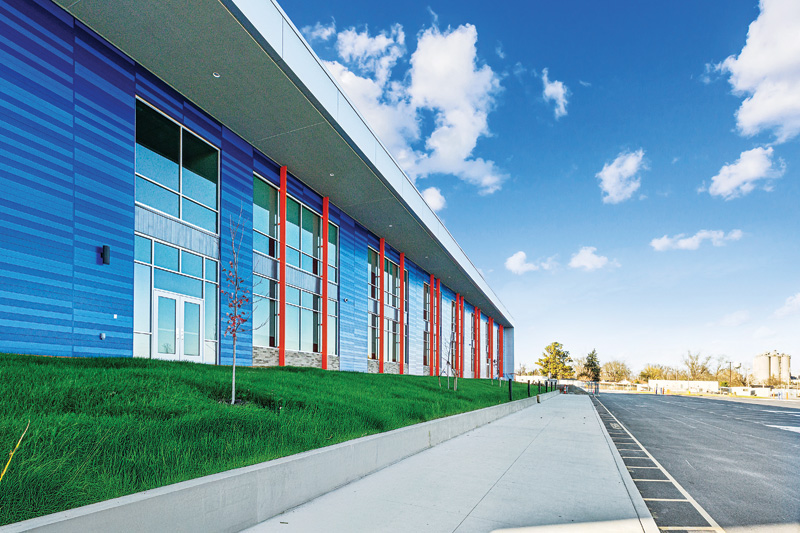
In today’s rapidly evolving building and construction industry, sustainability has emerged as an increasingly crucial consideration that shapes every architectural design and implementation aspect. This fundamental shift in industry priorities stems from multiple pressing factors: the documented increase in frequency and intensity of natural disasters like wildfires and severe weather events, heightened awareness of environmental impacts within the construction sector, and an industry-wide commitment to creating an environmentally friendly built environment that will stand the test of time while minimizing its ecological footprint.
Natural metals have experienced a surge in popularity within the construction industry owing to their widespread availability in nature, complete recyclability potential, and exceptional durability that spans decades. These materials have proven particularly valuable in sustainable building practices, with their ability to be recycled or repurposed. In the diverse landscape of metal-based building products, aluminum has distinguished itself as the premier choice for modern architecture and construction applications, garnering widespread adoption across residential and commercial projects.
Aluminum distinguishes itself as an environmentally responsible material through its unique combination of properties—infinite recyclability, exceptional durability, and significant energy-saving potential.
Lightweight and recyclable
Natural metals have gained prominence in building envelope design in recent years, driven by the industry’s growing emphasis on sustainability. This shift favors eco-friendly material choices and aesthetics that evoke nature and wellness. Known as “biophilic” design, this approach strengthens the connection between building occupants and nature through natural textures and materials. Natural metals—particularly those that mirror the patterns and visual appeal of wood and other organic materials—offer an innovative and efficient way to achieve these design goals.
Aluminum building materials offer a unique advantage: they can be reused and recycled indefinitely without losing their essential properties. This ability to be repurposed preserves resources and significantly reduces long-term energy consumption. Recycling requires only a fraction of the energy needed to produce new aluminum from raw materials.
Aluminum is fully recyclable and remarkably strong while maintaining a light, manageable weight, even across long spans. This characteristic is particularly evident in extruded aluminum building products.
Plus, with a higher strength-to-weight ratio than other natural metals like steel, aluminum can support more weight while using less material. This means your money goes further, and projects can be finished faster when less heavy lifting is required. The reduced weight also contributes to the material’s sustainability profile by decreasing transportation-related emissions and energy consumption throughout the supply chain. Further, aluminum’s lightweight nature allows for more efficient installation processes, reducing on-site equipment needs and labor hours while maintaining the highest structural integrity standards.
Non-toxic, responsible production
Reputable manufacturers of aluminum building products avoid using toxic compounds such as volatile organic compounds (VOCs), chromate, or other red-listed chemicals in their production processes. Thanks to aluminum’s inherent strength and pest resistance, no special chemical treatments are required to address those concerns before use in construction. Further, aluminum products can be powder-coated and sublimated, eliminating the need for potentially harmful liquid paint applications or future refinishing.
These eco-friendly finishing processes protect aluminum and contribute to its sustainability profile by reducing harmful emissions and chemical waste. Moreover, the durability of these finishes means less maintenance and fewer replacements over the building’s lifetime, further minimizing environmental impact.
Durability and fire resistance
A common misconception is that aluminum will oxidize and rust as it ages. While other natural metals may face this issue, aluminum does not. When correctly produced, finished, and installed, aluminum remains protected from oxidation and rust. This is because aluminum naturally forms a thin, protective layer of aluminum oxide on its surface when exposed to oxygen. Additional treatments like anodizing or protective coatings can enhance this natural resistance if desired.
Additionally, aluminum building products offer excellent fire resistance thanks to their inherent non-combustibility. Reputable manufacturers also conduct fire testing on their products to ensure they do not contribute to fires and remain structurally sound at high temperatures. Some products can help prevent fire from spreading since aluminum does not support flame growth.

Versatility
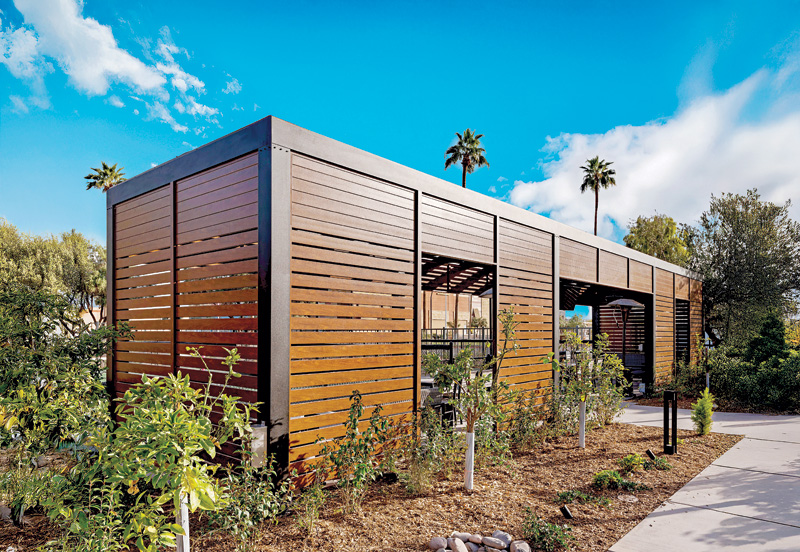
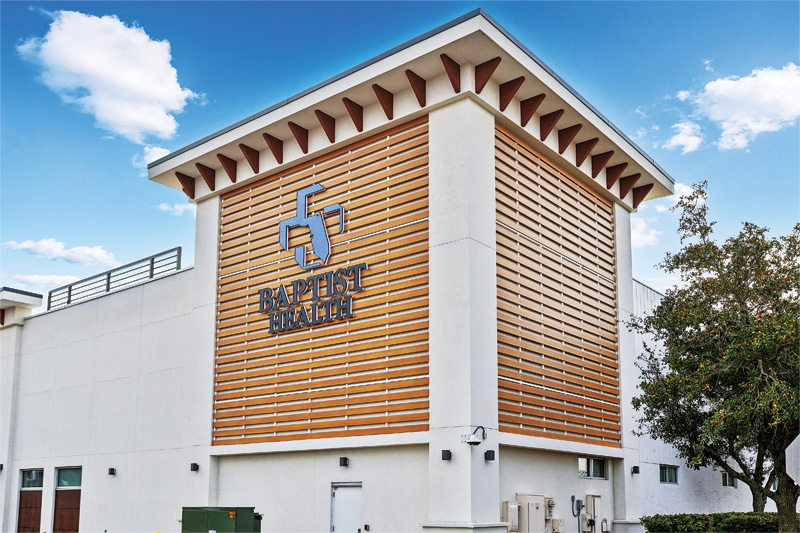
Versatility is one of aluminum’s most valuable attributes, making it a go-to material for architects and designers. This lightweight metal can be easily extruded, rolled, or machined, enabling creative and functional designs that meet diverse architectural requirements. Aluminum building products find their way into numerous applications: exterior cladding, soffits and overhangs, fencing and utility enclosures, decorative battens (both exterior and interior), and awning and pergola structures, to name a few. Aluminum can be shaped into various forms, allowing it to meet almost any design requirement.

Aesthetic appeal
Aluminum building products come in diverse shapes and forms, offering architects and designers extensive project options. From simple siding to multiple-sized battens for feature walls, aluminum accommodates a wide range of design scenarios.
Its ability to accept powder coating and sublimation opens endless possibilities for finishes—from solid colors to woodgrain, stone effects, and metallic surfaces—all created to endure. With many finish options, it is easy to achieve the desired aesthetic, whether ultra-modern, mid-century, traditional, or one’s unique look. Since aluminum works equally well in interior and exterior applications, architects and builders can create a cohesive aesthetic throughout their commercial or residential projects.
Natural metals benefit architects, designers, and builders by delivering exceptional durability, remarkable versatility, and comprehensive eco-friendly qualities. These sustainable characteristics are evident not only in the inherent properties of the materials themselves but also throughout their manufacturing processes, from initial production to end-of-life recycling. Their ability to maintain structural integrity while supporting innovative design solutions makes them increasingly valuable in modern construction.
When comparing various natural metal options available today, including steel, copper, and zinc, aluminum consistently emerges as the premier choice for contemporary building applications. This preference stems from its unique combination of characteristics: an exceptionally low weight that facilitates easier handling and installation, an impressive strength-to-weight ratio that ensures structural integrity while minimizing material usage, and unprecedented aesthetic versatility that allows for a wide range of architectural expressions and finishes.
As the industry continues to push toward more sustainable practices, choosing natural metal building products instead of wood, plastics, or composites is becoming increasingly popular. Even when the upfront investment is higher, selecting a material with greater durability and a lower environmental impact is always a smart choice—not only for the success of the project but also for the benefit of the planet.
Erin Patrick is the marketing and design manager for Parallel Architectural Products. She has been in the metal-building products industry for five years, working with leading industry brands to drive growth and innovation. During this time, she has learned from subject matter experts with decades of experience in metal manufacturing, design, and construction, gaining valuable insight into the growing role of metal building products in architecture.