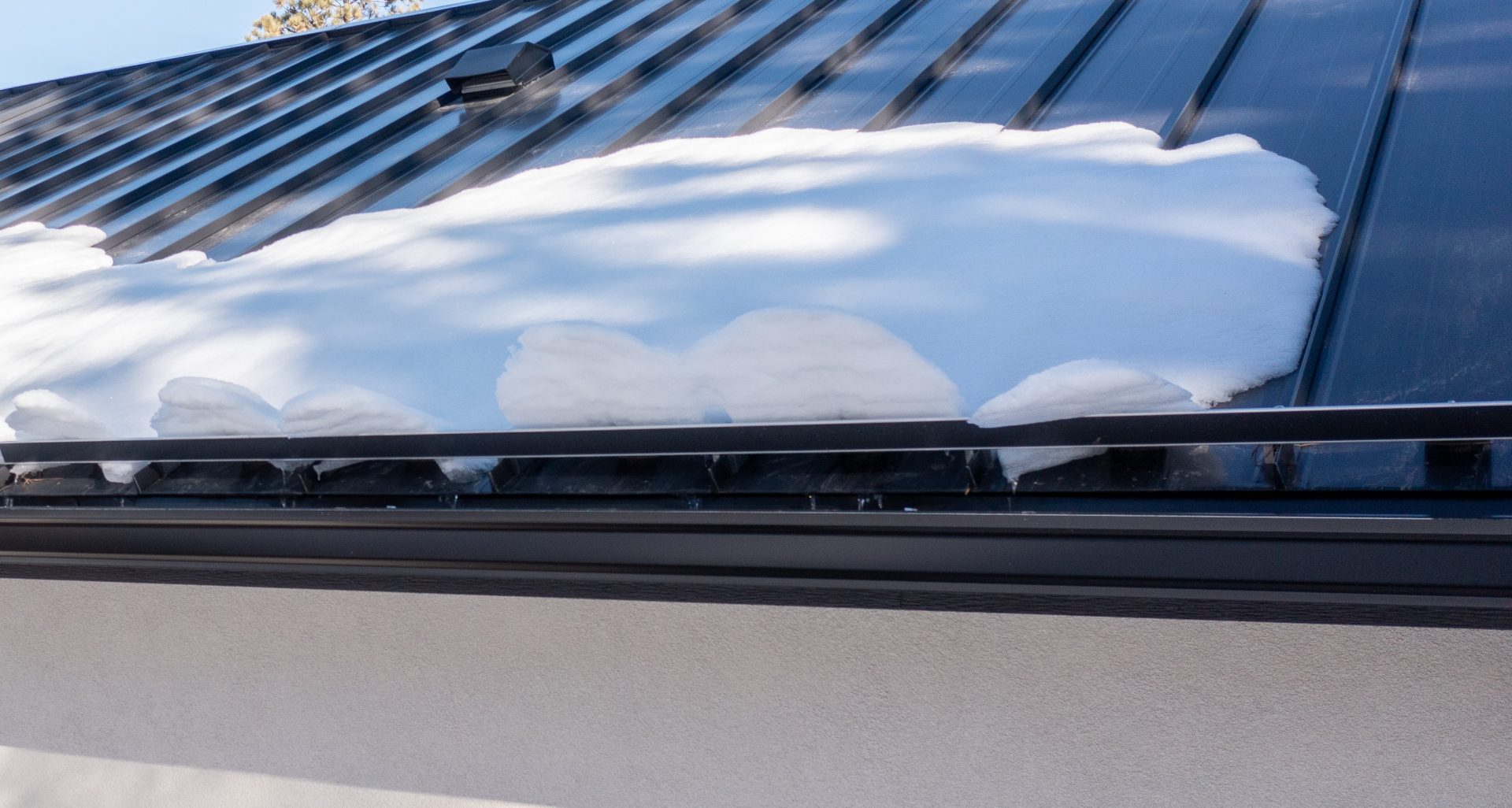
Photo courtesy of S-5!
In mountain resort environments, roofs play an active role in pedestrian circulation, outdoor gathering spaces, and the overall guest experience, not merely in weather protection. At ski resorts in particular, people routinely occupy areas directly below the eaves—entries, terraces, walkways, and après-ski zones—making roof behavior under snow load a critical life-safety issue rather than a secondary design consideration.
Each year, rooftop avalanches cause injuries, fatalities, and significant property damage in snow-prone regions. In high-occupancy resort environments, designers should treat snow retention as a core architectural and engineering decision, addressed early in the design phase and supported by verifiable performance data rather than an afterthought added late in the process.
A certifiably tested, scientifically engineered snow retention system is essential to protect guests, staff, and building infrastructure while preserving the long-term performance of metal roofs.
Engineering for mountain conditions
Effective snow retention design begins with project-specific engineering, not generalized assumptions. In some mountain resort communities, roofs carry 1.8 m (6 ft) or more of accumulated snow during the season. These conditions elevate snow retention from a detailing concern to a structural issue, as these accumulations represent resultant forces on snow retention systems and large masses subject to sudden release.
Roof slope, roof geometry, and the distance from eave to ridge directly influence the forces imposed by the snowpack on the roof assembly. These forces must be evaluated against the tested holding capacity of the snow retention system as installed on the specific roof profile and material. Appropriate factors of safety are then applied to ensure the system performs reliably throughout its service life.
This level of analysis is especially important in resort architecture, where multiple roof planes often overlap pedestrian circulation zones. Entries, outdoor decks, après-ski terraces, and walkways are often located beneath stepped or terraced rooflines, increasing both the likelihood and the consequences of snow release. Properly engineered snow retention systems rely on measurable variables and validated load data, ensuring the correct amount of restraint without unnecessary material or visual impact.
Despite this, many systems installed at ski resorts are selected without engineering analysis. Rob Haddock, CEO and founder of S-5!, notes that familiarity often replaces calculation: “More often than not, two- or three-pipe systems in ski resorts are built by a local general or roofing contractor or fabricated by a local blacksmith or stamping shop. They’re often dictated by the desire to keep the architectural look consistent across the resort or surrounding town—but are they actually engineered?”
Bigger is not stronger
Snow retention systems generally fall into two categories: continuous systems, such as snow rails or fences that run laterally across the roof, or discontinuous devices, such as snow stops or cleats arranged in various patterns. Both can perform effectively when engineered to resist the sliding forces of the cohesive snow blanket—particularly near the eave where snow density and compressive strength are greatest—and when supported by validated load testing.
In resort design, selection is frequently driven by perception. Large pipe systems are often assumed to be stronger simply because they appear substantial. In reality, snow behaves as a monolithic slab rather than as loose material flowing over a barrier.
“People think bigger is better,” says Haddock. “But snow doesn’t go over the top—it moves as one cohesive mass. When the base of that mass is restrained—job done. Taller or heavier-looking snow retention doesn’t necessarily mean safer or stronger.”
Architecture, aesthetics, and habit
Snow retention systems are among the most visible functional components of a metal roof, making aesthetic integration an important consideration in resort architecture.
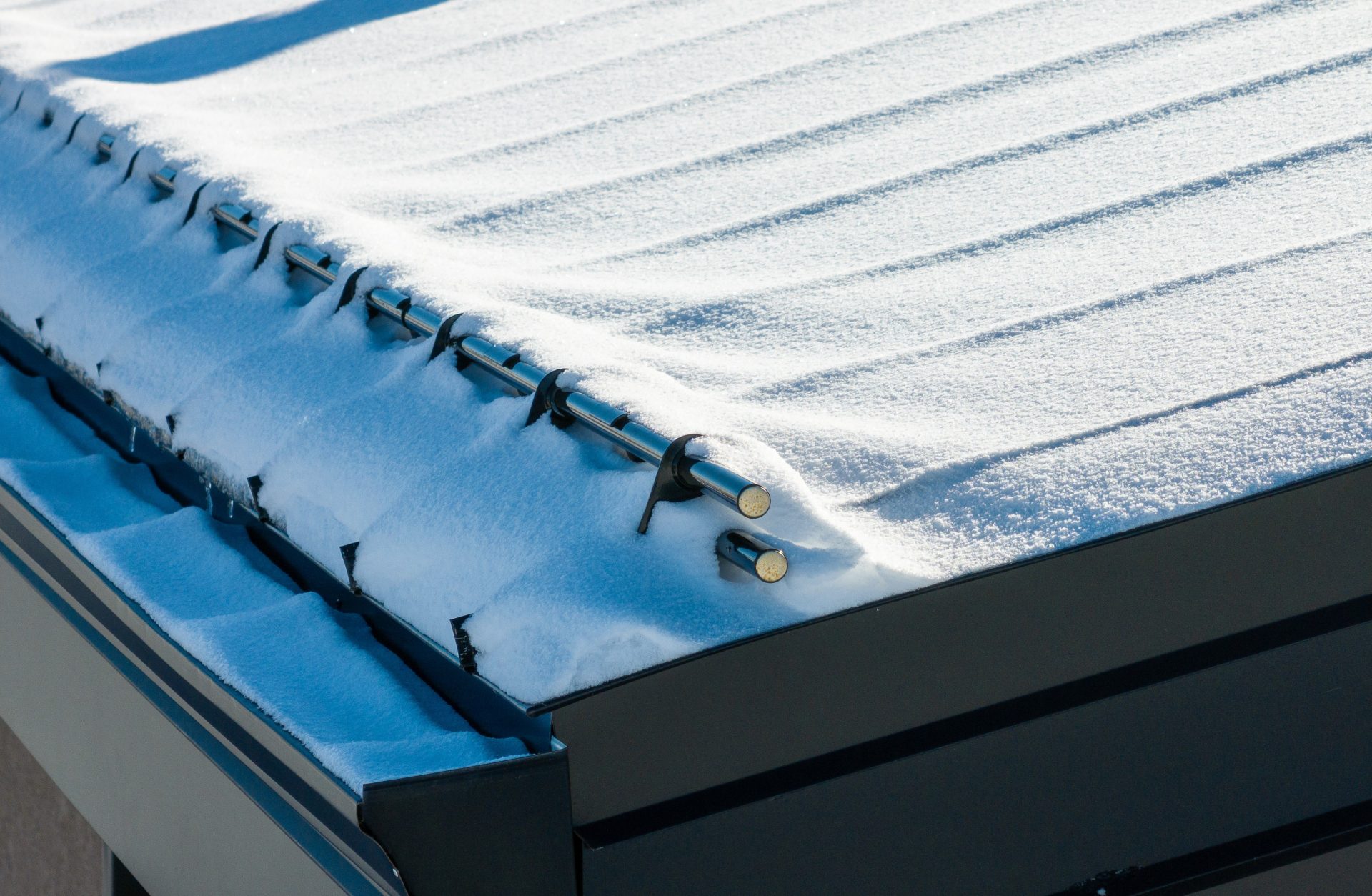
“Powder-coated tube systems are common, in part because they align with expectations of a high-end mountain aesthetic,” says Brian Cross of Rocky Mountain Snow Guards.
He observes that familiarity strongly influences decision-making. “Ski resorts like the look of powder-coated tube systems,” says Cross. “They’re perceived as higher-end and more expensive—the clientele doesn’t want cheap. Most of the time, selection isn’t based on testing; it’s based on what people are used to and what they feel comfortable specifying.”
However, proven performance must be paired with visual integration. When selection is driven primarily by familiarity or appearance, opportunities for performance-driven solutions can be overlooked, particularly when snow retention is treated as a visual accessory rather than a load-resisting, structural system integrated with the roof assembly.
Durability and roof compatibility
Mountain roofs are exposed to intense UV radiation, repeated freeze-thaw cycles, and prolonged contact with snow and ice. Snow retention components must be fabricated from materials and finishes that match the service life of the metal roof. Systems relying on plastics or adhesive-only attachment methods are generally ill-suited for these conditions, as material degradation can lead to premature failure and long-term performance issues.
Equally important is compatibility between the snow retention system and the roof material—whether steel, aluminum, copper, or zinc—to avoid galvanic corrosion and long-term degradation. Attachment methods must respect roof technology, particularly on standing seam systems, where non-penetrating clamp-based systems can preserve waterproofing and warranty coverage. Designers should confirm that the materials specified are consistent with those used in performance testing and that manufacturers can provide documentation verifying quality-controlled production. The best assurance is evidenced by up-to-date, certified ISO 9001-audited compliance of the production facility.
Mark Orsborn, retired owner of Colorado Custom Metal, now a ski instructor, has seen the consequences of overbuilt, underperforming systems: “Some architects specify very large pipe systems that clutter the roof, and they still don’t work. I’ve seen snow fences bolted through the roof, fail under load, and then get removed—leaving gaping holes behind. Bigger is not better; larger systems don’t automatically solve the problem.”
Risk, liability, and design responsibility
In high-traffic resort environments, the consequences of snow retention failure can be severe or even fatal. The sudden release of snow can endanger guests and staff, damage property, block egress routes, and disrupt daily operations. These risks place a heightened responsibility on design teams to specify systems supported by independent testing and documented engineering under recognized evaluation criteria.
“There are a lot of people walking around, a lot of eaves and a lot of après-ski areas,” Haddock says. “Ski resorts carry enormous liability, and snow retention plays a direct role in managing that risk.”
Integrating snow retention early
When snow retention is considered early—alongside roof geometry, circulation planning, and material selection—it becomes a cohesive part of the architectural system rather than a reactive add-on.
From early design through construction, collaboration with experienced manufacturers and engineers is essential. Project-specific calculations, transparent documentation, and meaningful warranties provide confidence that the snow retention system will perform as intended throughout the building’s life.
When snow retention is treated as an integral part of the roof system rather than a secondary accessory, it supports more than just safety. It protects the guest experience, preserves resort operations, and reinforces the durability and quality expected of premier ski and retreat-style destinations.
Fiona Maguire-O’Shea is a seasoned writer and public relations consultant with extensive experience developing technical content for the metal construction industry.
This feature originally appeared in the March/April 2026 edition of Metal Architecture, which you can find in our Digital Edition Archives.