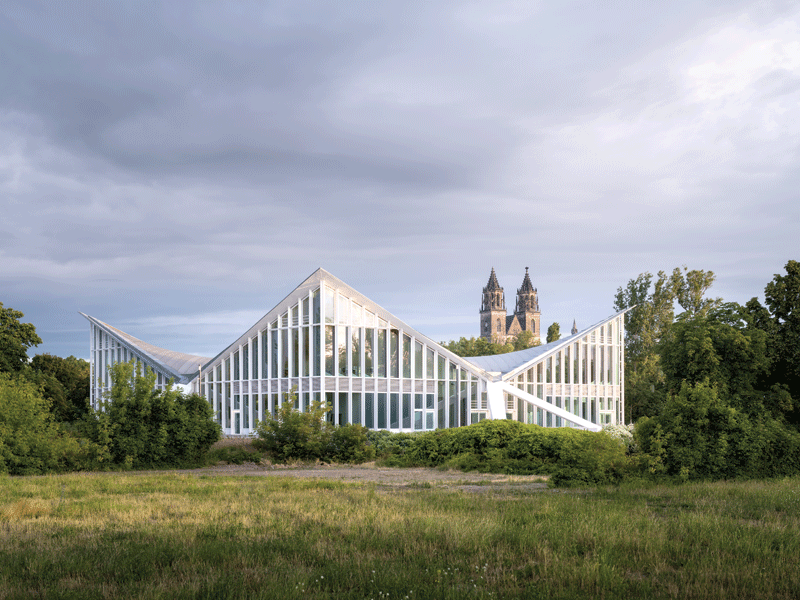
Situated two hours west of Berlin in Magdeburg, is the historic landmark known as “Hyparschale.” The brainchild of German civil engineer, Ulrich Müther, this unique hyperbolic paraboloid shell structure was one of 50 built during The Cold War, and the largest still intact. Constructed in 1969, the Hyparschale eventually fell into disrepair, and was abandoned for over two decades.
After several attempts at revitalization over the years, the state capital of Magdeburg authorities endeavored to save the multipurpose venue, which was given monument protection status in 1998. Scheduled in two phases with Gerkan, Marg and Partners (gmp) Architects commissioned to do the work, restoration on the Hyparschale lasted from 2019 to 2024.
“A basic prerequisite of any successful conversion is an appreciation for what others created in the past,” says von Gerkan, gmp’s executive partner, Stephan Schütz. “Along with Ulrich Müther’s grand gesture of the sweeping roof, we reopened the ribbon-shaped rooflights so, as originally intended, they once again heighten the four shell wing shapes and drench the interiors with copious daylighting.”
Given the structure’s roof was dilapidated, gmp utilized pioneering carbon concrete to strengthen and increase its load-bearing capacity. The renovation project also included creating additional 4.6-m-wide (15-ft-wide) rooms inside the venue, enabling more versatility for various functions. Further, footbridges interconnect the rooms ensuring easy access throughout the space.
Restoring Müther’s original vision in all its glory, the newly refurbished 3,948 m2 (42,495 sf) Hyparschale now operates as an exceptional space for exhibitions and events with a seating capacity of 500 in the main hall.