

Most architectural coatings are meant to last for many years and must unequivocally offer good adhesion. However, sometimes it serves an end user’s purpose to create a coating that is lacking in certain adhesion qualities, and, in fact, is designed to come off the surface. Peelable coatings fall into this category as a type of paint that is intended to eventually be taken off the surface of the structure when it has fulfilled its role as a temporary protective layer.
Why use a peelable coating?
Peelable coatings are useful during manufacturing, construction, and maintenance of a structure and its components. For manufacturers of steel wall panels and other structural fixtures, they may be an answer to the question of how to get valuable materials delivered on site clean and corrosion-free. In addition to the possibility of becoming scratched and dirty during shipping and handling, metal building supplies are vulnerable to corrosion as fluctuating temperatures and humidity levels subject them to harsher conditions in transit than may be experienced after installation. A sprayable, peelable coating is, therefore, worth investigating as a potential shipping solution.
For similar reasons, peelable coatings can be beneficial at the construction site. Even after frames, windows, and doors are installed, work may continue with plenty of dust and debris flying through the air from activities like sanding, drilling, and sawing. Paints and varnishes may also drip onto clean surfaces, or metal fixtures intended only for indoor installation may be temporarily left open to a corrosive environment, leading to rusting before the space is fully enclosed. Rather than placing cardboard over every window and door, having an easy way for contractors to coat vulnerable surfaces on the jobsite is a great way to keep surfaces clean and rust-free while waiting for all work to be finished.
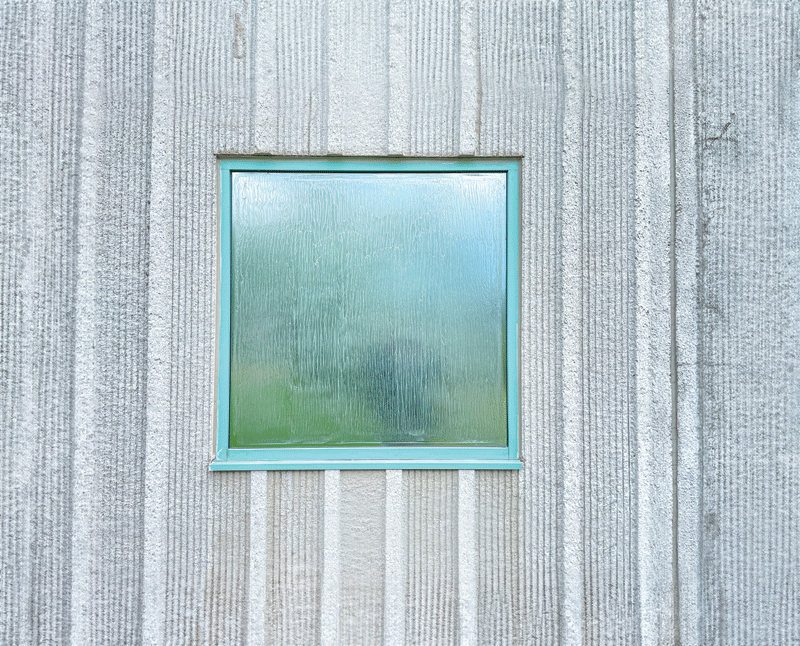
After construction is completed, a peelable coating can come in handy for periodic maintenance tasks such as painting or concrete waterproofing. Some structural surface treatments (e.g. water repellents) that need to be routinely applied to exterior walls may cause etching on glass. A peelable coating can be sprayed on windows and doors to mask them until the work is done.
What makes a peelable
coating successful?
A good peelable coating is one that can be applied and removed easily without damaging the surface. It must have enough adhesion to stick to the surface only as long as it is needed, with enough plasticity to peel off cleanly as one sheet when it is time for removal. Other preferable characteristics of a peelable coating include having a water-based formula for easy cleanup and low volatile organic compounds (VOCs) for the sake of workers and the environment. Better still is a formula that can be disposed of as solid waste after use. For best results, a peelable coating should be applied with spray equipment to achieve a coating that is thick enough to coalesce into one continuous sheet for easy removal. The thicker the coating, the less chance there is of mechanical damage, as well.
Variations on a peelable coating
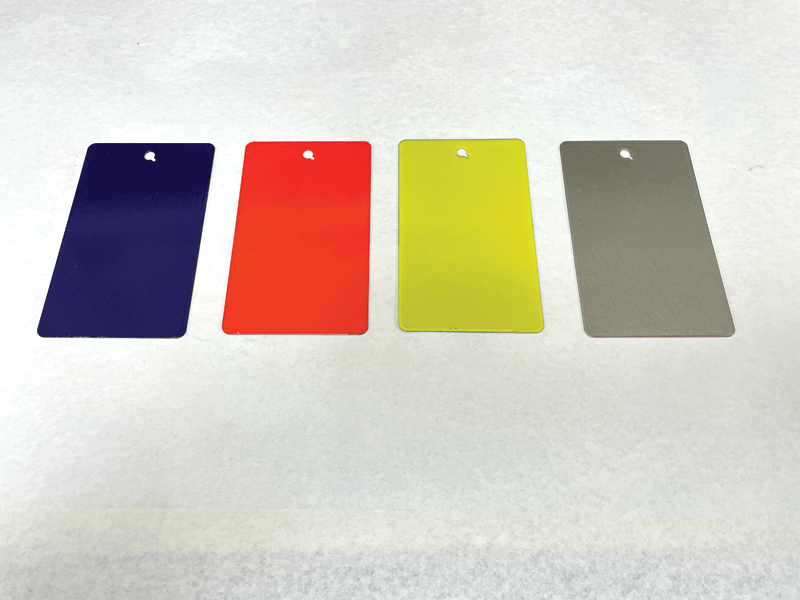
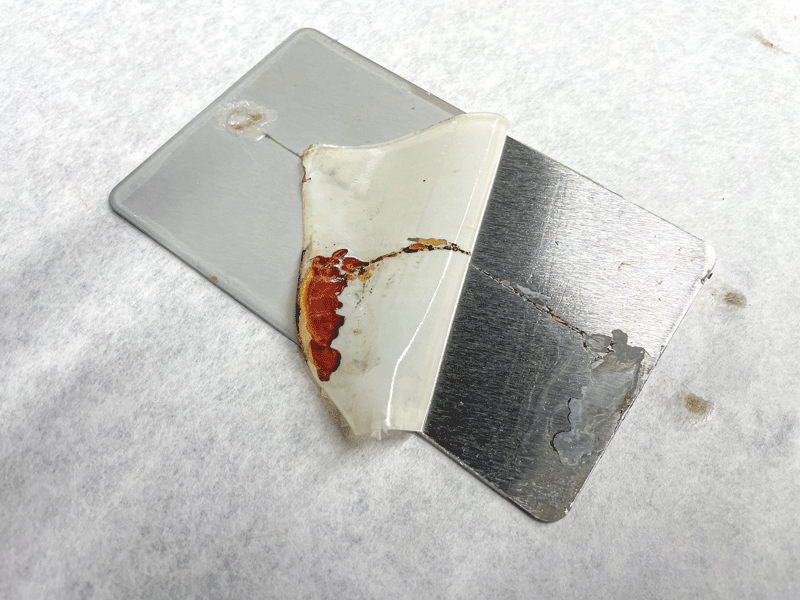
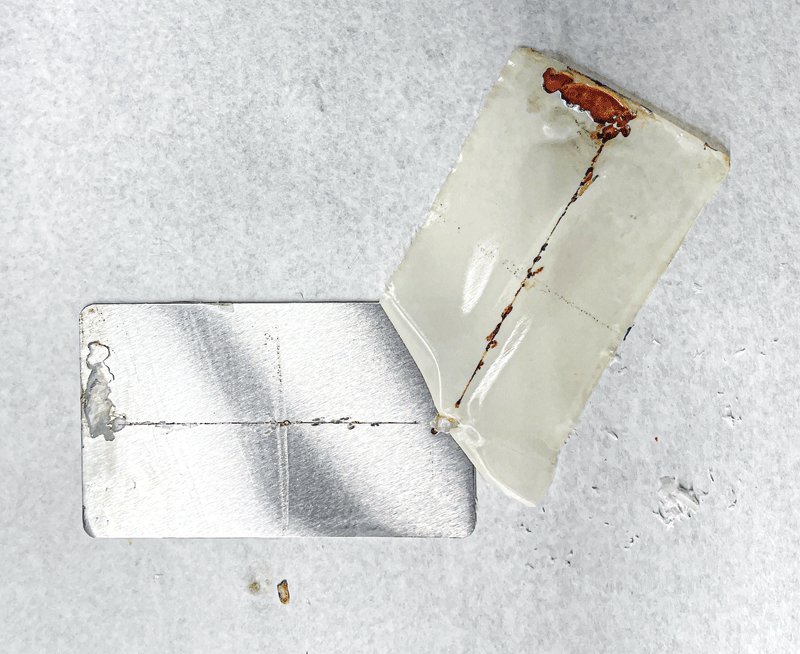
Peelable coating manufacturers can add many variations to just one basic peelable coating formulation. One obvious aspect is color. Peelable coatings can be left un-tinted for a clean, professional appearance or tinted to a variety of colors to blend into surrounding surfaces or to contrast and color code various components. Corrosion inhibitors can be added if the peelable coating will be used on metal surfaces. The images above show the performance of one peelable coating applied to a steel panel and subjected to a five percent salt fog solution at approximately 35 +/- 2 C (95 +/-3 F) for one week. The panel was scribed down the center to test corrosion creep. As a result of the modified adhesion characteristics of a peelable coating, it was more likely for corrosion to spread farther under the coating than if it had had normal adhesion. However, the panel performed considerably well despite the greater vulnerability, thanks in part to the specific corrosion inhibitor chemistry used. The coating peeled off easily to reveal a clean surface with only slight corrosion at the scribe and some staining at the bottom where the stand holding the panel had made it more susceptible to corrosion.
An important avenue to explore
Whatever the application, peelable coatings are an excellent option for manufacturers, construction crews, and maintenance teams or contractors who need to protect structural steel and glass or other non-porous surfaces temporarily from debris and corrosion. They offer a unique method of application and removability that offers greater ease and flexibility to workers and are a good avenue to consider when looking for temporary physical or corrosion protection on non-porous structural surfaces.
Author’s note: Special thanks to Jake Hemberger, Cortec® Coatings chemist, for performing peelable coating tests and technical consultation.
Julie Holmquist is the marketing content writer at Cortec® Corporation (cortecvci.com), which manufactures hundreds of corrosion-inhibiting products, including a peelable water-based coating that can be used on metal or glass.