


Photos courtesy ALPOLIC
The face of building design changed with architectural wall panel systems. By separating the load-bearing wall from the look of the project, cladding wall assemblies could be fabricated off-site. This improved the quality control of the facade and spurred advancements in finishes, sustainability, and safety. Rainscreen systems have advanced innovation by offering a new approach to air and water intrusion, making design possibilities limitless, especially as products like metal composite materials (MCM) have emerged. When selecting a cladding system, recognizing the available options is crucial.
Distinguishing between rainscreen and sealed systems
Cladding systems fall into one of two general categories: sealed and rainscreen. Multiple factors should be evaluated when determining the ideal cladding system for a specific project. Considerations include the project’s environment, aesthetic needs, wall performance, code requirements, and budget.
Sealed systems are designed to create an outward layer of protection against the elements with water-resistant cladding and sealed joints. The water-tight barrier depends on the effective application of the joint seal, which should receive regular inspection and maintenance.
Unlike sealed systems, such as those that are gasketed or caulked, rainscreen systems do not rely on a single-face seal approach. Instead, they manage wind and water intrusion through a multi-layer system. Most of the water intrusion is handled by the outer cladding layer, while an interior air-water barrier (AWB) or weather-resistive barrier (WRB) serves as a second line of defense.
Comparing the two main categories
A pressure equalized rainscreen (PER) system works on the premise if there is equal pressure between the interior cavity of the system and the environment outside the cladding barrier, water intrusion will be reduced. Pressure is regulated by engineering separate compartments behind the cladding, restricting airflow. Pressure equalization works in conjunction with drainage and ventilation to present an efficient system for managing moisture.
The focus of a drained and back-ventilated rainscreen (DBVR) system is not to prevent water intrusion through pressure; instead, it aims to facilitate the drainage and drying of any water that enters the cavity, with a design that supports water drainage and air ventilation.
Breaking down essential rainscreen system components
As defined by RAiNA, a rainscreen system consists of an outer control layer (such as MCM cladding), an inner control layer (typically the AWB over the substrate), and a space between (referred to as the drainage plane). There are two main functions of that cavity. The first is to drain any bulk water, and the second is to dry any residual water. Effective moisture management requires the right width for this cavity, which can depend on the cladding type.
While a 12.7 mm (0.5 in.) drainage plane may be sufficient for drainage (technically referred to as capillary movement), 9.5 mm (0.375 in.) is the recommended minimum depth for facilitating proper ventilation to allow any residual moisture to dry quickly.
What is furring?
To create that minimum drainage plane between the two layers, rainscreen systems can use a technique called furring. This is where a thin strip of material is attached in a way to create space. These applications are used to “fur” the cladding, creating air gaps away from the substrate. Many different materials are available for furring, but metal is often preferred over wood and plastic as it does not trap or absorb moisture, it does not compress, and it is non-combustible.
While the main purpose of the furring is to create a drainage plane, it can also serve as the structural attachment point for the cladding. In this way, a well-engineered wall could minimize the number of fastener penetrations going through the AWB or exterior insulation by attaching the cladding directly to the furring rather than back to the studs, after going through the layers of AWB, substrate, and continuous insulation (ci). Fewer penetrations through these materials mean fewer entry points for moisture intrusion.
Designing around the “Four Ds”
When designing a rainscreen, it is important to consider the “Four Ds”
- Deflection: cladding is the first layer of defense, and it aims to keep water out.
- Drainage: provide drainage paths for any water that does get into the assembly, down and out.
- Drying: facilitates efficient ventilation to dry out any residual moisture.
- Durability: use durable materials, like MCM, that can withstand the environment long-term.
Metal composite materials (MCM) panel installed with extruded aluminum trims over cladding support system. Photo courtesy Albuild Systems
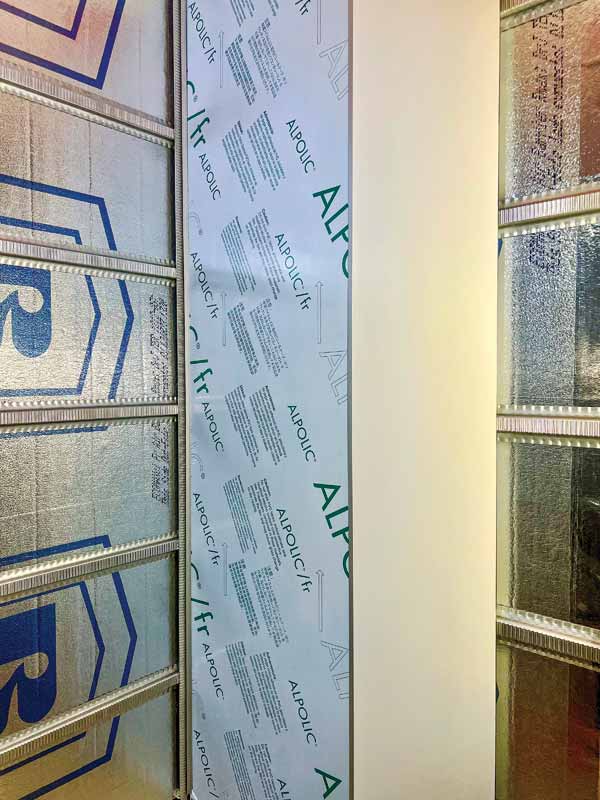
In addition to the “Four Ds,” it is also imperative to consider the thermal performance of the rainscreen design, and whether the furring or cladding support is acting as a costly thermal bridge, hindering performance. Furring and cladding support materials that cut directly through the ci, such as z-girts or clips, reduce the effectiveness of the insulation and can lose more than half of the R-value. That is why many prefer the furring and cladding support be installed outboard of the ci, where it will not act as a thermal bridge.
The advantages of MCM
MCM is a highly engineered building product that can be used to create a world of complex forms and shapes. Produced by bonding two thin sheets of metal to a thermoplastic core, MCM are adaptable and lightweight with no loss in rigidity. Composite materials are affordable, easy to install, and they offer superior flatness, durability, and ease of maintenance. Sheet metal tends to distort, or “oil can,” due to differential expansion and contraction in changing weather conditions.
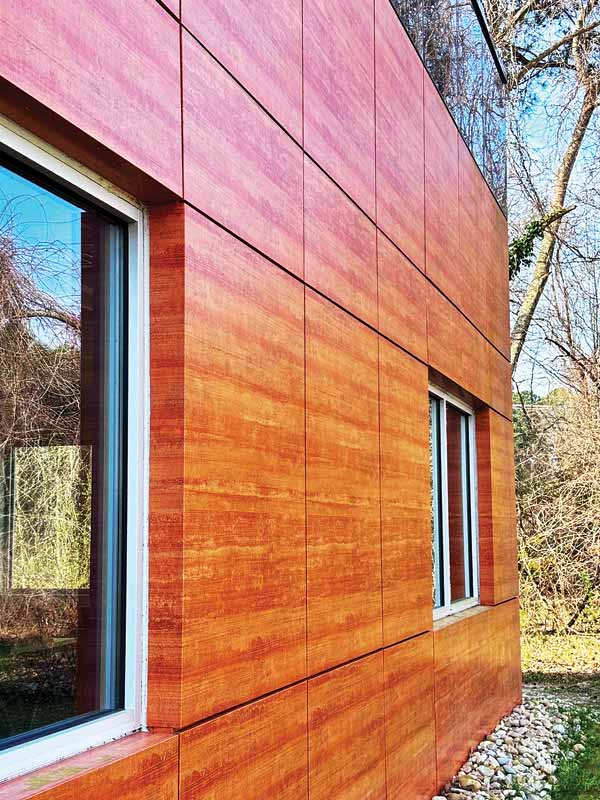
Safe and beautiful, sustainable MCM provides long-term performance. In addition to the richness of natural metals, MCM is available in various finish options. Gloss ranges from six to 70 on a gloss meter, MCM can shimmer with special effects and prismatic finishes can even change appearance depending on the viewing angle. Printed patterns mimic the appearance of marble and timber without the associated cost, weight, or maintenance requirements. Available in thicknesses of 2, 3, 4, or 6 mm (0.078, 0.118, 0.157, and 0.236 in.), MCM is a suitable choice for both exterior and interior cladding, as well as for any details in between.
Choosing the right partners
Architects, fabricators, and installers must select the system that meets their design and performance requirements.
As designers explore MCM’s versatility, many are creating unique installation systems that lead to inspiring designs. Whether sealed, rainscreen, or custom fabricated, the right partners collaborate to realize the envisioned design, blending beauty with functionality. A well-designed installation system using metal composite materials creates a building envelope that resists wind and rain, enhances energy efficiency, and allows for unique visual appeal.
Michael Bowie is the technical services manager for the ALPOLIC division of Mitsubishi Chemical America. With 12 years in the MCM industry, he is an invaluable resource to the AEC community and serves as a member on numerous industry organizations focused on safety and code compliance.
Greg Albracht, president and founder of AlBuild Systems, grew up in the building industry. With more than 40 years of experience, he has firsthand knowledge of the challenges builders face daily and the necessity for rainscreen solutions. builders face daily and the necessity for rainscreen solutions.