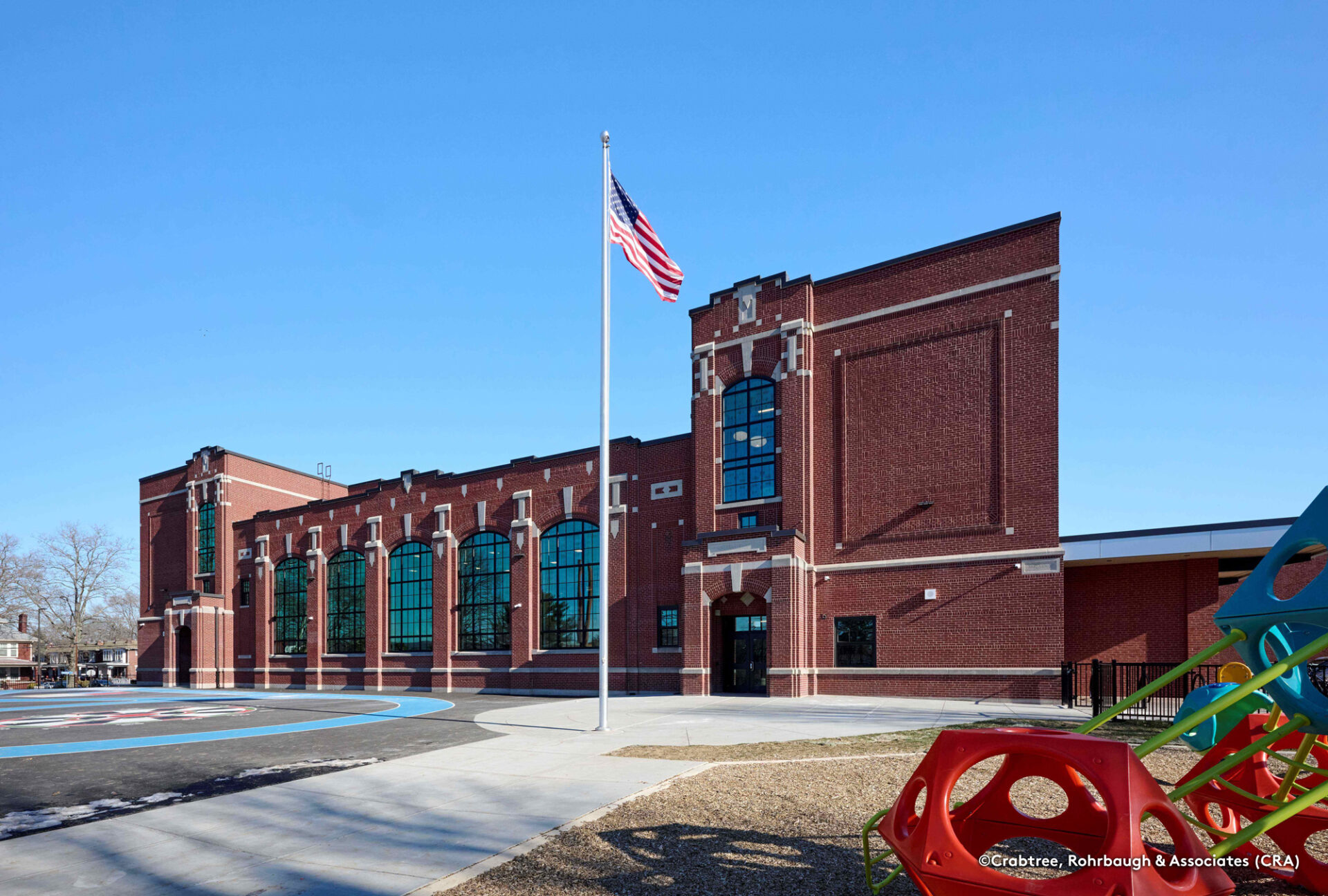
A century-old public school in Harrisburg, Pennsylvania, has reopened with historically styled, high-performance fenestration systems that marry early 20th-century aesthetics with 21st-century performance.
Following a $21.6 million renovation and expansion, Steele Elementary School now features more than 600 new aluminum-framed windows and comprehensive metal-framed curtain wall, storefront, and interior glazing systems. The three-story, 6,393 m² (68,800 sf) building—originally constructed in 1916—was brought back to life with the goal of meeting current learning standards while preserving its architectural heritage.
The window and framing systems were selected for their ability to replicate the scale, profile, and visual rhythm of the school’s original steel-framed, double-hung units. Installed by Aluma Glass & Glaze, the systems include thermally broken, simulated double-hung windows with projecting awning vents, curtain walls with arched tops, and muntin grids that mimic early divided-lite patterns. All aluminum components feature a Dark Bronze anodized finish to maintain consistency across exterior and interior installations.
To preserve the character of the original design, architects at Crabtree, Rohrbaugh & Associates followed U.S. Department of the Interior guidelines for window replacement, using historical photography and scale references. Although not listed on the National Register of Historic Places, the building was treated as a heritage asset within the school district’s reorganization plan.

New curtain wall and storefront sections span single and multi-story openings. Aluminum profiles range from 63.5 mm (2.5 in.) to over 260 mm (10.2 in.) in depth, depending on structural and aesthetic requirements. Interior storefront systems match the exterior and are used throughout the main corridor, bringing natural light deeper into the building’s core and creating sightlines into shared learning spaces.
Thermal performance was a top priority. All exterior-facing units were fabricated with insulating glass, warm-edge spacers, and polyamide thermal breaks. Operable windows provide natural ventilation, while impact-resistant glazing was used in high-traffic areas such as the gymnasium. The window and curtain wall systems were pre-glazed offsite, minimizing labor and ensuring consistency. Additional support for installation included pre-fabricated brake metal, matching caulking, and wide vertical mullions for structural alignment.
While honoring the original character of architect Charles Howard Lloyd’s early 20th-century design, the upgraded systems contribute to long-term energy performance, occupant comfort, and reduced maintenance.
The building now serves approximately 400 students and supports the Harrisburg School District’s plan to operate six neighborhood preK–5 schools. The revitalization of Steele Elementary represents a broader investment in public infrastructure, walkable education access, and architectural continuity.