Architectural metal wall panel types are numerous and provide flexibility in building design. Used for new construction or to retrofit existing buildings, their usage is growing. Metal Architecture asked industry voices about metal wall panel trends like usage, color, application and function.
Industry voices sound off on recent metal wall panel trends

Usage Trends
Metal wall panels are being seen more and more in building designs. “Metal panels are extremely hot lately and easy to adapt into the building scheme,” says James C. Tuschall, president of Tuschall Engineering Co. Inc., Burr Ridge, Ill.
“People are finding out about the metal wall panel options in color, texture and also direction,” says Jerry Iselin, president of
Metal Roof Specialties Inc., Tacoma, Wash. “Whether it be vertical, horizontal or diagonal, there are so many options. It allows architects, designers and building owners to do so many more things with a great product that serves us well as an exterior component to any building. Metal siding wasn’t that prevalent 20 years ago and now it’s huge in commercial, architectural and industrial environments. We are seeing it go into residential use more.”
Nathan Casteel, AIA, LEED AP BD + C, of Chicago-based GREC Architects agrees that metal wall panels are a common use in all facets of architectural design and are generally acceptable on the majority of projects. “We use highly tactile metals in exterior design; we are using these materials more on the interior to create more connections to the exterior,” he says. “Metal wall panels can create a nice juxtaposition to other softer warmer materials. Metal wall panels continue to be one of the most cost-effective, highest performing exterior wall systems. Their durability, longevity and performance make them an ideal material for cladding.”
Metal panels are more and more being used as accent walls and in areas mixed in with other façade materials such as masonry, fiber cement, EIFS and terra cotta. “Using multiple types of cladding on a project is growing in popularity and is widely accepted by designers and building owners as a way to create design interest,” says Steve Taylor, national sales manager, Knight Wall Systems Inc., Deer Park, Wash.

Shape Trends
Increasingly, metal wall panels are being mixed with shape variations and reveals. Wall panel direction can be installed from vertical to horizontal to angles, and even curved panels on the walls. “People are looking at walls that are anything but boring when it comes to shapes and metal,” says Jim “Screeb” Schrumpf, outside sales representative at AEP Span, Fontana, Calif. “The shape seems to be a bigger factor with some designers now that the rainscreen assembly is providing the waterproofing part of the building envelope. The interest in a wider, flat or smooth panel is still a request. This seems to push people to the composite and insulated products. They are available at a much higher price point than the single-skin panels. Valued-engineered options have people looking at narrower shapes in single skin. The concern over oil canning has led to the new push on shapes with random width ribs in the panel. These allow people use interesting combinations to create shadow lines and also reduce the risk of the appearance of oil canning.”
“Anything goes!” exclaims Joe Creighton, president, SECO Architectural Systems Inc., Snellville, Ga.,, when describing metal panel shape trends. “We have seen a change from square and rectangular shapes, to new and exciting wall systems that change in plane, color, texture and even shape! A lot more design and creativity is prevalent in today’s metal wall panel systems.”
John Pickford, president of Engineered Wall Systems Inc., South Salt Lake, Utah, agrees that not only are metal wall panels moving away from flat surfaces, but they are shaping in and out of the wall plant to provide texture, shadow lines and organic geometry to the façade. “Additionally, advancements in manufacturing techniques and materials have allowed shapes to move away from rectangular elements and incorporate much more geometric and organic form in the design,” he adds.
Frank DeBolt, senior project manager at Little Diversified Architectural Consulting, Charlotte, N.C., has seen the scale of the panels increase significantly recently. “Where panels used to be 1-inch by 4-inch, we are now implementing them at three to four times the scale,” he says. “In addition, the ability to have deep panels has increased significantly and they can be shaped to meet unique characteristics of a building.”
At his architectural firm, Casteel is seeing much more variety in shapes in both 2-D and 3-D trending. “While rectangular shapes are typical, panels with diagonal reveals can be used to create the effect of a sloped or angled panels,” he says. “Wall panels can also be sloped or stepped in 3-D to create even more dramatic effects and overall façade textures. I often use composite metal panels to create unique profiles at column and slab edge covers, and fins used in shading devices.”
Color and Appearance Trends
Long gone is the dingy silver characterized by early metal wall panels. Now, designers have a wider palette to choose from. “Architects are designing buildings using a wide variety of metal panel shapes and colors, and different types of metal,” says Jim Bush, vice president of sales and marketing, ATAS International Inc., Allentown, Pa. “We have seen an increase in custom color requests and in the use of natural metals. Multiple colors and profiles are often used on the same structure to create a unique building envelope that is aesthetically pleasing.” In response to the trend for metal wall panels with a weathered steel appearance, ATAS has recently introduced its Oxide Series.
“These colors combine the aesthetic appeal of aged metal with the advantages of brand new metal cladding in a PVDF finish, providing a timeless appearance to projects,” Bush says.
“Silver, gray and white still dominate the color palette, however, faux finishes and textures are gaining in popularity and frequency,” says Doug McIntyre, research and business development, SECO Architectural Systems. Stephanie Burke, marketing communications specialist at Laminators Inc., Hatfield, Pa., agrees that while shades of gray are still common, brighter colors such as reds, yellows and blues are trending, especially on schools. She also sees custom colors for corporate identification like logos and branding. Pickford sees a strong trend to custom colors and multiple tones in the same color family to make mosaic- type surfaces. “The other trend is a bit of a movement into exotics such as purple, yellow and green that is gaining some momentum especially in public spaces,” he adds.

Schrumpf says inner-city buildings and commercial buildings are using a mixture of metallic colors with black and gray. “Multifamily housing projects are using some same combinations and then will also mix in pastel colors mixed in with some light tan and earth tones,” he adds. “The institutional and public projects are staying close to the browns and blacks. There is still a demand for the aged material look in some segments weathering metal to go along with weathered looking wood siding colors.”
Eddie Portis, partner at Little Diversified Architectural Consulting, says metal wall panel colors are now unlimited and even cites the integration of graphics on them. Similarly, “Metal panels can now mimic wood, terra cotta, etc., many times at reduced costs and lead times,” he adds.
Mike Wallace, president of Quality Metalcrafts LLC, Rogers, Minn., says the availability of custom-paint Kynar colors with different sheens is the reason behind the trend of custom colors gaining in popularity. But, “The smaller composite projects that are economically not feasible in a custom color are often substituted with an aluminum plate panel system,” he says. “For the purists, natural metals continue to have their place in the marketplace as well.”
Panel Type Trends
In terms of the trends of the metal panel types and systems being used, Portis says modular metal panel systems are allowing new materials and shapes that can be utilized. In addition, “The insulating factors of metal panels add value to an energy-conscious project,” he says. “Perforated metals have now become popular and retro-style corrugated metal is making a strong comeback with new sleek designs.” Bush agrees that the use of perforated metal panels, in many different panel types, has risen dramatically for ventilation and acoustical purposes. At his architectural firm, Casteel is using perforated metal wall panels for screening, shading and creating dynamic spaces in general.

Taylor says aluminum composite materials (ACM) and metal composite materials (MCM) panels are still the majority of what he sees, with single-skin panels still making up a strong overall percentage of façades. However, “Formed metal panels such as box rib, corrugated, etc., are a growing segment, due to attractive prices and a broad color range, while adding interesting textures and shadow lines to the building’s profile,” he says. Burke says regardless of their type, metal wall panel trends include making sure they are easy to maintain, water resistant, have a durable surface finish, comply with all major codes and testing, and are able to be successfully fabricated.
Rainscreen and dry-joint systems continue to grow in usage. “Rainscreens still lead the pack with primary seal behind the system,” Tuschall says. As Taylor notes, “Rainscreen systems with exterior continuous insulation behind metal panels are common nationally now, due to the ASHRAE 90.1 standard, requiring much higher thermal performance from today’s building envelopes.”
Pickford agrees the new ASHRAE standards are increasing rainscreen assembly usage, but also recognition of these standards by the architectural community in addition to code officials. “Wall assemblies such as Deland, Fla.-based Kingspan’s Karrier Panel or Moon Township, Pa.-based CENTRIA’s Metal Wrap allow for very good insulation and waterproof assemblies that can provide quick enclosure/dry in for the general contractor, and allow final façade installation to follow,” he says. “We also see that many of the traditional heavy façades such as brick, stone and precast are being replaced with the metal and aluminum composite rainscreens. This allowsthe overall structure to be designed with a lighter frame providing cost savings and better return on investment to the owner.”
Wallace believes the biggest trend in metal wall panels relates to the joint conditions. “There are two joint conditions that are prevalent in the architectural market,” he says. “A wet joint where back rod and sealant fills the joint (normally a 1/2- inch joint) between panels creating a barrier panel system joint, or a dry joint condition where there is no sealant necessary. The appeal of not having to use a sealant is continuing to grow in popularity. Both systems have their place in the market as conditions present themselves where the panel system may need a sealant but when not necessary, the trend to use the rainscreen system is continuing to grow.”
All of these trends are a result of the metal wall panel industry striving to improve methodology of shape, color, attachment and aesthetic appeal. Metal Architecture will keep you abreast of new trends being introduced to the industry as they surface.
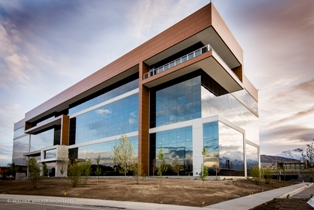
AEP Span trends with metal wall panels
Slate gray color has been more prevalent. Composite panels are still hot, but pricing has slowed down demand somewhat. Horizontal applications are becoming more accepted.
Lee Stanton, sales representative, AEP Span, Fontana Calif.
Traditional silvers, grays and dark earth tones still predominate. Using standing seam metal roof panels as wall panels is becoming more accepted. Building jurisdictions are requiring heavier gauges to mitigate oil canning concerns.
Steve Popkes, outside sales representative, AEP Span
Architects like unique things and as are result, I see the “tooth” like look and “boxy” look for metal wall panels. [There are more] earth tones and metallic colors.
Lou Budde, architectural sales representative, AEP Span
Architects are going more and more with flush face panels with varying reveals to create different shadow lines. Metal panels are gaining on fiber cement and becoming more popular year after year. Earth tones are becoming more common … seeing less blues and reds.
Jim Moreland, technical representative, AEP Span
I have been seeing a lot of prints in the field compared to solid colors. People are starting to realize that metal is more eco-friendly than a lot of the other products offered at this time.
Ty Murray, technical services representative, AEP Span