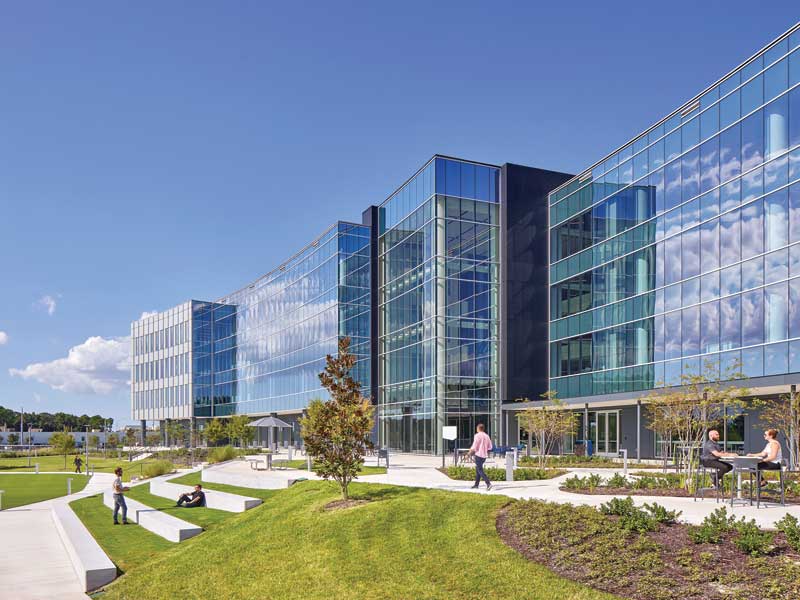
The time had come for a re-do. Jabil Inc. New Roosevelt headquarters had become plain and outdated. So, the goal was to modernize; make a space for employees which is organized, technologically advanced, and comfortable. A sleek metal facade skin was going to make headquarters look as technologically advanced and clean as the operations going on inside.
“I think much of the concern with the old headquarter location was how small and outdated it was,” explains Luke Rassmussen, project manager at M.G. McGrath Inc. “When it was decided this new headquarter building was to be constructed, our team was contracted for the metal and glass systems on the exterior. Gensler, the architects, really emphasized a look that was sleek, modern, and inspiring.”
Jabil provides manufacturing and supply chain solutions and brings a broad range of technologically advanced products to market, employing more than 200,000 people at 100 locations in 30 countries. Along with its corporate headquarters, other St. Petersburg, Fla. facilities include its design engineering and technology center, and manufacturing center.
By rebuilding and expanding its former two-story space, the new facility would allow Jabil to stay at its same location and bring together approximately 2,000 employees who previously had been spread out across eight different locations.
A desk with a view
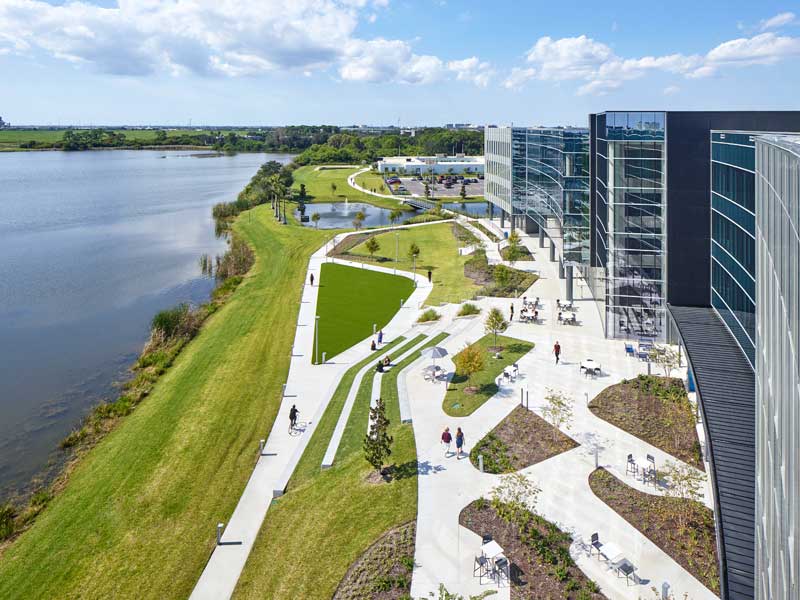
Located on Blue Heron Lake, the curve of the building frames the lake behind it. The large spans of glass give the building an open, comfortable vibe. The metal installed was used to update, modernize, and advance the look of the building.
The building features a siphonic drain system on the roof. Unlike traditional roof drainage systems, a siphonic system is designed to operate with the piping completely charged with water during a rainstorm. As well, with a big focus on sustainability, the new building promotes a connection with its natural outdoor surroundings.
is a “destination”—creating experiences for employees.
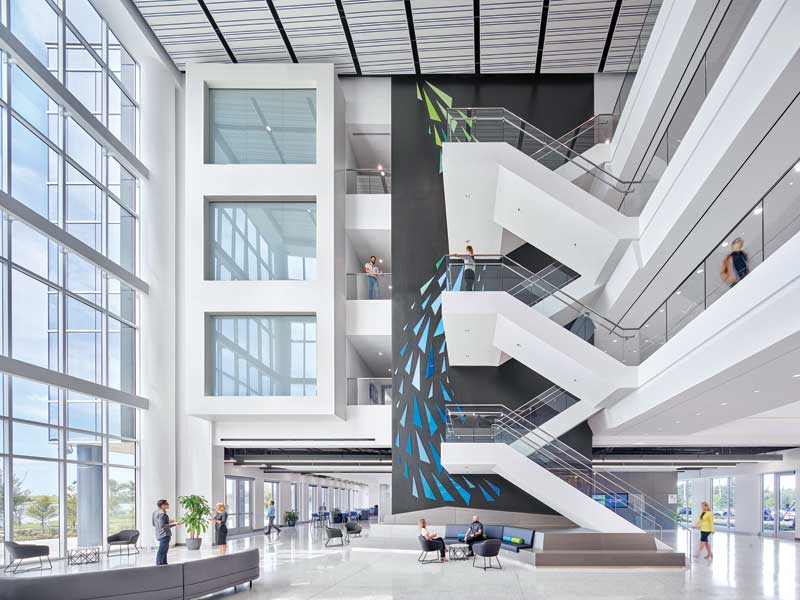
The building’s two wings are connected by a four-story atrium, making it a compelling destination for employees, a meta-trend affecting the future of work. According to Noel Keesee, Genser’s associate interior designer, there has been a shift. Employees are not provided just a workplace, but a destination where they can have an experience, ultimately driving innovation and creativity.
Fabricated and installed is 372 m2 (4,000 sf) of 4 mm (0.15 in.) aluminum composite metal column covers in Pewter Aisle, 139 m2 (1,500 sf) of standing seam metal roof panels in rich black, and 19 m2 (200 sf) of facia paneling in Pewter Aisle. The combination of the silvers, blacks, and neutral base tones also gave the building the futuristic and tech-savvy appeal the designers wanted without being too flashy or over the top.
“Nature and sustainability played a pretty significant role in this project,” says Rassmussen, adding green efforts were considered at every stage of the design and building process. “Our company incorporates sustainability planning and lean construction practices into all our projects, such as offering more energy-efficient material options (where possible), recycling scrap metal, and sourcing recycled/recyclable materials when relevant. Sustainability documentation is incorporated into our schedule to allow us to track certain metrics for the project and forecast for waste reduction, resource management, and more.” As well, McGrath’s internal virtual design and construction (VDC) department leverage Building Information Modeling (BIM) and computational design to perform simulated performance and constructability testing in efforts to reduce waste, mitigate rework, and improve efficiency.
Climate control
To support the idea of crafted chaos, the panelized metal ceiling system features a randomized sequence of 50-to 152 mm
(2- and 6-in.) wide metal panels. The recycled aluminum (up to 92 percent) construction is GreenGuard Gold Certified.
The surfaces team worked with the architects and general contractors to fabricate and install the metal system on the exterior facade, which included 4,366 m2 (47,000 sf) of 51 mm
(2 in.) Formall insulated metal panels were installed in rich black, low sheen rich black, champagne, and Pewter Aisle finishes.

To accompany the fresh look and feel, Jabil has been expanding their St. Petersburg headquarter campus to accommodate growth and company development. After demolishing their old Roosevelt Building, Jabil designed the replacement to include 15,793 m2 (170,000 sf) of office space, a fitness room,
a conference center, technology lounges, and a dining area.
Rassmussen says in the value engineering stage of a project, the team considered the proposed materials and systems to evaluate if they will hold up and perform in Florida’s harsh climate, and if necessary, provide alternatives that perform better or fit the application better. “The combination of saltwater, heat, humidity, and proximity to hurricanes all affected what could have been used for this facade. He says the IMPs and composite materials like the ones used on this project are great insulators with thermal performance properties that are effective at preventing heat loss and heat transfer. This not only reduces energy costs but lowers CO2 emissions. IMPs are also durable which helps them last in harsh weather conditions, but also reduces waste long term by needing to replace them less often. And even when it does come time to replace them, IMPs have great recyclability properties.
Size: 15,793 m2 (170,000 sf)
Building Owner: Jabil
Architect: Gensler
Metal Installer: MG McGrath Inc.
General Contractor: Skansa