It’s been 11 years since LEED version 4 was released (and five years since the LEED v4.1 option was introduced). The long wait for an update to the world’s preeminent green building rating system is almost over. The U.S. Green Building Council (USGBC) unveiled the first draft of LEED version 5 (LEED v5) for public comment in April. If you didn’t get a chance to review it, you should have another opportunity later this year during the anticipated second public comment period after comments from the first round are addressed and refinements made to the new version. If all goes to plan, the new and improved LEED will be available for projects early in 2025, with the stage set for regular updates every five years going forward.
As a longtime user of LEED, having first engaged with the v1 pilot in 1998 and certified my first project in 2001, I’m thrilled to see the refresh. While some details are subject to change, it’s not too soon to be looking ahead to how the new version may influence project planning and implementation. Here is an overview of some of the new elements we’ll see in LEED v5.
One of the most significant proposals is the addition of three new assessments in the Integrative Process, Planning, and Assessments (IP) category to directly address the USGBC’s “future of LEED” priorities, decarbonization, resilience, health, and equity. These prerequisites include Carbon Assessment, Climate Resilience Assessment, and Social Equity Assessment.
Carbon emissions reduction has been an implicit and explicit part of LEED from the beginning, mostly though energy efficiency, renewable energy, and encouragement of transportation alternatives. LEED v5 builds on this precedent and expands on it in several ways. The new Carbon Assessment prerequisite establishes a broad and long-term view by requiring project teams to estimate the embodied, operational, and transportation carbon impacts of projects for the first 25 years of the building’s life. Additionally, the proposed baseline for the familiar energy performance prerequisite and credit will be updated to ANSI/ASHRAE/IES Standard 90.1–2019, with an automatic update to the 2022 standard starting in 2028.
Going further, the new version includes a prerequisite for operational carbon projection and the development of a decarbonization plan, which will help building owners prepare for Building Performance Standards1 increasingly being adopted by states and municipalities. LEED v5 will also address the trend toward electrification, as well as grid interactivity and demand response. To address both energy performance and resilience, a proposed new credit will encourage peak thermal load reductions with enhanced building enclosures that reduce air infiltration and thermal bridging and with balanced ventilation and heat recovery in HVAC systems. These measures will reduce heating and cooling energy use and support thermal resilience during power outages that frequently coincide with extreme heat and cold events.
In the Materials and Resources category, a proposed credit would add options for reducing embodied carbon in materials, including whole-building life cycle assessment, low-carbon materials procurement, or analysis of environmental product declarations (EPDs) for global warming impact.
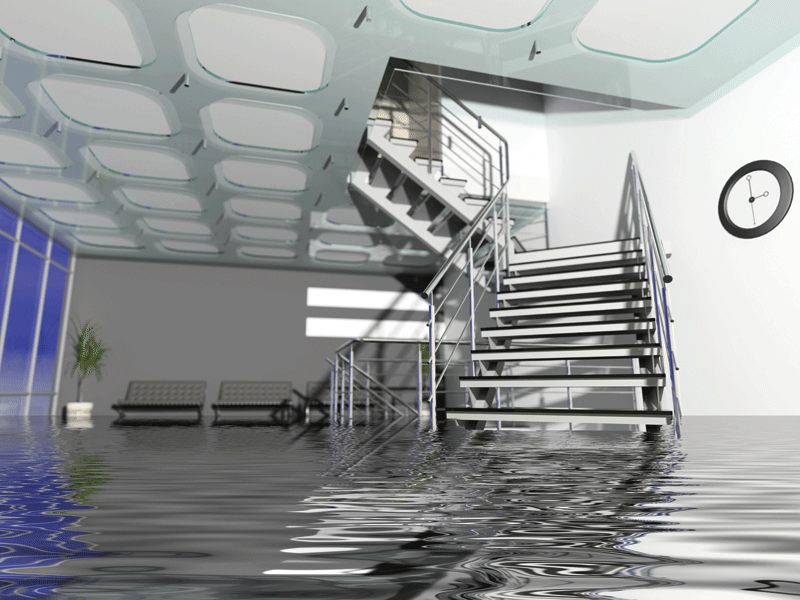
New to LEED v5 is a strong focus on natural hazard and climate change resilience, starting with the proposed Climate Resilience Assessment prerequisite. This assessment is aligned with property resilience assessments2 now becoming part of real estate transaction due diligence, and with climate-related financial risk disclosures that governments in Europe, Canada, the U.S. and elsewhere are beginning to mandate. This prerequisite is intended to prompt owners and project teams to assess how current natural hazards, from floods and hurricanes to earthquakes and tsunamis, and the emerging impacts of climate change, including sea level rise and extreme heat, drought, and rainfall, may impact the proposed project, and to consider what mitigations are possible to reduce vulnerabilities over the life of the building.
Building on this assessment prerequisite, LEED v5 proposes a new resilient site design prerequisite focused in protecting utilities from hazard events (e.g. elevating electrical equipment above flood level), an added tree cover requirement based on American Forests Tree Equity Score3 in the heat island reduction credit (addressing resilience and equity), a new water reuse credit to support drought resilience, and post-disaster hydration and sanitation needs. A blanket Resilient Spaces credit has been proposed in the Environmental Quality category with a focus on indoor comfort and occupant safety during significant location specific hazards identified by the resilience assessment prerequisite such as indoor air quality (IAQ) during hazardous outdoor air events (e.g. wildfire smoke), thermal safety during extended power outages, high wind and seismic hazard events, and even times of heightened infection risk from respiratory disease (referencing ASHRAE 241-20234).
Equity is also newly introduced in LEED v5. Like resilience, the new Social Equity Assessment prerequisite will encourage owners and project teams to make pre-design considerations, in this case engaging stakeholders and understanding the unique needs of the members of the community, project team, and supply chain related to diversity, equity, and wellbeing. While some aspects of equity are beyond the reach of the design team, making buildings accessible is well within scope. LEED v5 includes a proposed building accessibility prerequisite requiring the inclusion of basic accessibility measures for building entries, customer service locations, and restrooms that are not yet standard practice globally. An Enhanced Accessibility credit is also proposed with a prescriptive menu of choices for accessibility, accident prevention and safety, and wayfinding measures to improve equitable access and use.
A new Environmental Quality Occupant Experience credit is also proposed that focuses on the diversity of needs and preferences people have in support of their wellbeing. The credit includes a selection of measures to create customizable environments that give occupants choices relative to a variety of physical and sensory needs. It also combines and updates familiar LEED credits for thermal comfort, lighting quality, daylight, and acoustics into one credit.
Other important updates include the inclusion of bird collision reduction5 requirements along with the light pollution reduction, an update to the old prerequisite for storage and collection of recyclables that now requires developing a plan for zero waste in operation, and a new LEED Core and Shell credit encouraging green leases.
The proposed changes in LEED v5 are some of most significant in the rating system’s history and represent important updates to meet the evolving and expanding priorities for sustainable built environments. Watch for the next public comment period later this year and prepare to share your opinions on how to make the next version of LEED the best it can be, raising the bar on performance, addressing emerging priorities, and remaining an achievable and globally applicable green building rating system.
Alan Scott, FAIA, LEED Fellow, LEED AP BD+C, O+M, WELL AP, CEM, is an architect and consultant with more than 35 years of experience in sustainable building design. He is director of sustainability with Intertek Building Science Solutions. To learn more, follow Alan on LinkedIn at www.linkedin.com/in/alanscottfaia/.
Notes
1 Nationalbpscoalition.org
2 www.astm.org/products-services/standards-and-publications/standards/workitem-wk62996
3 www.americanforests.org/tools-research-reports-and-guides/tree-equity-score/
4 www.ashrae.org/about/news/2023/ashrae-publishes-standard-241-control-of-infectious-aerosols
5 https://abcbirds.org/glass-collisions/products-database/