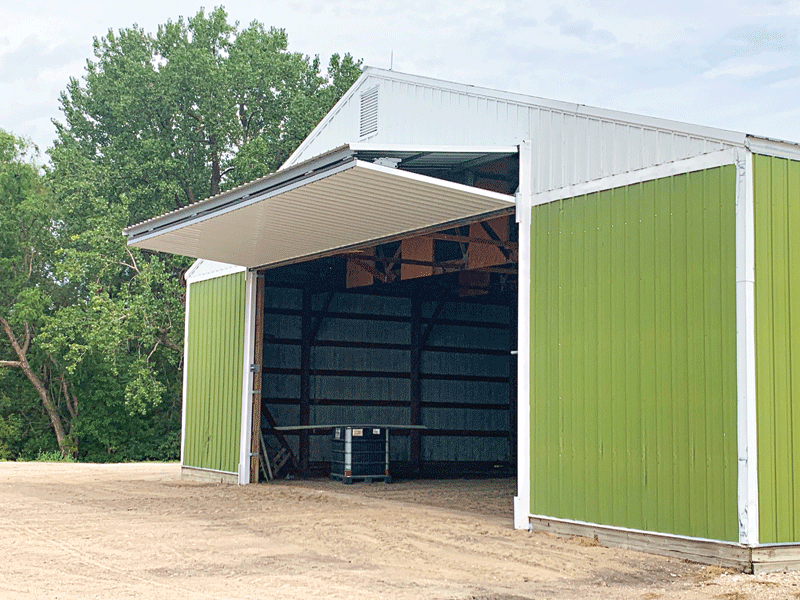
Building doors are designed for a long operating life—or at least they should be. However, outdated operating systems can pose significant safety risks and are more prone to breakdowns. Additionally, enduring severe weather and neglecting regular maintenance causes doors to become structurally compromised and visibly worn over time, leading to further complications.
One way to avoid these looming issues and breathe new life into an older building is by installing a new bi-fold or hydraulic door. A new door can dramatically increase functionality and safety, giving the building a fresh appearance while improving
environmental efficiency.
Here are five factors to consider for a door replacement that enhances usability and longevity:
Maximum space and efficiency
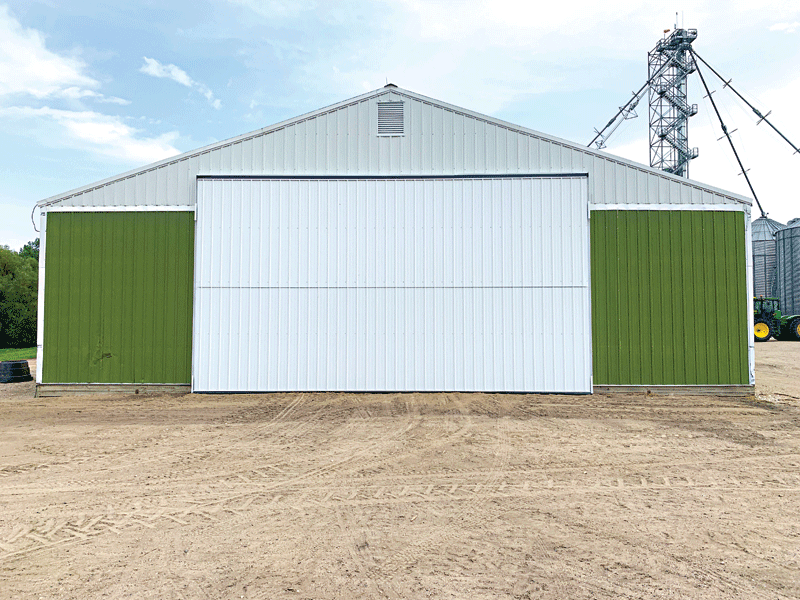
One advantage of upgrading to a bi-fold or hydraulic door is that the manufacturer will design the replacement door to accommodate the building and its height clearance. This custom-designed fit results in optimal performance, energy efficiency and space utilization.
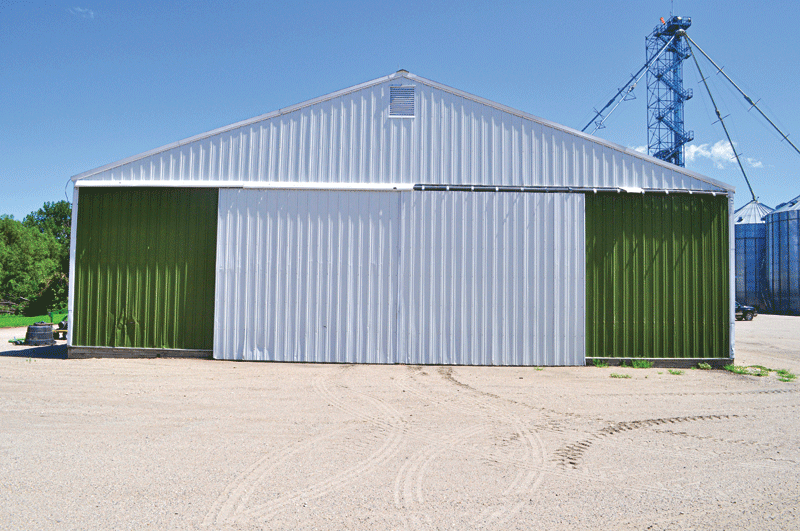
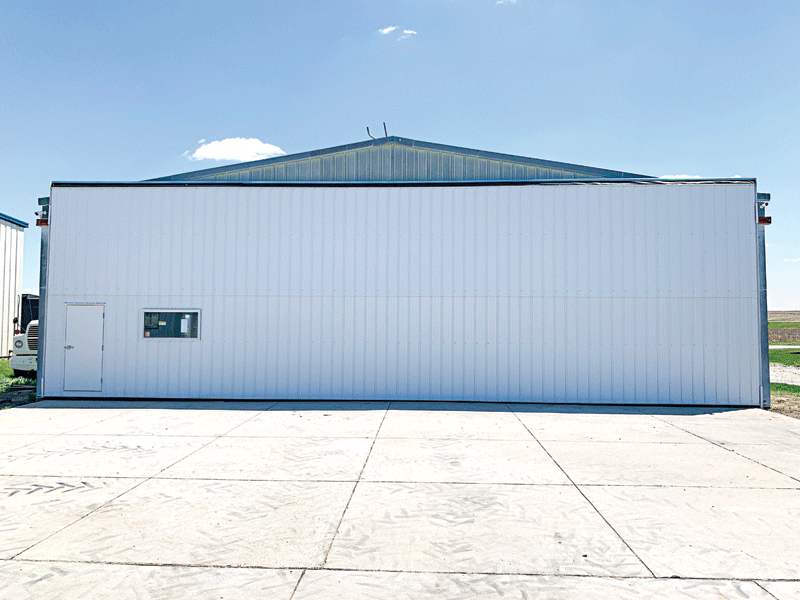
Manufacturers can also tailor doors to meet the customer’s vision for both look and function. Doors can be customized with different colors or windows to meet any desired aesthetic.
A new door requires less maintenance and will not break down at inopportune times, which increases efficiency. By upgrading, building owners have the assurance there is no need to repair it every few months, ultimately making it a more cost-effective investment.
Increased safety
When doors age, their parts and safety elements do too. Installing new doors ensures that they are outfitted with the most innovative and up-to-date safety features. This offers extra protection, especially when opening and closing the door.
Many manufactured doors have safety ratings to determine if the door has sufficient strength to operate efficiently and safely. For example, some manufacturers offer doors with a rating of 5 to 1. This means that the cables and straps opening the door can withstand stress that is five times greater than the weight of the door.
Beyond the door itself, locking systems, safety sensor technology and how the door lifts are all important safety features to consider when looking to replace a door.
Advanced opening and locking
Many doors offer latch-locking systems with safety switches that help prevent the door from opening until it’s unlocked. A single latch system with a safety switch improves usability by unlocking the door without going to each side of the door to unlock the jamb locks.
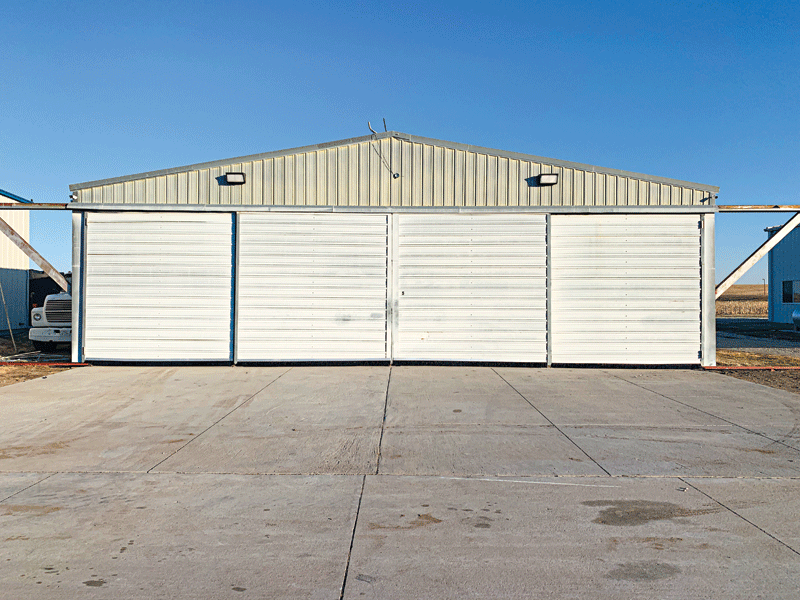
Over the years, there have been key advancements in door designs and technology such as automated opening systems. They provide the option of pushing a button rather than struggling to manually open old sliding doors.
Smooth, efficient lifting system
Many older doors have survived with outdated operating systems that have prevented the door from working its best. A nylon strap system is an easy upgrade that allows the doors to open more smoothly which improves productivity and safety while preventing costly maintenance check-ups.
Similar to a cable system, the nylon straps wrap around the drum and open the door upwards. This system increases safety because the nylon straps have a rated breaking strength much higher than that of cables.
Adding nylon straps is beneficial because they require less maintenance and exude less noise during operation. Plus, the straps are easy to replace if an issue occurs.
Retrofit support
Once the decision is made to replace a door, it’s important to carefully choose a manufacturer to get the best result and service throughout the life of the door. With any door design, engineering and/or installation project, manufacturers should take a thorough and hands-on approach to ensure the customer is pleased with all stages of the door replacement process.
Look for a manufacturer that has a comprehensive design and planning process that includes several consultations involving the building specifications. There is also an advantage to partnering with a manufacturer that works through a dealer network. These local door dealers are available to help with service issues and can even travel to the location to record building opening measurements before the door is built. It will help to ensure a proper fit and confirm that the design will work.
To provide a fast and turnkey installation, it is beneficial when a manufacturer installs the finished door and also brings all the needed equipment to provide an efficient installation.
In collaboration with the contractor, the manufacturer will ensure the door lines up precisely with the existing building opening and that it will operate smoothly. Installation crews can even dispose of the old door unless the customer would rather discard it themselves. By upgrading an aged door, owners can have confidence in their investment for the long run.
Finally, ask how service is handled after installation, and choose a manufacturer or door dealer that provides periodic general maintenance visits. Regular service will help avoid unnecessary emergency repairs and make the most of the door investment.
From start to finish
Building owners across multiple sectors can increase their efficiency and productivity by working with door manufacturers who are straightforward and collaborative during each project. Choosing a manufacturer with know-how and quality equipment ensures that from the initial handshake to the final product, owners will have peace of mind every time they close their door.
Jason Myrvik is the general manager at Midland Door Solutions and offers more than 20 years of industry experience. As general manager, he oversees the manufacturing and installation departments and ensures the best customer service. Contact him at Jason@MidlandDoorSolutions.com