Consider them the big three: insulated metal panels (IMPs), metal composite materials (MCMs), and single skins. These are three distinct yet widely used materials in modern architecture, each offering unique benefits. Each plays a critical role in modern projects, balancing thermal performance, durability, and aesthetic appeal.
Metal Composite Materials
UT Southwestern/UT Dallas Texas
Instruments Biomedical
Dallas, TX
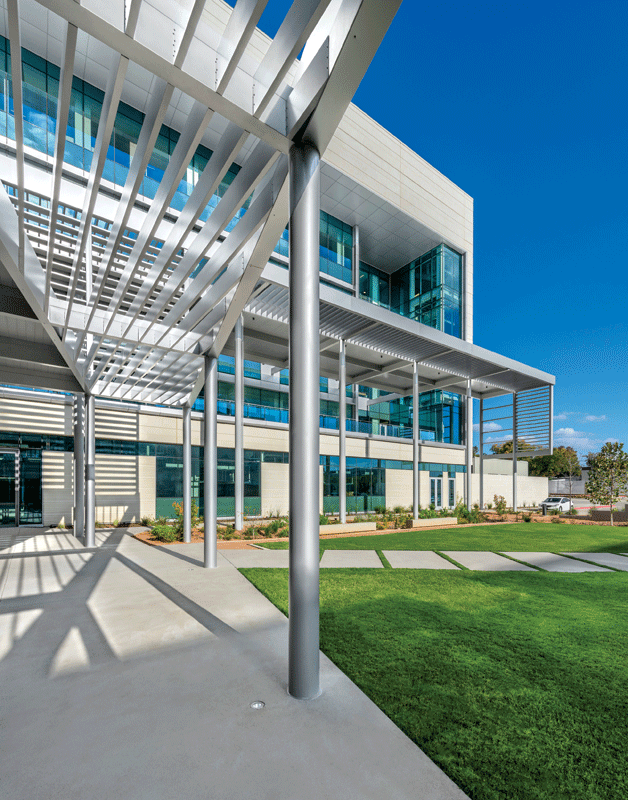
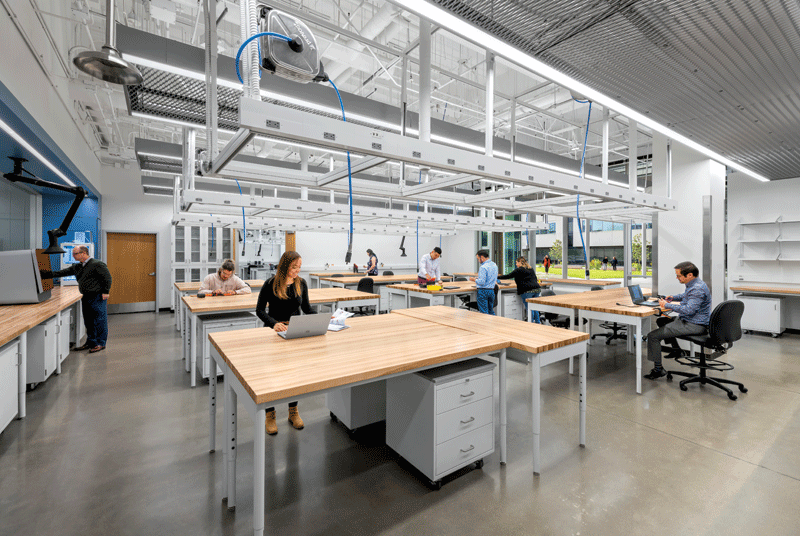
The Texas Instruments Biomedical Engineering and Sciences Building (BMES) catalyzes a unique partnership between UT Southwestern Medical Center and The University of Texas at Dallas, bringing their biomedical engineering programs together to foster innovative solutions for unmet medical needs. The five-story research facility connects engineers and scientists with access to physicians and patients on UTSW’s East Campus to improve technologies to advance patient care.
Project goals
At the facility’s main entry, a cantilevered canopy projects outward, welcoming visitors to the front door while reaching over to connect to the neighboring research building. The canopy then wraps the building, forming the perimeter edge of a new landscaped courtyard before stepping up to create a two-story pedestrian walkway and shade trellis over a level 2 roof terrace. The canopies are multi-faceted in their function and utility. They provide beneficial cover and shade for the building while crafting a human-scaled arrival experience that connects occupants to the outdoor environment and the broader campus.
MCM elements
The 11,613 m2 (150,000 sf) building’s design incorporated extensive use of metal composite materials, featuring 2,972 m2 (32,000 sf) of wall panels and 371 m2 (4,000 sf) of soffit panels. The project also includes 1,579 m2 (17,000 sf) of metal canopies. Inside, 297 m2 (3,200 sf) of perforated metal ceiling panels and 111 m2 (1,200 sf) of expanded metal ceiling were installed.
Metal’s lightweight and high strength-to-weight ratio made it an obvious choice for the cantilevered canopies and integrated curtainwall shade elements. The canopy system is constructed entirely of aluminum and steel, including an integrated drainage system. Aluminum was also an important choice for the interior ceilings, where single panels run the entire width of the corridor. Lightweight aluminum panels installed via a torsion spring system provide maintenance personnel with easy handling and access to the service plenum above. The panels also include a custom perforation pattern that adds visual movement down the corridors while aiding acoustics.

According to Randall Daniel, senior principal, architect, the composite material itself is very strong, and good longevity and durability are expected from the product. “If we do see durability issues, though, it is more often with the coating and color stability. For this project, we specified a PVDF fluoropolymer finish which the manufacturer warranties for 30 years.” Daniel says the lighter colors used on the project should have less issues with fading, so the client could expect a good 30-50 lifespan.
Single Skin
‘r kids Family Center
New Haven, Conn
r’ Kids photos courtesy Photos courtesy Tim Nighswander, Carl Vernlund
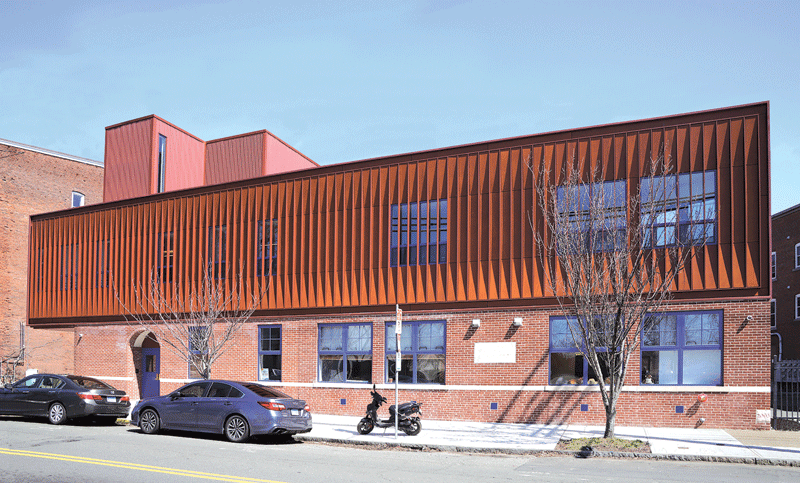
The ‘r kids Family Center, a 697 m2 (7,500 sf) innovative nonprofit, concentrates on reunification, a sensitive process where birth parents are given the support necessary to provide their children loving, permanent homes with a novel approach that is becoming a national model. The facade consists of 82 aluminum fins alternating with facetted wood veneer panels. The team had just 152 mm (6 in.) of horizontal space between the face of the existing brick and the concrete roof slab to build the new facade. The result has little topographic depth but catches light and shadow in a surprising way. The three principal moves of the project—the cantilevered second and third stories, the garden, and the ribboned, public-facing facade—allowed the center to grow its capacity while retaining the intimacy at the core of its practice.
Project goals
This project was an expansion of an existing building constructed for a non-profit using State bonding funds. Cost was a primary driver of every decision. The team constructed parts of the building more elaborately, incorporating more detail, and then covered most of the exterior in straightforward metal profile panels. The result was concentrated detail in certain places and elevated the presence of the rest.
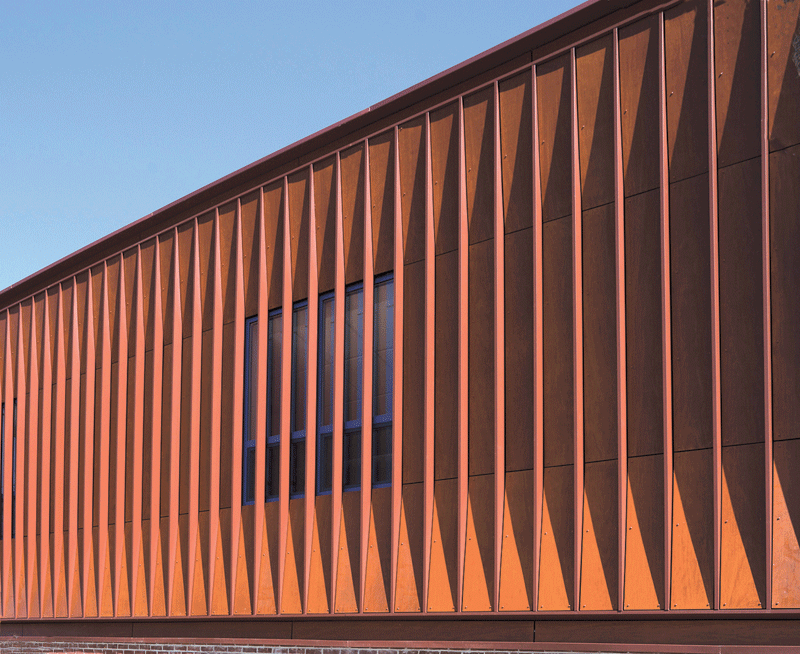
Single skin elements
The team chose the profile panels for their texture and ability to catch light. This choice helped the overall budget and informed how the architecture was developed.
They expanded the existing building, designed in 2003, to support two more floors. A steel frame structure was added, cantilevered to the north, creating a 92 m2 (1000 sf) roof garden on a tight urban lot.
When it comes to the long-term durability expectations of the single skin used in the project, architect Craig Newick says that is an interesting question. “We looked at several single-skin buildings in the area when we were deliberating material choices. We saw steel panels that had corroded from ground splash, and we found aluminum panels on the coast of Long Island Sound that looked to be holding up very well. We ultimately selected a finish that has some texture to it—not enough to really notice—but it behaves in light in a very interesting way.”
Newick says it can look almost chocolate brown in dim light and then drift to a terracotta orange in bright, direct light.
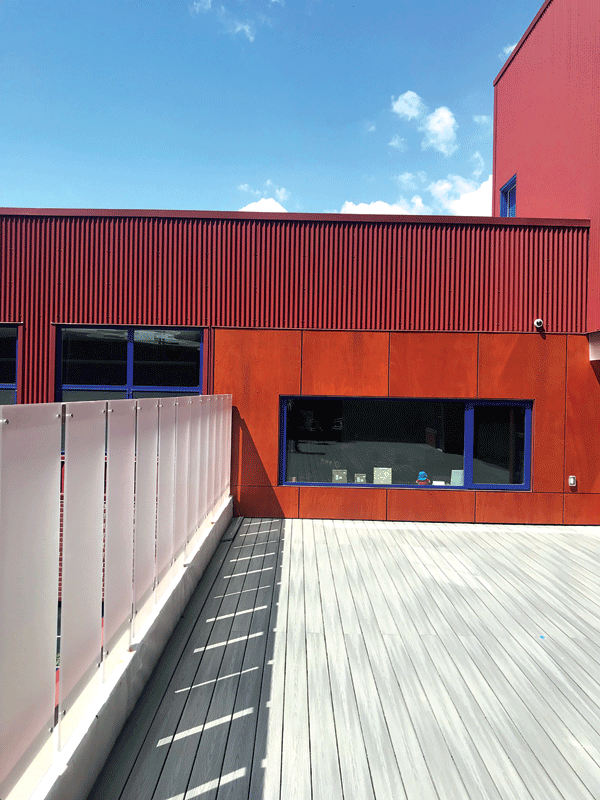
Newick says they selected a panel with a curved, corrugated profile. “It looks very much like vertical battens when you look at the walls obliquely. This material covers 75 percent of the building exterior. On the principal street facade and at other places in the building where a person would really come in contact with the facade, we composed an elaborate combination of vertical aluminum pickets with facetted wood-skinned phenolic panels in between. It is a very complex thing, but there are several places where if you stand in such a way that you are looking obliquely at both this facade and the single skin corrugated, they look very much the same.”
Insulated Metal Panels
Techo-Bloc
Ottawa, Ont., Canada
to the exterior.
Techo-Bloc photos courtesy Kevin Belanger Photography
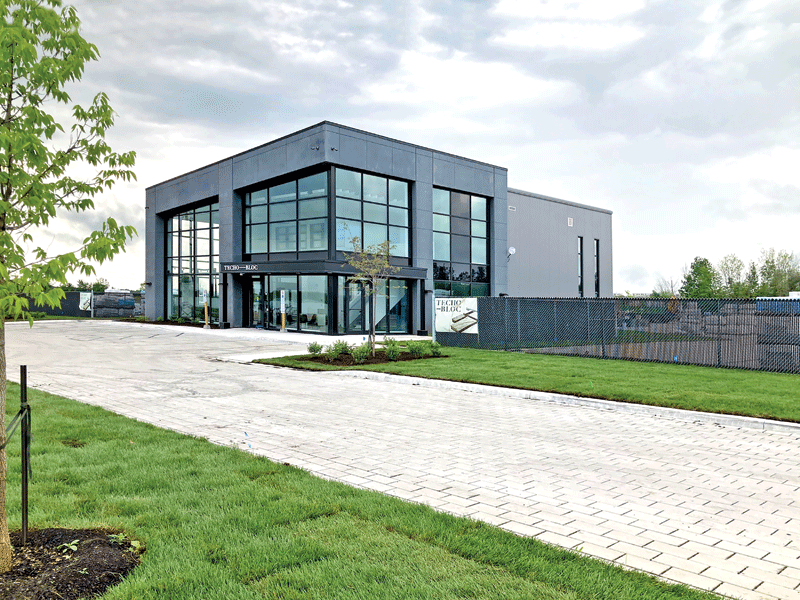
This 520 m2 (5,600 sf) commercial sales showroom and warehouse is home to a full-service interlocking stones landscape company. The building utilizes a 15 m (50 ft)
by 24 m (80 ft) single slope framing system with insulated metal roof and wall panels. One 24 m single panel with 127 mm (5 in.) insulation is used on the roof. A completely open, partial mezzanine provides extra space for executive offices and a boardroom. The ground floor is a dedicated showroom for sales. The back of the building has two vertical lift overhead doors for the warehouse space. A precast wall system and striated gray insulated metal panels bring a modern look to the exterior. The glass and aluminum curtain wall highlights the front facade and adds a visually appealing and energy-efficient space.
Project goals
The decision was made to move forward with a pre-engineered structure for this project, as the clients were eager to streamline the design process and construction and ultimately occupy the building in the shortest timeframe feasible. Quick erection times reduced cost and waste.
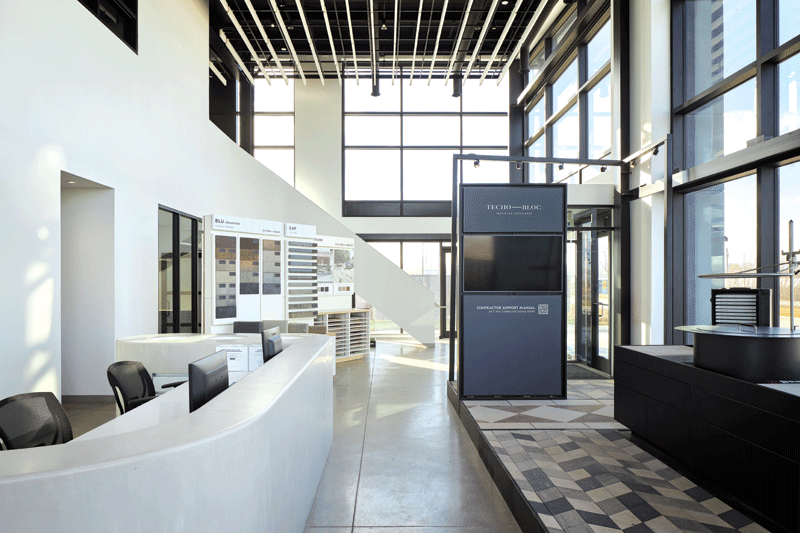
When it came to Techo-Bloc’s long-term durability expectations, project architect Brandon Lawrence said, “With proper care and maintenance, we’re expecting the panels to last 30 to 50 years.”
IMP elements
Lawrence says, “The high-quality IMPs use durable coatings and cores, which contribute to their longevity. The panels provide a thick gauge facing, which provides superior protection from environmental factors.” He also says the foam cores provide excellent thermal insulation that is continuous with little to no thermal bridging, which enhances the overall building’s performance in terms of energy efficiency and durability.
Additionally, the IMPs provide aesthetic value as well. “The IMPs come in a series of colors, profiles, and finishes which increase aesthetic opportunity.” Lawrence says this lends itself to many different architectural styles, making it easier to achieve desired aesthetic effects while benefiting from the functional aspects of the panels.