

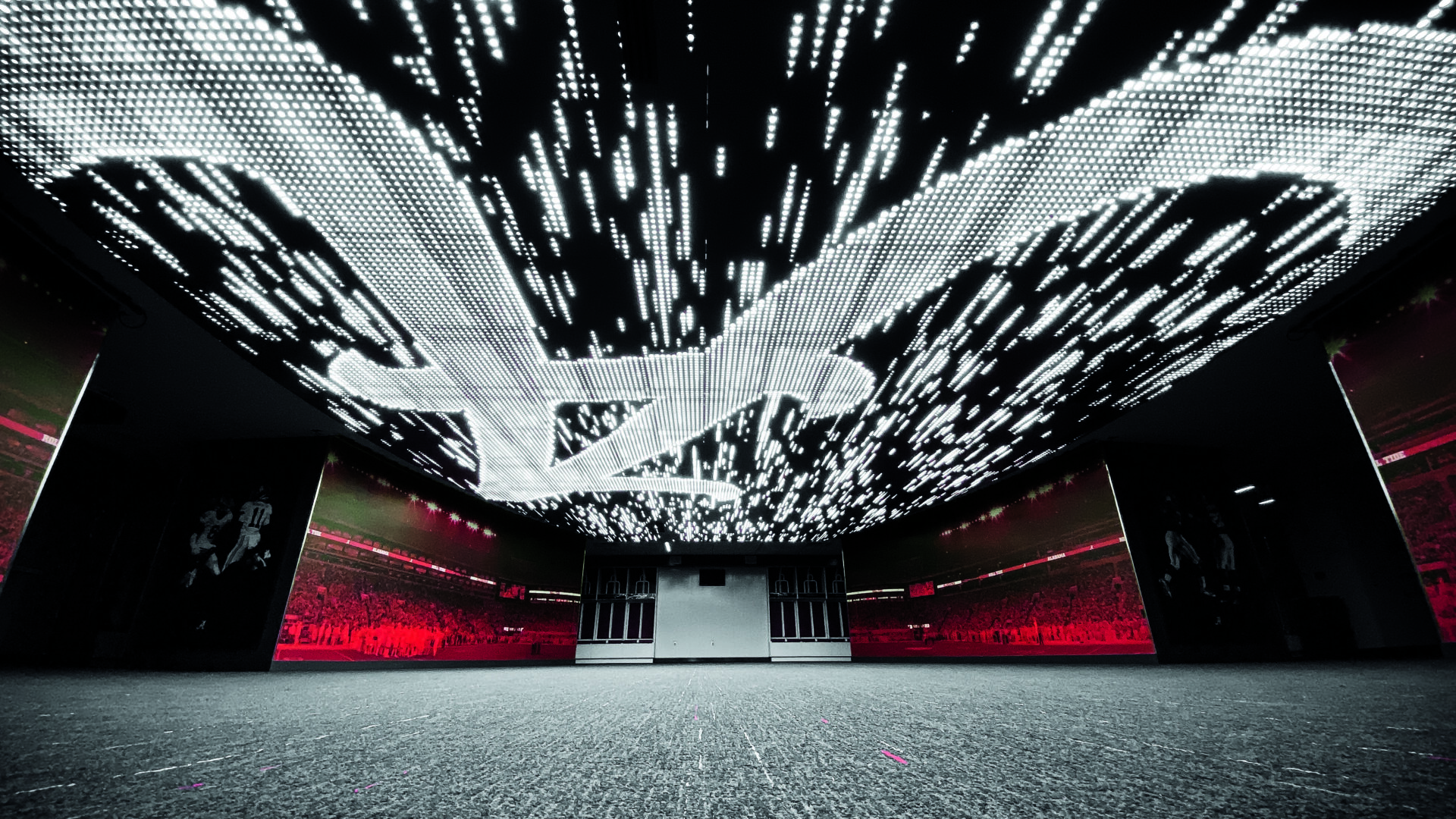
Chefs have a mantra that is very relatable to metal ceilings, “people eat with their eyes first.” The interior design megatrend of metal ceilings is driven in part by their aesthetic appeal. However, just as a chef needs to do more than just create a visually appealing dish, there are factors beyond aesthetics that architects need to consider when designing and specifying a metal ceiling. To ensure a metal ceiling meets customer expectations and provides a pleasant, healthy experience for occupants, professionals need to look beyond the visual appeal to its “ingredients” and “preparation.” This article highlights key considerations that can help ensure a metal ceiling delivers in terms of aesthetics, performance, occupant health, sustainability, time, and budget.
Preparation in metal ceiling manufacturing
Understanding how metal ceilings are manufactured helps make decisions that strike an optimal balance between how a ceiling looks, functions, and meets budget requirements. Metal ceiling panels begin with a base material—the most popular being steel and aluminum—that enters the manufacturing process as either coil stock or sheet stock. Typically, this stock is not perforated. Perforations can be added during the process to provide acoustical benefits.
During this step, the metal stock is fed into a machine that stamps perforations of a given size, shape, and pattern into the metal, then trims the panel to length. As the perforation process imparts “memory” (dents) into the metal, it’s important to level the panels. This flattening process also mitigates the tendency of metal to bend or curl when it is perforated or cut.
Next, the metal panels move to a mechanical forming line where they are bent to achieve the desired finished panel size and shape, and have their edges notched. For standard rectangular panel shapes and sizes, this can be done in an automated process. If panels are odd sizes or shapes, a worker must use equipment to bend them by hand.
After panels are perforated, formed, and sized, a finish is applied. The most common application options are:
- Baked polyester: This is applied directly to the base metal without a primer and provides a hard, corrosion-resistant finish that is typically glossy and offers strong color retention
- Powder coating: Providing a very even finish without runs, brush strokes, or spray patterns, powder coating is highly durable, offers a wide range of color options, and provides long-lasting corrosion resistance
- Dye sublimation: Used to create high-quality, long-lasting prints on various metal substrates, heat and pressure are used to transfer images onto metal ceiling panels
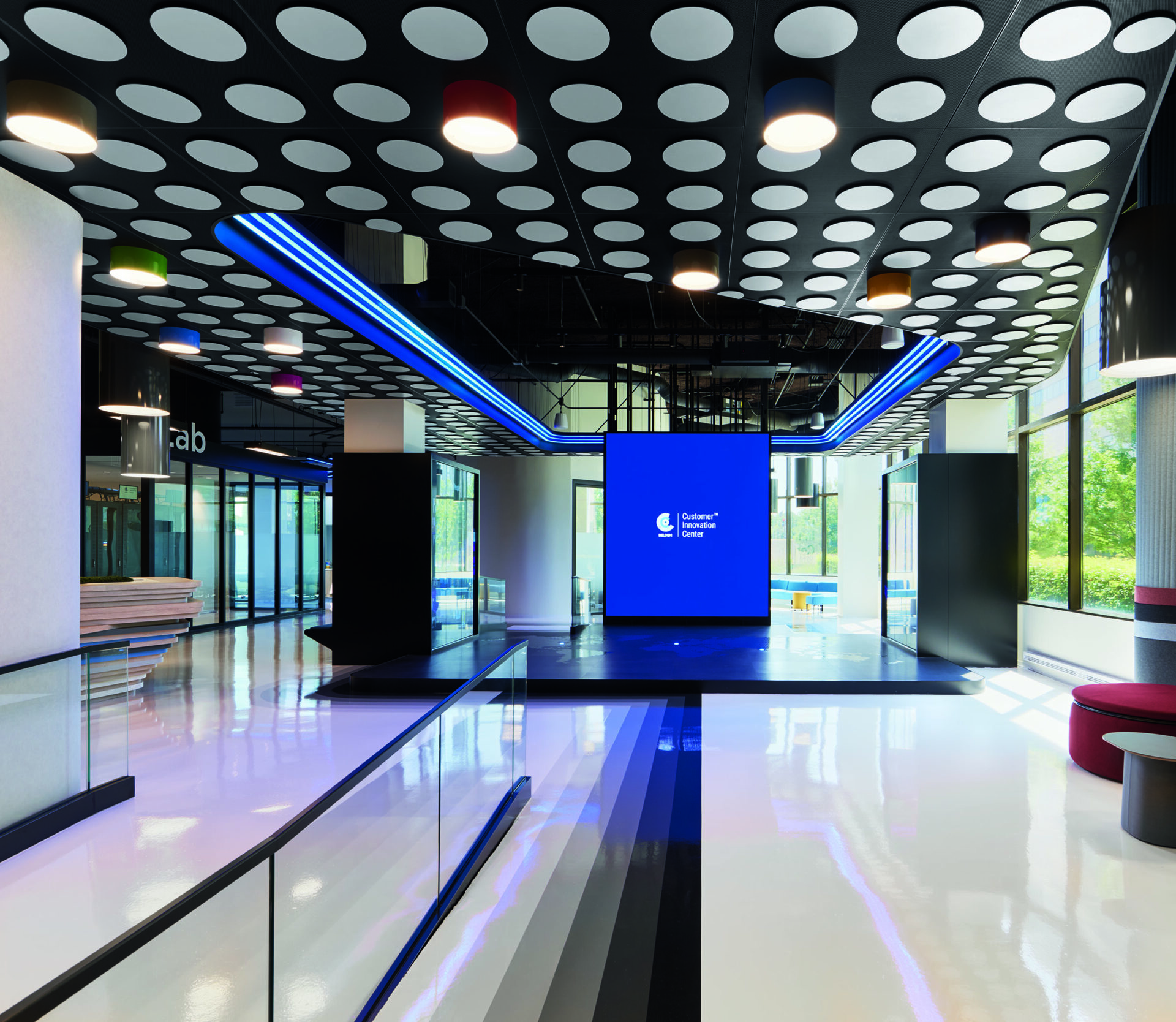
Photo courtesy Armstrong World Industries.
Coating provides the base metal with a protective barrier against corrosive elements such as moisture. A thorough coating prevents steel from rusting and aluminum from pitting, then rusting. If the perforations expose the base metal, it means the stock was pre-painted, making it susceptible to corrosion.
The last step in manufacturing is packaging panels with required accessories, such as gasketing material and acoustical fleece.
With advances in customization, virtually any design vision can be accommodated. It is important to consider how design choices impact cost and schedule. Handwork and color specialization, for example, typically have higher costs and longer lead times.
Attributes of metal ceilings—choosing the right ingredients
Be sure to consider the attributes of metal ceilings when making design decisions.
The average lifespan of a metal ceiling is 20 to 30 years. A metal ceiling’s durability is determined by the type of metal, thickness, perforations, edge detail, and panel construction. In addition to aluminum and steel, metal ceiling panels can be manufactured from galvanized steel, wire mesh, expanded metal, tin, composite materials, and more—all with their own set of advantages and disadvantages.
Finish options:
- Brushed or natural finishes leave some base metal exposed or etched, making it more vulnerable to corrosion
- Faux wood looks are usually printed on vinyl laminate applied to the base metal. Higher quality laminate will last longer without degrading into layers
- Powder-coat wood looks are images applied directly to the base metal
- Mirror finishes provide a highly reflective effect
Cost and durability of finishes should always be a consideration.
Panel size can impact cost, ease of installation, ease of access, and perforation options. All metal ceiling panels will deflect to some degree. This is less noticeable in smaller-sized panels. Deflection in larger panels can be mitigated by stiffeners or strategic configurations.
Perforations enhance acoustical performance and aesthetics. Their size, pattern, and shape all factor into acoustics and the design visual.
Consider how important it is to easily remove a metal ceiling panel to access the plenum or replace it. Various suspension options are available to increase accessibility, and metal ceiling options—including expanded metal, welded wire, woven wire, and open cell—can create open plenum spaces.
If products like air diffusers or lighting are needed, some ceiling manufacturers collaborate with lighting and HVAC companies to offer finished, integrated accessories. However, some standard metal panels can also be field cut if needed.
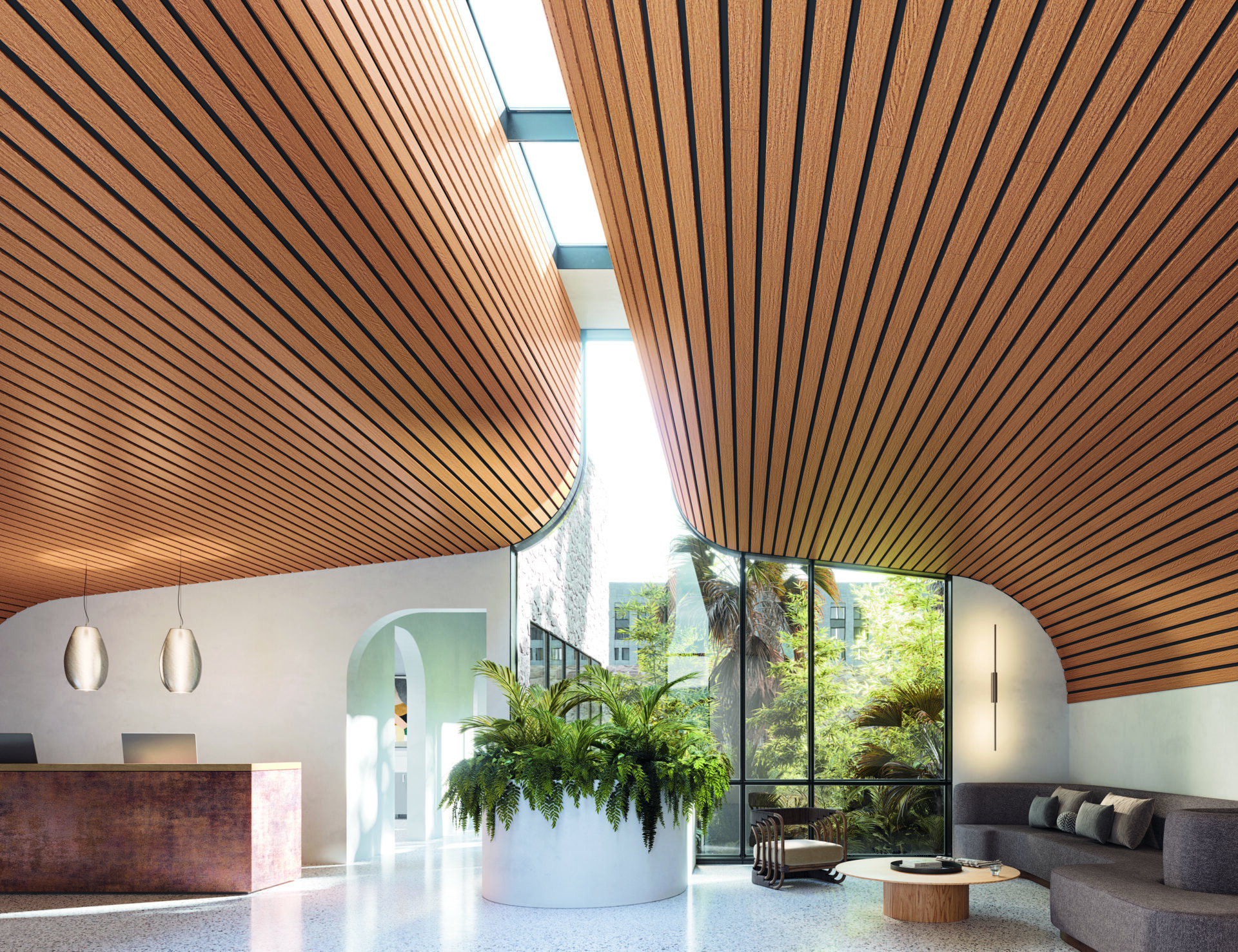
Photo courtesy Armstrong World Industries.
Getting started
Specifying a metal ceiling design may seem daunting, but getting started comes down to three basic steps. First, consider the importance of design intent vs. budget vs. timeline. Second, define and prioritize performance needs, such as acoustics and accessibility. Lastly, involve manufacturing representatives early and work closely with them throughout the process. These experts provide important insights into costs and lead times and help explore all the options necessary for reaching the right combination of aesthetics and performance.
According to an Allied Market Research report, the metal ceilings market was valued at $2.4 billion in 2020 and is expected to reach $4.3 billion by 2032. As one of the fastest-growing interior finishes in the U.S., metal ceilings’ durability, resiliency, aesthetics, and environmental benefits bring value to virtually every segment—from transportation, offices, and education to healthcare, retail, and hospitality. For the foreseeable future, metal ceilings will continue to present strong opportunities for architects and designers. Balancing stand-out aesthetics with considerations based in metal ceiling manufacturing and attributes can be the key to making the most of these opportunities for businesses and customers.
Andrew Lake, senior product manager of interior metals for Armstrong World Industries, has been an integral part of the Armstrong team for more than two decades. Andrew’s success in early roles, including plant fabrication supervisor and manufacturing team manager at the Armstrong Marietta Plant and Macon facility, respectively, demonstrated strong leadership, relationship-building, strategic-thinking, and problem-solving skills that became the foundation for him to evolve his responsibilities and grow his value to the company, its customers, and the building materials industry. Having fulfilled responsibilities ranging from architectural and contracting sales manager to recycling infrastructure process specialist and integration marketing sales manager—Andrew is known for his eagerness to embrace change and ability to turn vision into reality through strategy, structure, and talent. Most recently, Andrew served as director of new product development before taking on his current responsibility for growing the Armstrong interior metals business as senior product manager of interior metals. Andrew received his bachelor’s degree from West Virginia University.