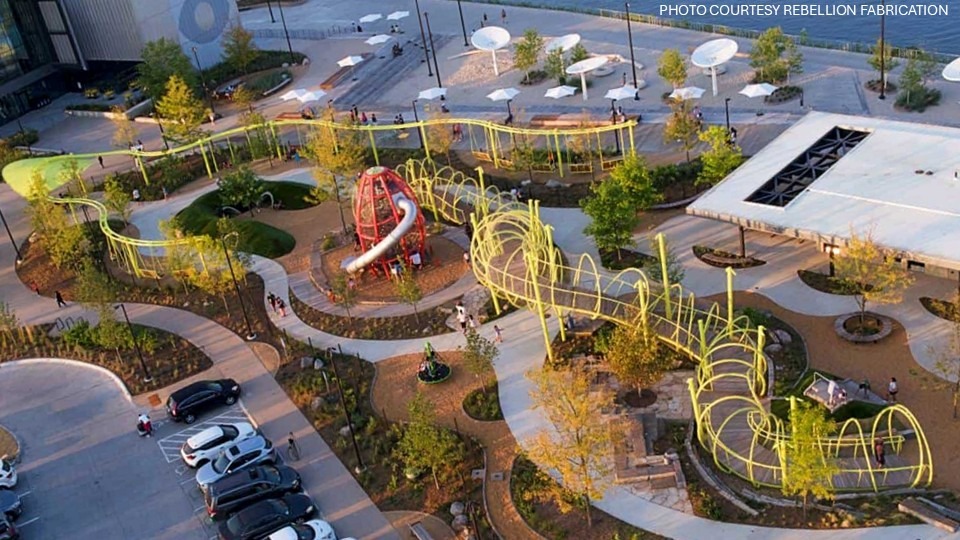
A sculptural, steel play structure known as The Adventure Path at Lewis and Clark Landing in downtown Omaha, Neb., combines a winding elevated route, integrated lighting, and custom-fabricated steelwork into a signature destination within the city’s riverfront park system.
OJB Studios served as the landscape architect for the overall park, while architecture and engineering firm ADBC Architecture designed The Adventure Path as a site-specific alternative to standard playground equipment.
The exposed structure is built primarily from linearly and helically rolled Schedule 80 heavy-wall steel pipe, including 8 in. (203.2 mm) and 5 in. (127 mm) sections. Custom trusswork, saddles, handrails, side rails, and bolted connections support the undulating pathway. With no cladding to conceal its mechanics, the steel structure also accommodates its extensive lighting infrastructure, including approximately 400 ft (121.9 m) of illuminated handrails.
“There’s nothing to hide behind,” says Ross Gredys of Rebellion Fabrication, the manufacturer for the project. “The steel structure itself is the final structure.”
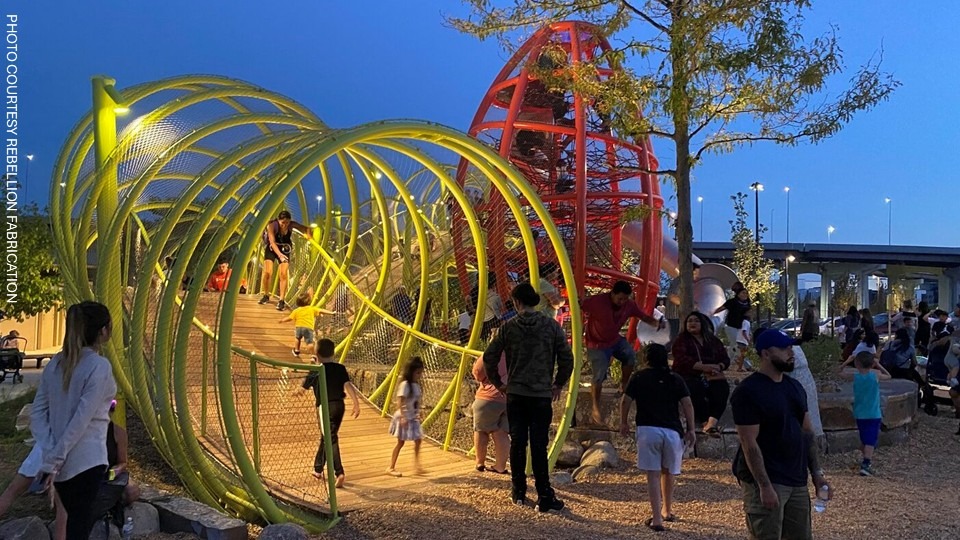
Lighting coordination was a critical part of the design. The structure incorporates tamper-resistant access ports throughout the steelwork so that electricians could route, pull, and maintain wiring within the handrail and structural system.
“We had to create tamper-proof access ports that we could apply all over the structure so that, as they’re feeding miles of electrical wire through, the electricians can pull what they need to pull and change directions,” Gredys says.
Less than a year before the planned park opening, the team had a digital model but no completed construction drawings. The fabrication team worked with the design team, the engineer of record, the electrical team, the contractor, and the erector to translate the model into buildable steelwork.
The entire pathway was assembled in the factory before separating it into transportable sections. This full-scale fit-up allowed the team to verify the geometry of its non-plumb columns, curved rails, and complex transitions before installation. Custom clamshell-style bolted connections reduced field welding and helped enable installation of the structure in approximately three weeks.
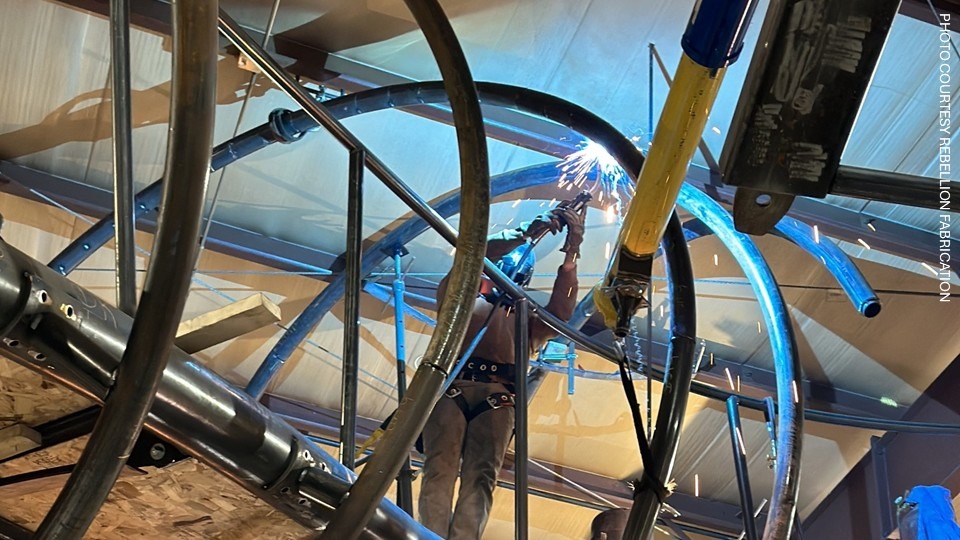
The Adventure Path’s elevated, climbable geometry required safety measures that addressed fall protection. More than 1,000 small steel eyelets were welded to the handrails to secure stainless-steel wire mesh, while the pathway’s spiraling “slinky” form was enclosed in 360-degree netting to prevent falls beyond the guardrail.
As retaining walls, changing grades, and access points could not be fully replicated during shop assembly, the completed installation was also reviewed by a playground safety inspector. The team added localized plates and coverage and coordinated with the landscape architect to close off small gaps beneath the structure.
“The rules are all the same, but no structure is ever the same that you’re building,” says Gredys. “You have to be very aware of what the rules are at the design phase of that, because there’s all the small little details that have to go onto the structure to support all the safety equipment to keep the kids safe while they’re playing on it.”
The project’s finish system was designed for a river-adjacent environment. Steel components received a five-stage high-performance coating system, including a zinc-rich primer, multiple finish coats, and a UV-protective clear coat to provide added corrosion protection.
By day, The Adventure Path invites people to safely explore and move through its sculptural steel form; by night, its integrated illumination transforms the riverfront into a distinctive visual landmark.
— With files from Rebellion Fabrication