

From countertops and gutters to rooftops and façade cladding, RHEINZINK is finding itself right at home in a wide range of residential applications. Introduced to the North American market in the early 1990’s, RHEINZINK rapidly became an important material in commercial architecture. In recent years, designers and builders are increasingly using the metal in both interior and exterior residential applications. Zinc offers a level of aesthetic appeal and superior performance that few other metals can match, according to the company. Whether used as a residential roofing material or façade cladding, RHEINZINK is a natural weathering material that forms a warm, gray patina that requires virtually no maintenance. With the ability to alter orientation of the panel seams, architects are able to achieve inspiring designs. Homes with zinc gutters benefit not only from a distinctive appearance but also from better drainage performance, according to the company. Unlike traditional gutter systems, RHEINZINK half-round gutters are supported from below with brackets rather than hung from above. Cradling a gutter from below is structurally preferred and also helps provide a clear and uninterrupted waterway for cleaning and maintenance. The half-round shape drains water one-third faster than box gutters and reduces the dependence on slope. The faster flow helps clean out gutters, too. With the increasing emphasis on sustainability and environmental impact in residential construction, zinc offers a creative solution. Zinc is 100 percent recyclable and recycled zinc conserves 95 percent of its initial energy content. For more information, visit www.rheinzink.com.
Rheinzink promoting its residential applications
This Month’s Features
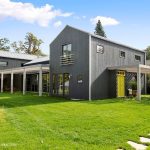
Education, advocacy, and metal building excellence
Metal building systems extend far beyond the basic, box-like structures that many architects may still associate with them. Today, they support complex designs, varied...
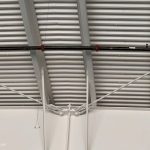
Bracing for the future
In metal building design, owners want to know the cost and delivery. Architects think about openings, elevations, space planning, and how the building will...
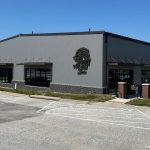
Champions Run
Recognizing the growing popularity of pickleball, Champions Run Golf Course in Omaha, Neb., developed a new year-round facility designed to provide an inviting environment...

From basic shelter to building blocks with infinite possibilities
When 13 metal building system manufacturers came together 70 years ago as the founding members of the Metal Building Manufacturers Association (MBMA), they did...
Read the latest issue
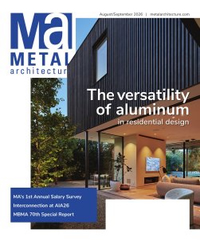
September 2026