Architects designing buildings along the Atlantic Coast, from Miami to Boston, and the Gulf Coast, from Tampa to Houston, are likely familiar with the Hurricane-Prone Region (HPR). Defined by the International Building Code (IBC), the HPR also includes Hawaii, Puerto Rico, and Guam. In these areas, the design wind speed for typical buildings meets or exceeds the threshold used to define high wind risk.
Hurricanes and tropical cyclones pose serious threats to both life and property in the HPR. As a result, building envelopes must be designed to withstand extreme wind forces and wind-driven rain. Special attention is required at envelope penetrations, where failure can compromise the integrity of the entire structure.
Louvers play a critical role in protecting these penetrations. In the HPR, louvers must prevent the intrusion of water, wind, and debris while still allowing airflow and complementing the building’s architectural facade. To ensure this performance, hurricane-resistant louvers are evaluated under one of the industry’s most demanding standards: AMCA 550.
How AMCA 550 evaluates storm performance
The Air Movement and Control Association International (AMCA) establishes the most widely accepted performance standards for the HVAC industry. While AMCA 500-L is commonly used to evaluate louver air performance and wind-driven rain resistance, far fewer products meet the more rigorous requirements of AMCA 550, which is based on the latest versions of the International Mechanical Code (IMC).
Louvers certified to AMCA 550 are proven to protect buildings against wind-driven rain at wind speeds of up to 177 km/h (110 mph).
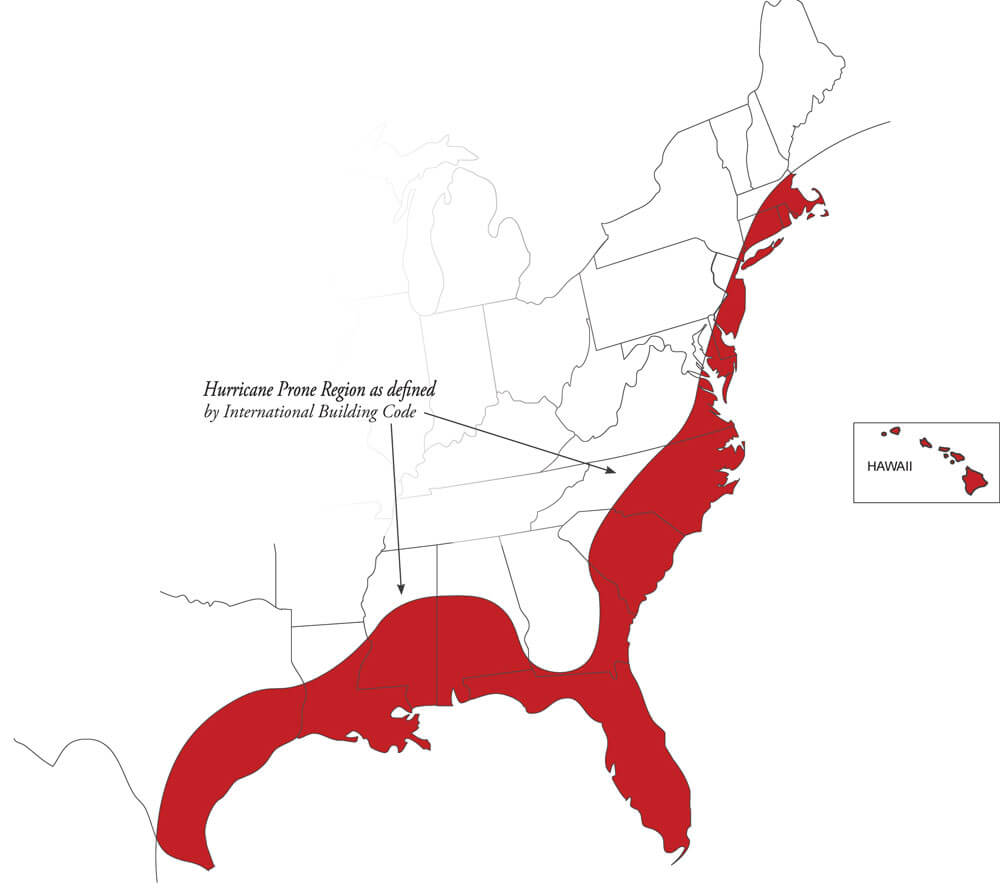
Image courtesy Airolite
AMCA 550 test procedure
During the test, a fan and water spray nozzles are positioned in front of the louver to simulate high-velocity horizontal rain. Wind speed:
- begins at 56.3 km/h (35 mph) for 15 minutes
- increases to 112.7 (km/h) 70 mph for 15 minutes
- escalates to 114.8 km/h (90 mph) for another 15 minutes
- peaks at 177 km/h (110 mph) for five minutes
Approximately 946.4 L (250 gal) of water is sprayed during the test, simulating an extreme rainfall rate of 223.5 mm (8.8 in.) per hour.
AMCA 550 is a pass/fail test. To pass, the louver must block 99 percent of the sprayed water. If more than 1 percent, or about 9.5 L (2.5 gal), collects behind the louver, the product fails.
Design characteristics of AMCA 550-certified louvers
Only a limited number of louver designs can withstand the severe conditions imposed by AMCA 550 testing. Products that achieve certification typically fall into one of two categories: either high-performance vertical blade louvers or dual-module louvers with horizontal front blades and vertical rear blades.
Vertical blade performance
Vertical blades are particularly effective against wind-driven rain, which tends to move horizontally rather than downward. Blades oriented perpendicular to the dominant wind direction are better able to block lateral water movement. In addition, vertical blades do not provide horizontal surfaces where water can accumulate, unlike horizontal blades that can catch and carry water along their length.
Dual-module louver design
Dual-module louvers address additional storm hazards, including wind-borne debris. These designs incorporate thick, reinforced, closely spaced horizontal front blades that deflect debris downward. They also include vertical rear blades that prevent wind-driven rain from entering the building.
Beyond their protective function, horizontal front blades also provide a strong architectural sightline that many designers find visually appealing.
Structural integrity and anchorage
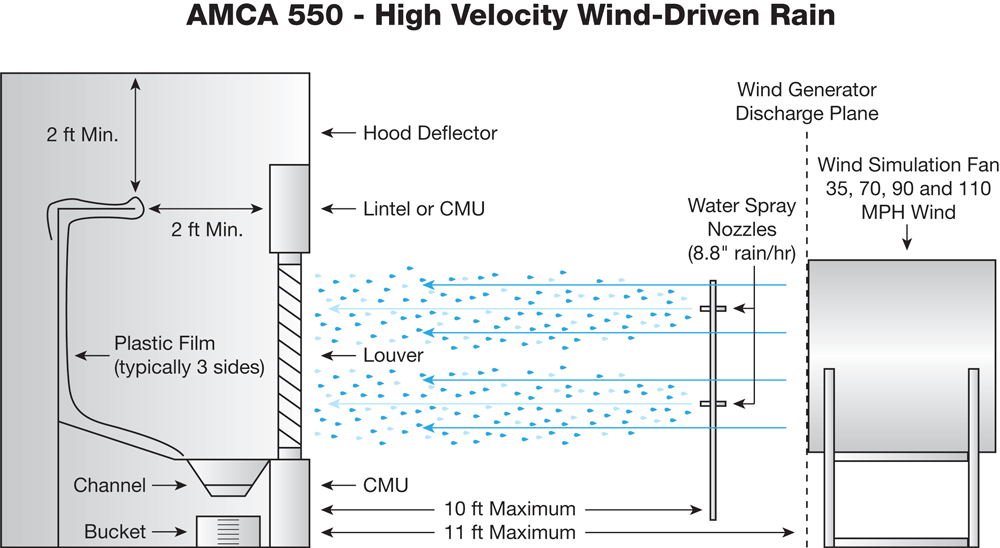
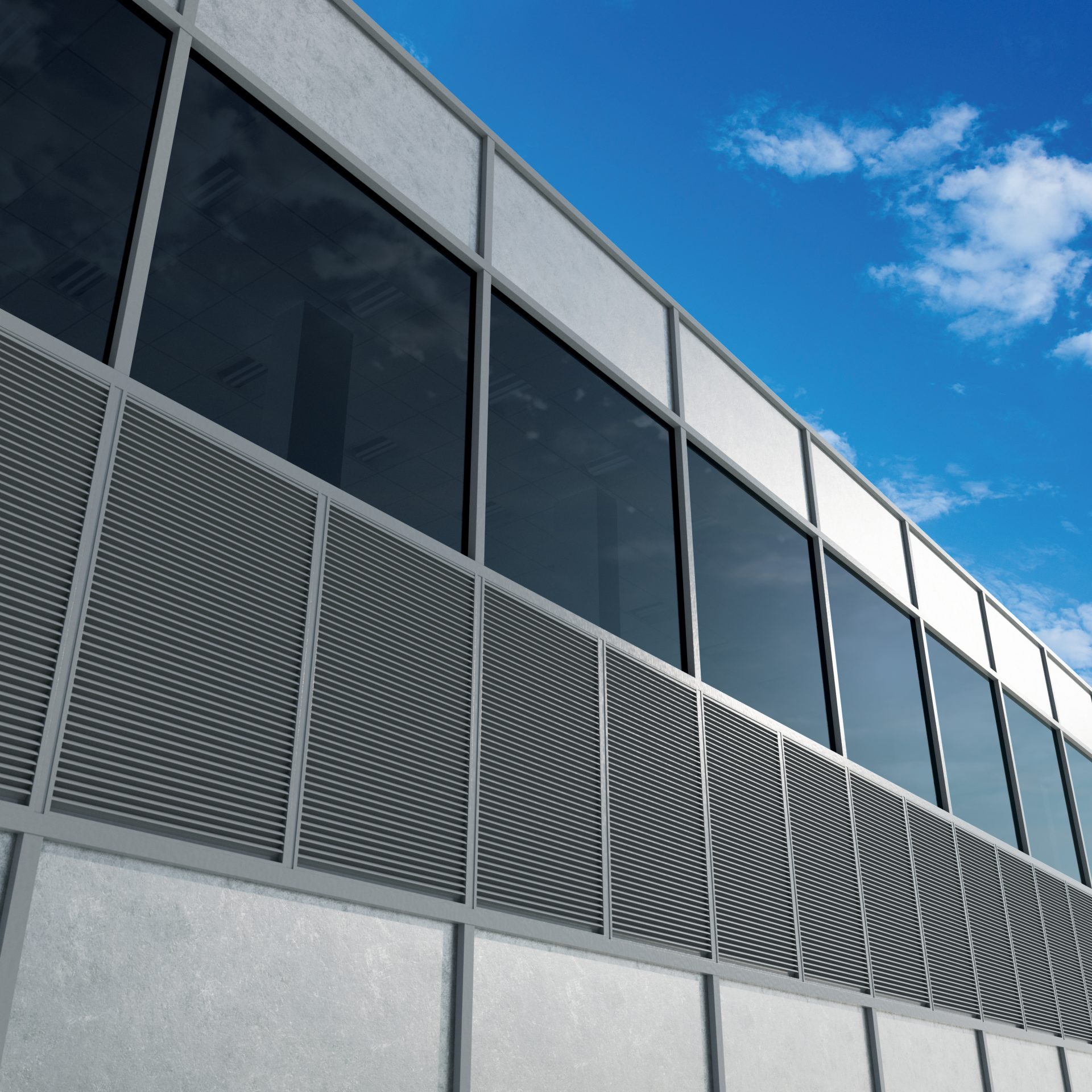
Image courtesy Airolite
AMCA 550-certified louvers feature heavier, deeper, and more rigid frames than standard louvers. Their extruded blades are thicker and engineered to resist vibration and deflection under extreme wind loads.
Anchorage requirements are equally stringent. Louvers must be mechanically fastened to the building structure, and the anchoring method cannot interfere with blade function or compromise performance.
Storm performance in occupied facilities
AMCA 550 allows both open and closed-device products to be tested. As a result, combination louver/damper assemblies are often evaluated with the damper in the closed position. These products are intended for unoccupied buildings, where dampers are closed during tropical storms or hurricanes.
By contrast, fully open louvers are required for facilities that must remain operational during severe weather events. These include emergency and critical facilities that may be occupied or unoccupied during a storm.
Special considerations for storm shelters
Storm shelters and safe rooms present unique design challenges. When constructed using Federal Emergency Management Administration funds, these spaces must comply with FEMA and International Code Council requirements.
Louvers used in storm shelters are often tested to AMCA 500-L to verify resistance to water penetration while still allowing the airflow necessary to maintain habitable conditions.
A limited number of louver products meet both FEMA requirements and AMCA 550 certification. These designs are especially well-suited for storm shelters in the HPR. They combine horizontal front blades capable of deflecting high-velocity wood debris with vertical rear blades that protect occupants from wind-driven rain while maintaining comfortable ventilation rates.
Resilient louvers support durable building design
Tropical storms and hurricanes cause tens of billions of dollars in damage each year in the United States, in addition to the immeasurable costs associated with injuries and loss of life. Architects, mechanical engineers, and other design professionals play a vital role in mitigating these risks. Respectively, high-performance vertical blade louvers and dual-module louvers with horizontal front blades and vertical rear blades can offset the impacts of water or debris storm hazards, with extruded aluminum enabling these systems to last.
Specifying louvers certified to AMCA 550 strengthens the building envelope and helps ensure that structures can provide shelter, protection, and comfort during extreme weather events. Safeguarding envelope penetrations with louvers designed, manufactured, and tested for the most demanding conditions is essential to resilient building design in the HPR.
Steve Groff is Airolite’s product manager. He has more than 30 years of facade design experience and has been with Airolite since 2006. For more information, visit www.airolite.com.