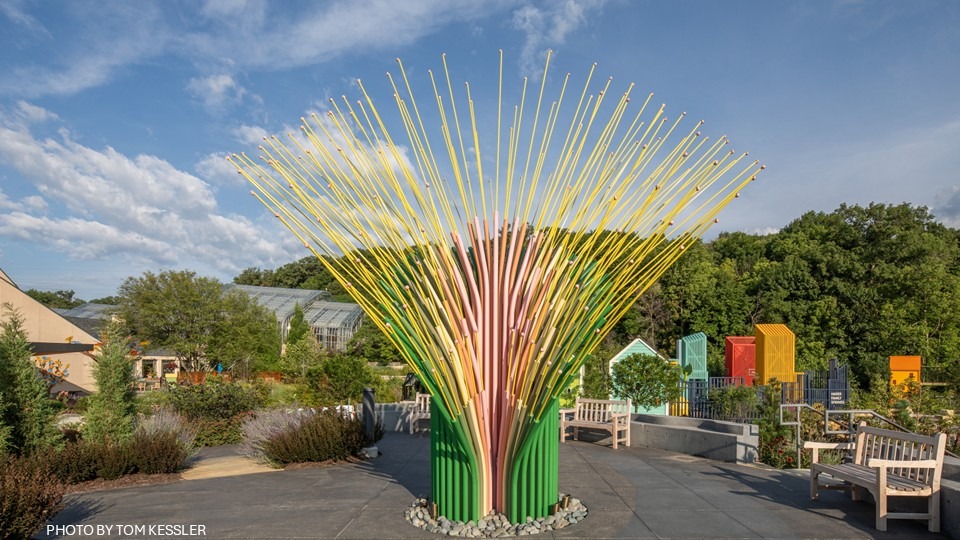
 More than ever, architecture is on the move. Literally. Kinetic designs instill architectural elements with an immersive quality, connecting structures not only to their environments but also to the people who interact with them. Chorus Ventus, a sculptural structure made from stainless steel tubes, serves as a focal point for the Children’s Garden at Lauritzen Gardens in Omaha, Neb. The project exemplifies kinetic design as a beacon of connection.
Lauritzen Gardens is a botanical garden and cultural hub that fosters appreciation and education for nature. The 100 acre (40.5 ha) area includes trails, formal gardens, artistic displays, and more. The Children’s Garden, designed by The Architectural Offices, offers hands-on opportunities for young minds to flourish and nourish a deep appreciation for nature.
Designed by Mark Nixon and Viliina Koivisto of NEON, a firm that combines architectural and artistic perspectives in its practice, the Chorus Ventus pays homage to the abundant grassy ecosystem that once engulfed central North America. Like plant life, this structure moves with the wind and the vibrations of its surroundings.
The floristic formation comprises 151 curved steel tubes that support glass-reinforced plastic (GRP) rods featuring bells on each tip. Showcasing a natural color scheme, the steel tubes are powder-coated. The outermost layer of steel tubes is green, wrapped around layers that gradate to shades of yellow, orange, and, finally, a soft pink at the innermost layer. The organic progression of color allows naturalistic wonder to prevail, no matter the season.
Steel is strong and durable, allowing the flora-inspired design to bear Nebraska’s cold winters and warm summers for decades to come. The tubes are also thoroughly anchored to the ground, with a two-layer baseplate providing confidence in the design’s ability to withstand storms and tornadoes. Steel also acts as a sturdy foundation for the attached rods, which are interchangeable and replaceable, ensuring resilience over time.
Red, green, and blue (RGB) lighting at the base of Chorus Ventus allows the structure to be seen at night, enhancing its bright colors and contrasting beautifully with the dark night sky.
Inviting in both its composition and situation, the structure stands at the top of a spiral ramp, decorated with complementary plants along the way. Seating areas surround Chorus Ventus, providing spectators with a peaceful place to enjoy views of both the sculpture and the Missouri River.
With its gentle movement and bell chimes, Chorus Ventus truly becomes a living part of its surroundings—and its steel composition ensures that its life will last.